(Analyzed at: Jan, 2026)
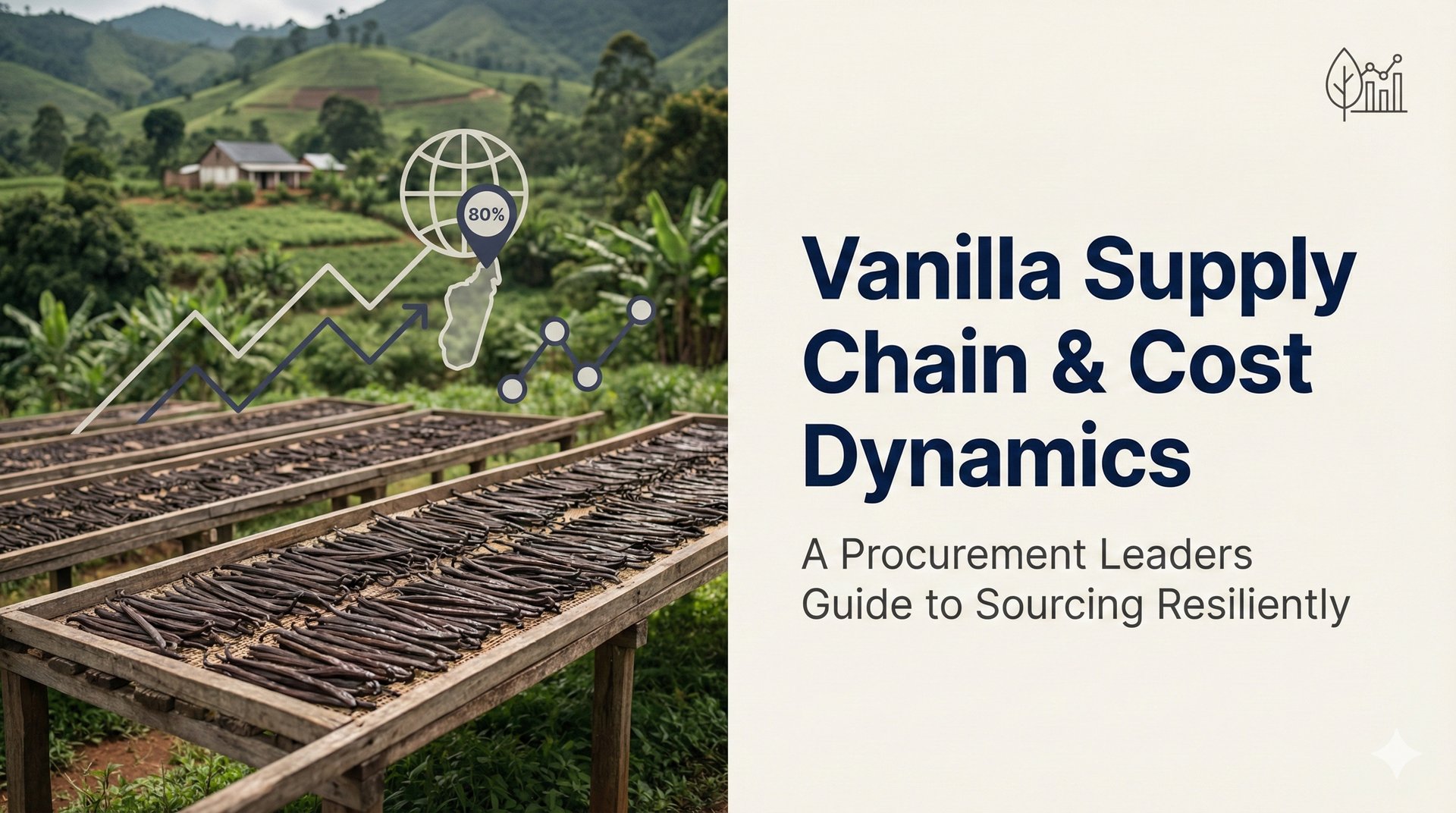
Vanilla's journey from farm to your formulation line is unusually complex for an agricultural commodity, and this complexity directly affects cost, risk, and sourcing strategy:
.png)
Key Insight: Vanilla's cost structure is unique because labor and curing processes dominate upstream costs, while processing and distribution shape downstream margins.
.png)
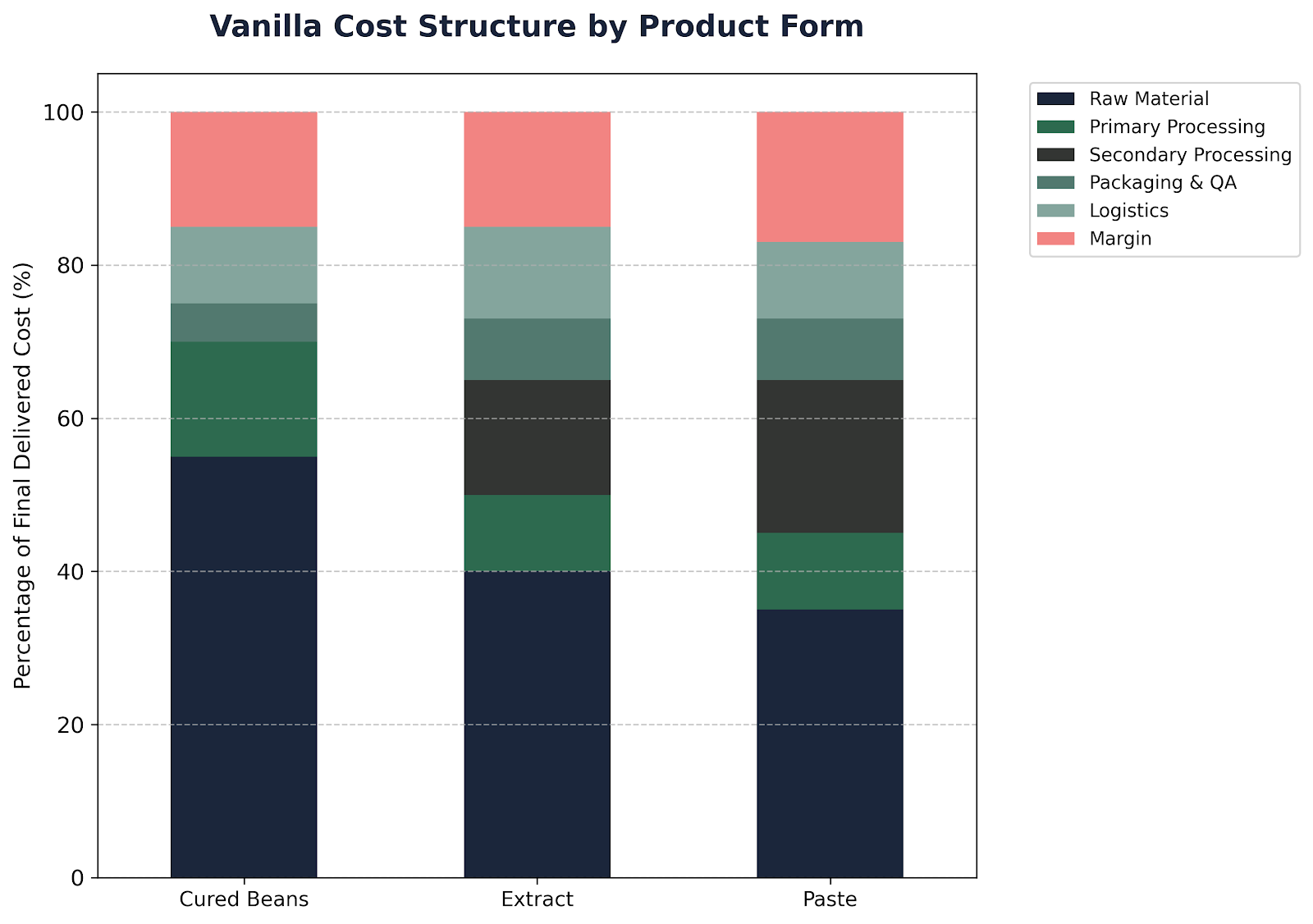
Note: These percentages are modeled estimates illustrating how costs concentrate at different stages and forms.
.png)
.png)
Other agricultural commodities (e.g., coffee, cocoa, spices) share similar dynamics: concentrated production, weather sensitivity, labor-intensive processing, and volatile markets. Applying structured chain analysis and intelligence tools mitigates risk and optimizes cost across categories.
Vanilla exemplifies how upstream labor intensity and climatic risk cascade into downstream cost volatility. Intelligently dissecting cost drivers and structural risks empowers procurement to improve accuracy in forecasting, supplier selection, and total landed cost optimization.
Q: Why is Madagascar vanilla pricing so volatile?
A: The volatility stems from high market concentration (80%) in a region vulnerable to cyclones. Additionally, the labor-intensive 6-month curing lead time creates an inevitable lag between supply shocks and market availability.
Q: What is the strategic value of sourcing from PNG?
A: Papua New Guinea (PNG) serves as a strategic hedge against Madagascar. It offers the Vanilla Tahitensis variety, which provides a unique floral profile and a cost-effective alternative to the dominant Planifolia variety.
Q: How can I optimize vanilla procurement costs in 2026?
A: Move beyond spot buying. Leverage historical price data to identify seasonal trends and diversify your sourcing to Indonesia or PNG during Madagascar’s peak volatility windows.