
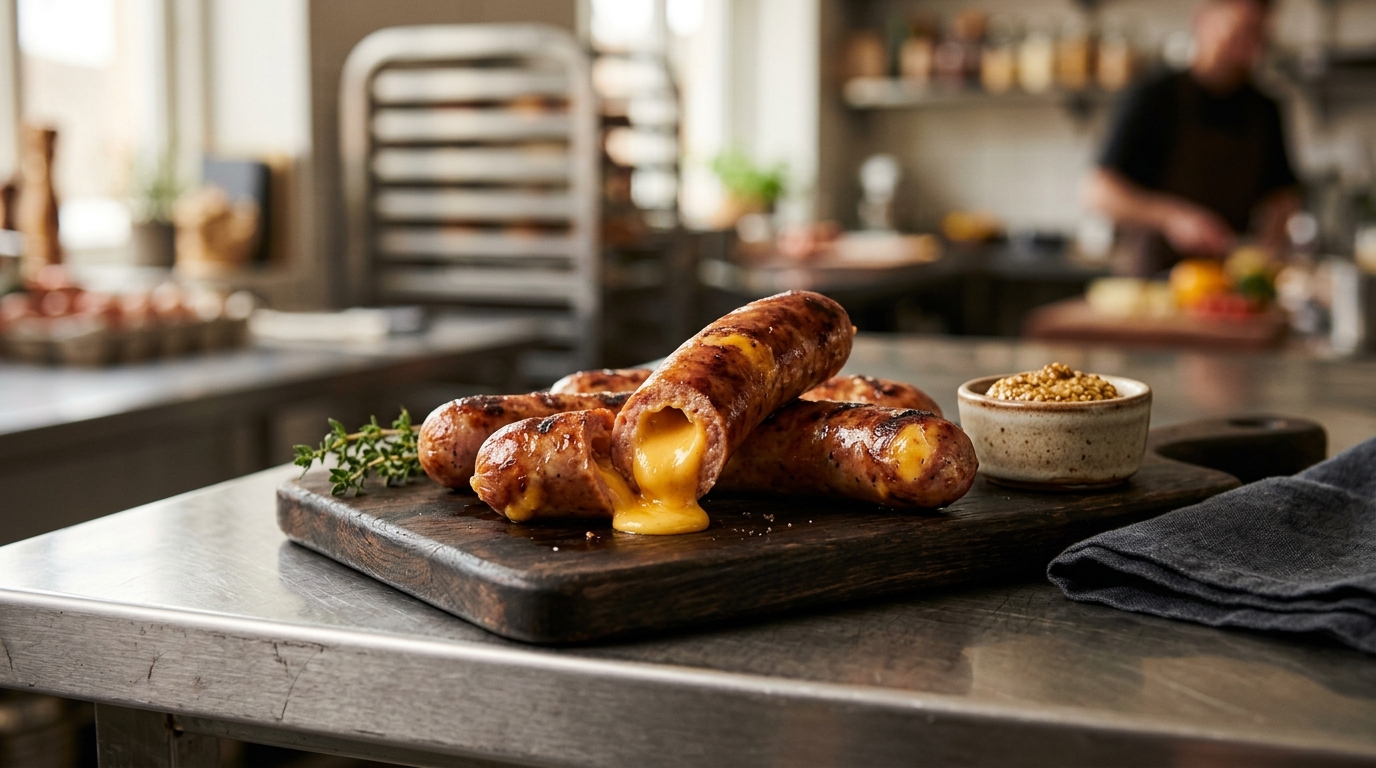
This case study shows how a North American private-label buyer stabilized cost and improved service levels for cheese-filled frankfurters by treating the category as a multi-input, high food-safety governance product—not a simple commodity sausage. The core message is transferable: separate the cost stack, qualify suppliers through RTE reality gates first, and only then let commercial competition work.
Insight: Cheese-filled frankfurters behave like a “multi-input + high-risk RTE” category—your commercial leverage is constrained by food-safety controls (post-lethality Listeria programs), cold-chain execution, and tight processing windows (cook/cool validation).
Data: In the U.S., post-lethality exposed ready-to-eat (RTE) meat and poultry products must comply with FSIS’s Listeria control requirements under 9 CFR 430.4, which sets out control “alternatives” (combinations of post-lethality treatments, antimicrobial agents/processes, and sanitation) and influences FSIS verification intensity.
Procurement Impact: If you treat cheese-filled franks like a “simple commodity sausage,” you’ll over-index on unit price and underwrite hidden costs—holds, rework, shelf-life losses, and supplier-change lead times driven by validation and audit readiness.
Insight: The winning play wasn’t “find a cheaper plant”—it was re-allocating volume across two plants, rewriting index logic across meat + dairy, and tightening the spec only where it reduced defect cost.
Data: The buyer tracked cost drivers using public reference points that are commonly used in U.S. dairy pricing mechanics—USDA AMS National Dairy Products Sales Report (NDPSR) for cheddar block pricing—plus internal protein exposure indices for hog/beef.
Procurement Impact: You get a story procurement leaders recognize: stabilize margin through better contract architecture, reduce single-site risk, and protect OTIF without paying “insurance premiums” everywhere.
Insight: The buyer’s biggest risk wasn’t price—it was a brittle supply chain where a single co-manufacturer and a single cheese format created cascading failures (production schedule slips → cold-chain expedites → shrink/claims).
Data: The company was a North American retailer/private-label operator sourcing ~3,600 MT/year of cheese-filled franks across retail multi-packs and foodservice bulk packs. Supply was split across two suppliers, but 78% of volume was effectively tied to one facility due to validated process parameters and pack-format tooling.
Procurement Impact: High concentration plus RTE constraints means disruptions don’t just create backorders—they create costly “no-good options” (spot buys that fail spec, emergency freight, or risking shelf-life).
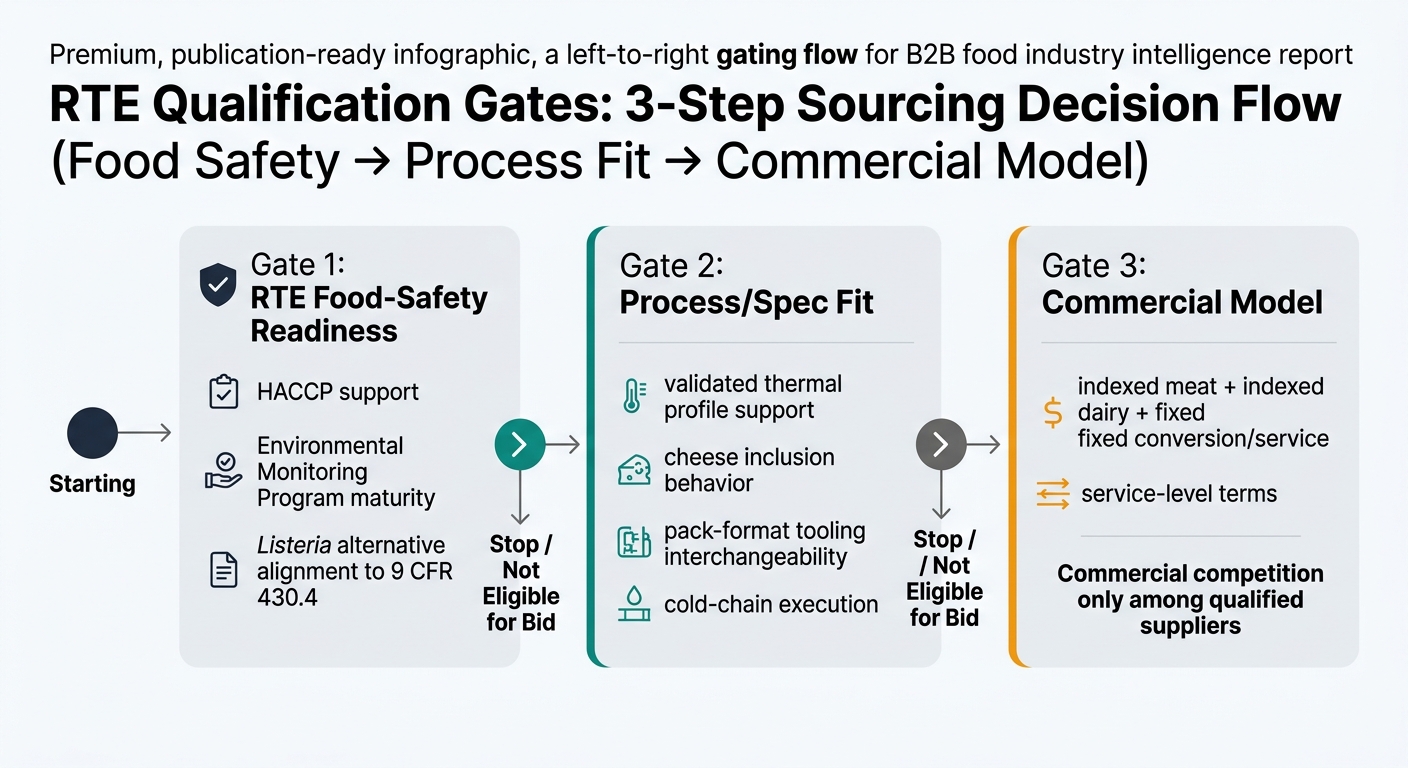
Insight: The team rebuilt the sourcing decision around three gates—(1) RTE food-safety readiness, (2) process/spec fit, (3) commercial model—so price competition happened only among truly interchangeable options.
Data: FSIS’s Listeria rule (9 CFR 430.4) requires post-lethality exposed RTE producers to implement controls under defined alternatives, and FSIS provides a dedicated compliance guideline for controlling Listeria monocytogenes in these products.
Procurement Impact: This prevents “false optionality” (quotable suppliers that can’t pass QA/food-safety gates) and shortens the time from shortlist to award.
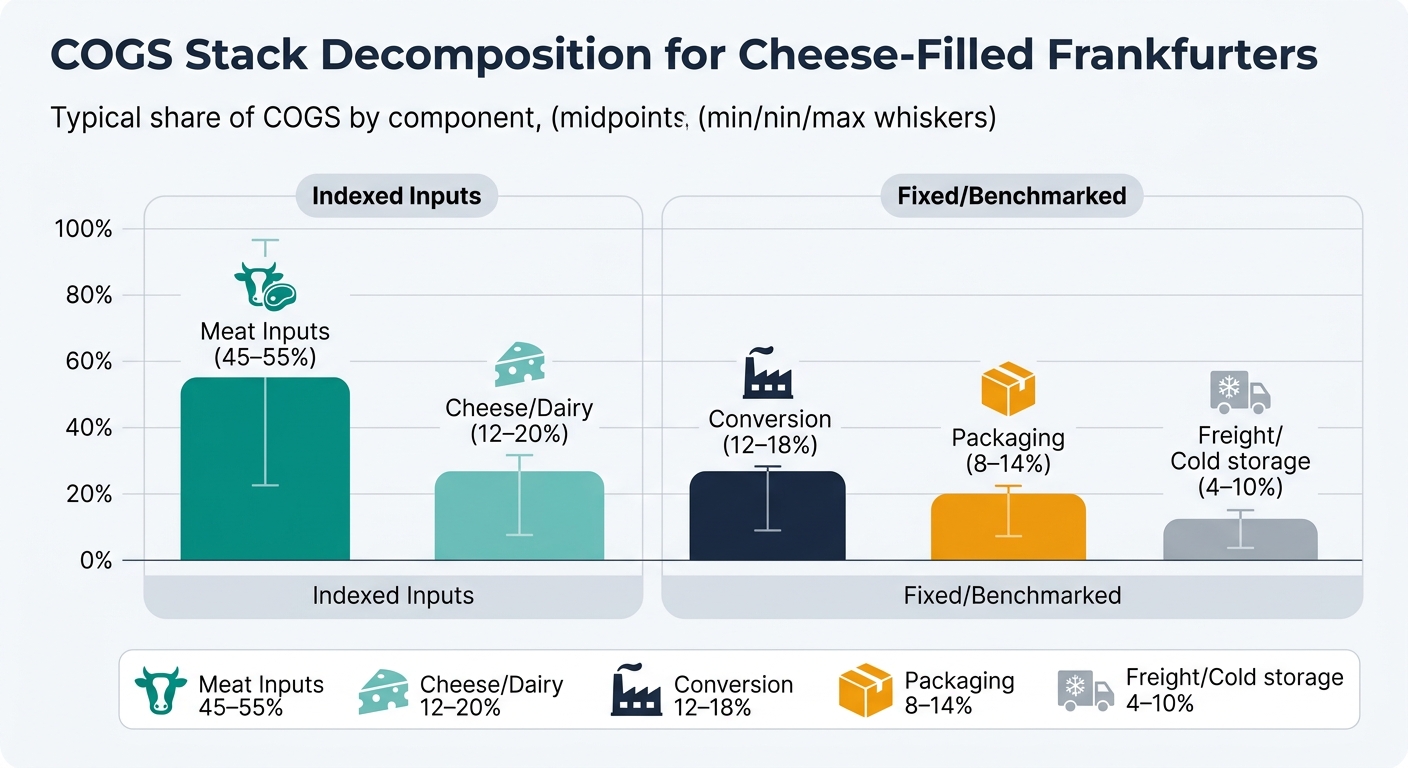
Insight: They stopped negotiating a single number and started negotiating a formula—one that matched the real cost stack.
Data: For dairy, they anchored discussions to USDA AMS NDPSR reporting (e.g., 40-lb block cheddar pricing series) that many commercial teams reference when building transparent dairy index logic.
Procurement Impact: A formula-based model reduces “who’s right” debates and shifts negotiations to controllables: conversion cost, yield, packaging, and service levels.
Insight: They made Listeria-control posture and post-lethality exposure controls non-negotiable qualifiers.
Data: 9 CFR 430.4 is structured around three alternatives; establishments producing higher-risk products like hotdogs under sanitation-only approaches can face more frequent FSIS verification than those using more robust control combinations.
Procurement Impact: You avoid awarding volume to suppliers whose sanitation-only approach increases hold/testing friction—or whose programs won’t meet your customer/retailer audit expectations.
Insight: They tightened only the parameters that were statistically linked to scrap and claims—mainly cheese format tolerance, emulsion stability markers, and pack-out temperature controls.
Data: FSIS issued revised cooking (Appendix A) and stabilization (Appendix B) guidelines in December 2021 and published notices on availability and verification expectations, reinforcing that establishments should use the updated guidance or alternative scientific support.
Procurement Impact: Small spec changes can unlock higher line stability (less blowout/void rework) and improve shelf-life consistency—often worth more than a 1–2% price concession.
Insight: They didn’t “multi-source everything.” They dual-sourced the co-manufacturing node and kept cheese supply partially shared to preserve leverage while reducing single-point failure.
Data: The team shifted 26% of volume to a second facility already running audited RTE lines and capable of the same pack formats, reducing single-facility dependency from 78% to 52%.
Procurement Impact: This is the pragmatic resilience move: fewer emergencies, less expedite freight, and faster recovery if a plant loses capacity.
Insight: They created a quarterly supplier “truth table” tying price variance, OTIF, holds, and claims to volume allocation.
Data: FSIS Directive 10,240.4 describes verification activities for establishments producing post-lethality exposed RTE products under the Listeria rule, underscoring that compliance posture drives ongoing operational scrutiny.
Procurement Impact: Volume becomes a managed lever: suppliers who protect continuity get rewarded; chronic schedule slippage becomes a commercial penalty.
Insight: The measurable gains came from reducing volatility and failure cost (expedites, claims, rework), not from chasing the lowest quoted price.
Data: Over 12 months post-implementation, the buyer tracked COGS, OTIF, defect rates, and concentration; dairy inputs were monitored against USDA AMS NDPSR reporting to validate index behavior.
Procurement Impact: This is how you defend the program internally: you can show procurement created value across finance (COGS), operations (service), and governance (risk).
| Metric | Before | After (12 months) | What actually drove it |
|---|---|---|---|
| Total COGS (SKU family) | Baseline | -6.8% | Index redesign + fewer expedites + yield/defect improvements |
| Annual spend impact | — | ≈$1.4M | Based on ~$21M category spend |
| OTIF | 92% | 97% | Dual-source capacity + lane rebalance |
| Expedite freight + rework | $410k/2Q | $150k/2Q | Fewer schedule shocks + fewer holds |
| Claims rate (cases) | 0.9% | 0.6% | Cold-chain controls + spec edits |
| Primary plant concentration | 78% | 52% | Intentional volume split |
Insight: Cheese-filled franks reward buyers who treat qualification time as a cost—and reduce it before disruption hits.
Data: FSIS’s Listeria rule plus the compliance guideline for post-lethality exposed RTE products creates real operational constraints; switching suppliers typically requires evidence review, validation alignment, and audit readiness, which can’t be compressed at the last minute.
Procurement Impact: Your “time-to-switch” is a hidden KPI. Reducing it is often worth more than a marginal price win.
Insight: The highest-ROI move is usually commercial + governance redesign (index + dual-source + service-linked allocation), not a supplier swap.
Data: USDA AMS NDPSR provides a practical public reference for cheddar blocks, while FSIS’s 9 CFR 430.4 framework and related compliance guidance/directives provide a defensible way to build qualification gates that reflect real RTE constraints.
Procurement Impact: You reduce volatility, shrink failure cost, and create defensible supplier accountability—without betting the business on a single site.
Most teams can’t answer, in one place, “Which input moved (meat vs cheese vs packaging), which supplier passed it through fastest, and what did it do to OTIF and claims by lane?” If you can’t connect those dots weekly—using consistent indices and supplier performance signals—you’ll keep renegotiating after the fact instead of timing contract resets and qualification work before the next volatility spike.
(Analyzed at: Jul, 2026)
If you’re selling into a cheese-filled frank bid right now, push your customer to contract around transparent indices (protein exposure + NDPSR-style cheddar references) and make RTE qualification evidence a front-end gate, not a back-end surprise. With 2026 protein markets still sensitive to supply swings (ERS notes tighter second-half 2026 pork production expectations) and dairy inputs tracked weekly through USDA AMS reporting, the teams that win are the ones that prevent “all-in price” arguments from turning into OTIF and claims problems later. Miss that structure and it’s easy to give back low-single-digit savings through expedite freight, holds, and shrink—often hundreds of thousands of dollars on a ~$20M program.


