INDUSTRY TRENDS

Roasted Pistachios Procurement Guide (2026): Where Price Really Comes From, Where Risk Hides, and How to Source for Resilience

Author
Team Tridge
DATE
April 8, 2026
9 min read
roasted-pistachios Cover
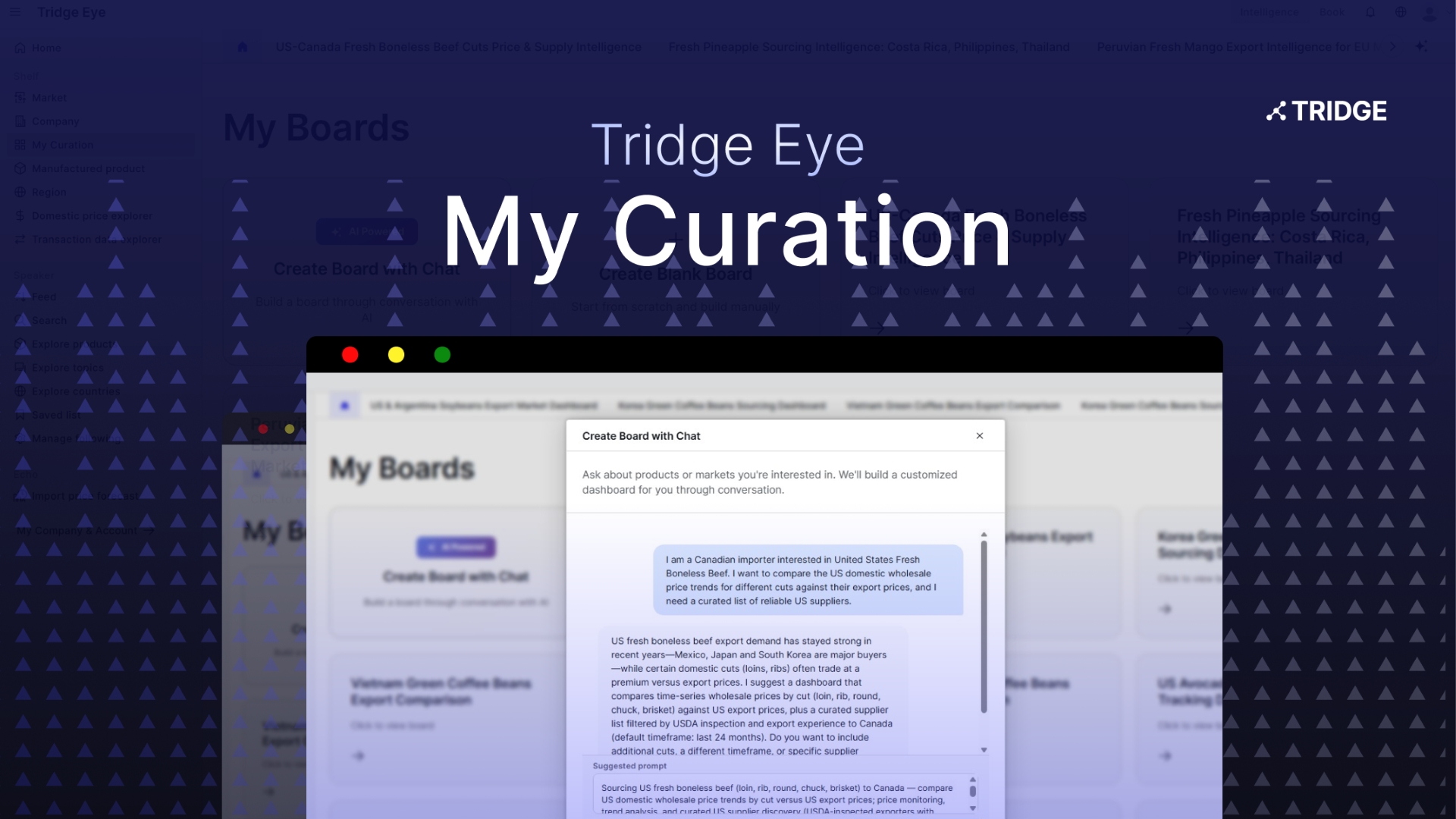
Tridge Eye Data Intelligence Solution

This report is powered by Tridge Eye Data Intelligence.

Every data point, price signal, and supply risk insight in this analysis comes from the same platform that procurement and sourcing leaders worldwide rely on daily. As you read, consider what this level of market intelligence could do for your sourcing decisions.

Explore Tridge Eye →

Roasted pistachios behave like a “simple snack” only on the surface. In procurement terms, they’re a crop-year-driven, quality-decay-sensitive ingredient where spec decisions, compliance gating, and inventory timing often matter as much as the headline nut price. This guide translates pistachio supply chain realities into practical sourcing decisions, procurement artifacts (RFQ structure, scorecards, contract clauses), and measurable outcomes (TCO, continuity, governance).

Executive Summary

  • Origin concentration is real and material: FAO-reported global production is heavily concentrated in the United States, Iran, and Türkiye (combined ~87% in 2024)—so weather, water, policy, or logistics shocks propagate quickly. [1]
100% stacked bar chart showing global pistachio production share concentration across the United States, Iran, Türkiye, and the Rest of World, with a callout noting that high origin concentration amplifies weather, policy, and logistics shocks; labeled as sourced from FAO-reported data cited in the article references.
  • U.S. concentration is effectively California concentration: California produces >99% of U.S. pistachios, creating a single-state exposure for many buyers. [2]
  • Alternate bearing drives “surprise” volatility: Pistachio trees commonly swing between “on” and “off” years, complicating annual budgeting and fixed-price contracting. [3]
  • Food safety is not theoretical: FDA investigated a Salmonella outbreak linked to pistachio cream (June 2025), reinforcing why contracts must operationalize testing, traceability, and hold/reject mechanics. [4]
  • Should-cost must be a range, not a point: Yield loss (sorting + roasting fines/breakage), compliance holds, and packaging barrier choices can decouple roasted quotes from raw market movement.
  • Best procurement leverage often comes from system design: Spec rationalization + pre-qualified dual sourcing + crop-cycle-aligned contracting typically improves both cost predictability and continuity (without claiming guaranteed savings).

Key Insights

(Analyzed at: Apr, 2026)

  • Strategy: Hold
  • Reliability: Medium
  • Potential Saving: 4% ~ 10%
  • Insight:Keep core volumes under structured coverage (primary + pre-qualified secondary) rather than chasing spot “wins.” Global supply remains structurally concentrated in the U.S./Iran/Türkiye system [1], and U.S. supply is highly California-dependent [2]. In this setup, the most repeatable near-term savings typically come from (1) tightening your should-cost range (explicit yield-loss + compliance-hold assumptions) and (2) negotiating service-level and quality-cost levers (COA cadence, defect bands, packaging oxygen control, lead-time tiers) rather than purely indexing off a raw-nut proxy.

1) What You’re Actually Buying: The Real Roasted-Pistachio Flow (Ground Truth)

Roasted pistachios look like a simple snack input, but procurement outcomes are shaped by where value is added and where risk concentrates.

Typical supply chain flow (what matters to sourcing):

Flowchart diagram of the roasted pistachios supply chain from Orchard & Harvest through Hulling & Drying, Storage & Lot Management, Shelling/Sorting/Grading & Testing, Roasting & Seasoning, Packaging & QA Release, and Logistics & Distribution, with short cost-driver and risk tags for each step and subtle highlights on make-or-break steps such as hull/dry, sorting/testing, and packaging.
  1. Orchard production & harvest (in-shell pistachios)
  2. Concentrated supply base: the U.S., Iran, and Türkiye account for a very large majority of global output (FAO-reported; ~87% combined in 2024). [1]
  3. In the U.S., pistachio production is overwhelmingly California-based (category is exposed to a single state’s agronomic and water realities). [2]
  4. Hulling & drying (hours after harvest)
  5. This is where mold/mycotoxin risk is either prevented or “locked in.” (Procurement implication: this is a supplier capability gate, not a clerical step.)
  6. Storage & lot management (inventory carry across the year)
  7. Pistachios are harvested seasonally but sold year-round; working capital and storage conditions become real cost drivers.
  8. Shelling, sorting, grading (kernels vs. in-shell snack grade)
  9. Optical sorting, defect removal, and testing are where “commodity” becomes “spec-compliant.”
  10. Roasting & seasoning (dry roast vs. oil roast; salted/flavored)
  11. Roasting is a manufacturing step with energy, yield loss (breakage/fines), and sensory consistency implications.
  12. Packaging & QA (bulk cartons vs. retail-ready; nitrogen flush/vacuum)
  13. Packaging is not cosmetic: it’s a shelf-life control against oxidation/rancidity.
  14. Export/import logistics & distribution
  15. Ambient shipping is common, but heat exposure in transit/warehousing accelerates quality degradation.

Assumption (so you can calibrate the analysis):

This report targets a mid-to-large buyer sourcing roasted pistachios as (a) bulk ingredient for snack/food manufacturing or (b) finished snack input for private label/co-man. The logic holds across both, but cost ratios shift by pack format and brand requirements.

Trade-off to keep in view: tighter roast/sensory specs and packaging requirements improve brand consistency, but they shrink the qualified supplier pool and can silently create single-source risk.

2) Where the Money Really Goes: Cost & Margin Build-Up by Node (and Why It’s Not Just “Nut Price”)

Key insight: In roasted pistachios, raw nut value dominates, but procurement performance is often won or lost in the “middle” (sorting/QA, roasting yield loss, packaging barrier performance, and inventory carry).

2.1 Upstream / Orchard & Harvest (Raw In-Shell)

What procurement should internalize

  • Supply is structurally concentrated in a few origins; your risk is not only “supplier risk,” it’s often origin-system risk (weather, water, labor, phytosanitary).
  • Pistachios have an alternate-bearing tendency (“on/off” years), which adds cyclicality to availability and pricing discussions. [3]

Primary cost drivers

  • Water/irrigation energy, orchard labor, pest pressure, yield variability
  • Farmgate price sensitivity to crop size and quality (open-shell rate, defects)

Margin reality

  • Grower economics are capital-intensive (long-lived orchards). When supply tightens, upstream captures a large share of the upside.

2.2 Primary Processing (Hulling, Drying, Initial Sorting)

What procurement should internalize

  • This is the first “make-or-break” food safety step: rapid post-harvest handling reduces mold growth and downstream compliance risk.
  • Any weakness here shows up later as lot rejection, downgrades, or heavy sorting cost.

Primary cost drivers

  • Drying energy, throughput/capacity constraints during harvest peak
  • Lot segregation, initial QA sampling/testing

Margin reality

  • Processors with reliable capacity during peak harvest can command better terms in tight years.

2.3 Storage & Inventory Carry (Quality Preservation + Working Capital)

What procurement should internalize

  • Pistachios are stored and released over months; storage conditions become a hidden “quality tax.”

Primary cost drivers

  • Warehouse cost, pest control programs, shrink, financing/working capital

Margin reality

  • Handlers who can carry inventory (balance sheet strength) can arbitrage timing; buyers who don’t plan get exposed to spot pricing.

2.4 Shelling, Sorting, Grading & Compliance Testing

What procurement should internalize

  • “Roasted pistachios” are often priced as if roasting is the main value-add; in practice, sorting + compliance is frequently the bigger differentiator.
  • Compliance thresholds (e.g., for mycotoxins) can differ by destination and customer standard; testing/holds can drive lead time variability.

Primary cost drivers

  • Optical sorting, metal detection/X-ray (where used), labor, yield loss from defect removal
  • Testing and rework/hold costs

Margin reality

  • High-performing graders monetize capability (lower defects, fewer claims, more consistent lots).

2.5 Secondary Processing (Roasting, Salting/Seasoning)

What procurement should internalize

  • Roasting creates sensory value but also introduces manufacturing variability: roast curve, salt adhesion, breakage, and moisture control.
  • Energy cost volatility matters (gas/electric).

Primary cost drivers

  • Energy, line efficiency, seasoning inputs, yield loss (fines/breakage)

Margin reality

  • Roasters with proven sensory repeatability and low breakage can price above commodity roasters.

2.6 Packaging & QA Release (Barrier Performance = Shelf-Life Insurance)

What procurement should internalize

  • Packaging is a shelf-life control; oxygen management (e.g., nitrogen flushing) is commonly used to slow oxidation.

Primary cost drivers

  • High-barrier films, nitrogen/vacuum systems, labeling compliance, finished goods QA

Margin reality

  • Retail-ready formats carry higher packaging and co-man margin; bulk cartons shift cost back toward raw + compliance.

2.7 Logistics, Import/Export, Distribution

What procurement should internalize

  • Transit time variability affects freshness and customer complaints (rancidity perception).
  • Port congestion and inland trucking variability show up as OTIF misses and expediting cost.

Primary cost drivers

  • Ocean freight, inland freight, insurance, duties/tariffs where applicable, brokerage

Margin reality

  • Importers/distributors price in financing, risk, and service level.

Product-level cost breakdown (illustrative, to support should-cost conversations)

These are modeled ratios to show where cost concentrates. Actual numbers vary by origin, crop year tightness, spec strictness, pack format, and customer QA requirements.

A) Bulk Roasted Kernels (10–25 kg cartons, ingredient use)

Supply Chain Node Cost Ratio (% of delivered cost) Notes
Orchard raw nut value 55% Dominant driver; moves with crop size/quality
Primary processing (hull/dry) 6% Throughput + energy
Storage & inventory carry 7% Working capital + shrink
Shelling/sorting/testing 12% Compliance + yield loss
Roasting/seasoning 7% Energy + breakage
Packaging & QA release 4% Bulk packaging
Logistics/import/distribution 9% Freight + service level

B) Roasted In-Shell (salted/unsalted, bulk for foodservice)

Supply Chain Node Cost Ratio (% of delivered cost) Notes
Orchard raw nut value 60% In-shell snack grade premiums
Primary processing (hull/dry) 6% Peak capacity matters
Storage & inventory carry 6% Quality preservation
Sorting/grading/testing 10% Open-shell rate, defects
Roasting/salting 7% Brining/salt adhesion variability
Packaging & QA release 3% Often simpler than retail
Logistics/import/distribution 8% Freight + OTIF

C) Retail-Ready Roasted Pistachios (pouches/jars, private label/co-man)

Supply Chain Node Cost Ratio (% of delivered cost) Notes
Orchard raw nut value 40% Still largest component but diluted by packaging & downstream margin
Primary processing (hull/dry) 5%
Storage & inventory carry 6%
Sorting/grading/testing 10% Claims/chargebacks risk
Roasting/seasoning 6% Sensory spec tightness
Packaging & QA release 13% Barrier films, N2 flush, labeling
Logistics/import/distribution 8%
Co-man/wholesale margin 12% Service level + complexity

3) One Structural Fact That Explains Most “Surprises”

Structural fact: Global pistachio supply is concentrated, and crop-year dynamics plus trade/compliance friction can move availability faster than your annual contracting cycle.

  • The U.S., Iran, and Türkiye are dominant producers; concentration means weather or policy shocks in one region propagate quickly. [1]
  • In the U.S., supply concentration is effectively California concentration (most buyers underestimate the single-state exposure). [2]

Procurement implication: if your contracting calendar ignores crop cycle timing, you’ll repeatedly buy at the wrong moment (either over-committing before quality is known, or waiting until everyone else is chasing compliant lots).

4) The Critical Insight: Why Raw Pistachio Markets and Roasted Quotes Don’t Move in Sync

Procurement teams often assume “roasted pistachios = raw pistachios + a fixed conversion.” In reality, roasted pricing can decouple due to four mechanisms:

  1. Compliance gating creates a two-tier market
  2. Lots that meet the buyer’s compliance/QA gates price differently than lots that do not; downstream processors price in rejection/hold risk.
  3. Yield loss is not stable
  4. Breakage, defect removal, and roasting fines vary by lot quality and roaster setup—so conversion cost is not constant.
  5. Packaging and shelf-life protection can dominate (retail-ready)
  6. High-barrier packaging and oxygen management add real cost and reduce claims.
  7. Inventory carry and service level
  8. A supplier offering short lead times in a tight period is selling you balance sheet + risk absorption, not just nuts.

Practical procurement artifact: build your should-cost as a range (best-case vs. worst-case yield loss + compliance hold cost), not a single-point number.

5) How Procurement Teams Typically Get This Wrong (and the Avoidable Consequences)

  1. They over-spec the roast/sensory profile too early
  2. Consequence: supplier pool collapses → single-source dependency → weaker leverage.
  3. They benchmark only unit price, not total cost-to-serve
  4. Consequence: “cheaper” supply creates higher claims, shorter shelf life, expediting, and line disruptions.
  5. They treat food safety as a QA-only topic
  6. Consequence: procurement signs contracts without enforceable testing/COA, hold/reject, and traceability clauses.
  7. They dual-source on paper but not in operational reality
  8. Consequence: backup supplier exists, but lead times/MOQs/spec differences make switching impossible during disruption.

Real-world reminder: pistachio products have been involved in Salmonella investigations/recalls (example: FDA outbreak investigation tied to pistachio cream in June 2025). [4]

6) What an Intelligence-Driven Workflow Changes (Decision by Decision)

This section is framed around the decisions a procurement manager must make, not tool features.

Decision A: “Who belongs in my qualified supplier pool by spec and pack format?”

Use intelligence to:

  • Build a supplier universe segmented by:
  • Form: in-shell vs. kernels; whole vs. pieces
  • Process: dry roast vs. oil roast; seasoning capabilities
  • Packaging: nitrogen flush/vacuum; bulk vs. retail-ready
  • Certifications: organic/kosher/halal; GFSI schemes (where required)

Procurement artifact: a fit-gap scorecard (spec compliance, lead time, MOQ, QA system maturity proxies, logistics lane options).

Outcome metrics:

  • Qualified supplier count by spec tier
  • Time-to-longlist and time-to-RFQ cycle

Decision B: “Is my incumbent price ‘market’ or ‘supplier margin’?”

Use intelligence to:

  • Separate market movement (crop cycle/origin tightness) from supplier-specific pricing
  • Create a should-cost narrative with explicit drivers:
  • Raw nut index proxy (origin/crop year)
  • Sorting/testing intensity
  • Roast yield loss range
  • Packaging barrier cost
  • Freight + service level

Procurement artifact: negotiation brief + indexation logic options (fixed, indexed with collars, volume tiers).

Outcome metrics:

  • Price variance vs. market proxy
  • Savings realization vs. inflation (governance-corrected)

Decision C: “How do I dual-source without breaking QA and operations?”

Use intelligence to:

  • Identify alternates before disruption, then align cross-functionally on:
  • Spec flex points (size/count range, acceptable defect tolerances)
  • Sensory tolerance bands (roast color range, salt % range)
  • Packaging equivalency requirements

Procurement artifact: dual-source playbook with triggers (OTIF drop, lead time extension, quality incident thresholds).

Outcome metrics:

  • Switch-over lead time
  • % volume covered by pre-qualified secondary
  • Concentration risk (share of top supplier/origin)

Trade-off (explicit): broader spec bands increase optionality and resilience, but may require tighter incoming QC and more robust sensory approval processes.

7) Strategic Use Cases Procurement Leaders Can Deploy in Roasted Pistachios

  1. Cost volatility control without breaking supply
  2. Use case: choose contract structure (fixed vs. indexed) aligned to crop-cycle risk
  3. Output: indexation clause options + volume commitment tiers
  4. Supplier portfolio design (primary/secondary/spot)
  5. Use case: avoid “single roaster/packer” dependency
  6. Output: coverage map by capability and lane
  7. Spec rationalization to expand the supplier pool
  8. Use case: reduce spec creep that quietly raises cost
  9. Output: spec lever list (what can flex without harming brand)
  10. Risk monitoring tied to actions (not dashboards)
  11. Use case: origin/logistics/food safety signals trigger inventory or sourcing mix moves
  12. Output: watchlist + mitigation prompts + decision log
  13. Governance and audit-ready decisioning
  14. Use case: leadership needs proof of compliance and rationale
  15. Output: KPI definitions, supplier scorecards, documented approvals

8) Why This Matters Beyond Pistachios (Examples Your Team Likely Also Buys)

Roasted pistachios are a clean example of a broader procurement truth: in food categories with compliance gating and quality decay over time, “price-only sourcing” reliably underperforms.

Comparable categories (same procurement pattern):

  • Almonds (roasted or blanched): defect sorting, oxidation/shelf-life packaging economics
  • Cashews (roasted/seasoned pieces): breakage yields, grading (W240/W320 vs. pieces), roasting yield loss and sensory consistency
  • Dried fruits (raisins, dates): moisture management, contamination/foreign material controls, lot variability and claim risk
  • Cocoa ingredients (powder/butter): origin concentration, processing margins, compliance and traceability demands

Transferable procurement lesson: build category strategies around (1) where quality is created, (2) where risk gates the market, and (3) what specs control supplier optionality.

9) Why This Is a Powerful Procurement Example (What It Proves in One Category)

Roasted pistachios demonstrate—clearly and measurably—how intelligence improves procurement outcomes:

  • Cost: should-cost becomes defendable because you can attribute price to raw value, compliance effort, yield loss, packaging, and service level.
  • Risk: resilience improves when dual-sourcing is built around capability and spec equivalency, not just “another vendor name.”
  • Governance: decisions become auditable (why a supplier was selected, what risks were accepted, what mitigations exist).
  • Speed: cycle time drops when supplier discovery, benchmarking, and risk monitoring are structured as repeatable workflows.

Bottom line: in roasted pistachios, the winning procurement move is rarely “negotiate harder.” It’s usually: design the supplier/spec/contract system so you’re not forced into the market at its worst moment.

Tridge Eye Data Intelligence Solution

Make Faster, Data-Driven Sourcing Decisions

The insights in this report are just the starting point. Tridge Eye is the data intelligence solution that gives procurement and sourcing leaders real-time market signals, price benchmarks, and supply risk alerts — so you can act before the market moves.
Explore Tridge Eye →

References

  1. en.wikipedia.org
  2. incnutfruit.nimiaweb.com
  3. americanpistachios.org
  4. fda.gov
Subscribe
By subscribing you agree to with our Privacy Policy and provide consent to receive updates from our company.
Thank you! Your submission has been received!
Oops! Something went wrong while submitting the form.
Subscribe to receive the latest blog posts, updates, promotions, and announcements from Tridge.