INDUSTRY TRENDS

Peanut Butter Procurement (2026 Guide): Cost, Risk, and the Real Levers Beyond Peanut Price

Author
Team Tridge
DATE
April 6, 2026
9 min read
peanut-butter Cover
Tridge Eye Data Intelligence Solution

This report is powered by Tridge Eye Data Intelligence.

Every data point, price signal, and supply risk insight in this analysis comes from the same platform that procurement and sourcing leaders worldwide rely on daily. As you read, consider what this level of market intelligence could do for your sourcing decisions.

Explore Tridge Eye →

Peanut butter looks like a simple, shelf-stable SKU. In practice, procurement outcomes are usually decided by qualification gates (especially aflatoxin controls and allergen governance), approved capacity (roasters/co-mans), and packaging continuity (jar/lid/liner/label)—often more than by the headline peanut price. This guide is written for procurement and sourcing leaders who know how to run a category, but are newer to peanut-butter-specific constraints.

Executive Summary

  • Aflatoxin is a supply-availability constraint, not just a QA detail. In the U.S., FDA’s action level for total aflatoxins in peanuts and peanut products is 20 ppb; exceeding it can make lots non-usable for many programs. [1]
  • EU limits can be materially tighter for peanuts/groundnuts intended for direct human consumption (commonly referenced as B1 ≤ 2 µg/kg and total ≤ 4 µg/kg in Regulation (EU) 2023/915 tables), which can shrink eligible supply for multinational programs. [2]
  • “Dual source” can still be correlated risk if both suppliers depend on the same origin, the same sheller network, or the same packaging subcomponents.
  • Packaging is a frequent hidden bottleneck (jar/lid/induction liner/labels). Treat packaging as part of the resilience system, not a low-criticality indirect. (Market sources describe induction-liner supply as moderately concentrated with a few major players—useful as a risk prompt, not a precise fact base.) [3]
  • Cost surprises tend to come from exception costs (expedites, downtime, OTIF/chargebacks) rather than from baseline COGS. Retail programs commonly enforce performance financially (OTIF/label/ASN compliance), so reliability affects TCO. [4]

Key Insights

(Analyzed at: Apr, 2026)

  • Strategy: Hold
  • Reliability: Medium
  • Potential Saving: 4% ~ 10%
  • Insight: For the next 2–3 quarters, prioritize risk-adjusted TCO over aggressive unit-price chasing: (1) lock packaging continuity (jar/lid/induction liner) with dual-qualified specs and safety stock where lead times are long; (2) tighten aflatoxin governance into award criteria (COA completeness, testing cadence, reconditioning capability); (3) build a true second path by validating that alternates do not share the same origin/sheller/packaging dependencies. This typically reduces expedites, downtime, and retail penalties more reliably than trying to “time” peanut price.

1) What the Peanut-Butter Supply Chain Actually Looks Like (Ground Truth)

A left-to-right peanut butter supply chain flow with 6 nodes (upstream peanuts, primary processing, secondary processing, packaging & QA release, logistics & distribution, end-market requirements) and highlighted qualification gates for aflatoxin controls, allergen governance, and packaging continuity, with icons and color-coded risk hotspots at primary processing and packaging/QA.

Peanut butter looks like a simple SKU, but procurement outcomes are shaped by a multi-node chain where food safety (aflatoxin), allergen governance, and packaging availability can become the true constraints—often more than the peanut price itself.

Typical supply chain flow (what you buy vs. where risk sits):

  1. Upstream peanuts (farmer stock / in-shell / shelled kernels)

  2. Seasonal crop economics; quality starts here (moisture management, foreign material, kernel damage).
  3. Weather at harvest and drying discipline can materially change aflatoxin risk.
  4. Primary processing (shelling / cleaning / sizing / sorting / blanching)

  5. Converts peanuts into food-grade kernels.
  6. Aflatoxin testing + segregation is a gating function; “failed lots” get diverted, reworked/reconditioned (where allowed), or downgraded.
  7. Secondary processing (roasting + grinding into paste / peanut butter manufacturing)

  8. Roasting defines flavor; grinding defines viscosity and texture.
  9. “Natural” vs. “stabilized” is a formulation and process choice, not just a marketing claim.
  10. Packaging & QA release (jars, lids, induction seals, labels; lot coding; metal detection)

  11. Packaging is often the hidden long-lead item.
  12. QA release is where aflatoxin documentation, traceability, and allergen label controls become non-negotiable.
  13. Logistics & distribution (ambient, but temperature-sensitive for quality)

  14. Not a cold chain, but heat exposure impacts oil separation, texture, and complaint rates.
  15. End market requirements (retail vs. foodservice vs. industrial)

  16. Retail and private label add service-level requirements (OTIF/chargebacks) and spec rigidity. [4]

Procurement implication: You are not only buying “peanut butter.” You are buying a controlled system: approved origins/lots + validated controls + allergen segregation + packaging continuity + service reliability.

2) Where the Money Really Goes: Cost & Margin Build-Up by Node

Key insight: Peanut butter’s total landed cost is usually dominated by (a) peanut input economics and yield loss across sorting/roasting, but the biggest surprise drivers in programs are often packaging (jar/lid/seal) and service failure costs (expedites, downtime, penalties). When disruptions hit, the binding constraint shifts from “price” to approved capacity.

Below is a procurement-oriented breakdown of cost drivers at each node.

2.1 Upstream / Raw Material (Peanuts)

What matters operationally

  • Peanuts are seasonal; supply planning often requires inventory carry.
  • Grade distribution matters (sound mature kernels, damage, foreign material). Small quality shifts can create big downstream yield losses.

Cost drivers

  • Farm economics (yield, irrigation, inputs)
  • Grade/quality premiums
  • Carrying cost if you buy forward / hold inventory

Risk flags

  • Weather during harvest/drying increases mold pressure → aflatoxin risk
  • Origin concentration (single state/region or single exporting country)

Regulatory anchor (US): FDA action level for total aflatoxins in peanuts/peanut products marketed for human consumption is 20 ppb. [1]

2.2 Primary Processing (Shelling / Sorting / Blanching)

What matters operationally

  • This is where “food-grade eligibility” is often determined.
  • Sorting and physical removal of defective kernels is a core control step; it also creates yield loss.

Cost drivers

  • Yield loss (shells + rejects + defect removal)
  • Testing, sampling, lab turnaround, reconditioning cycles
  • Storage and segregation infrastructure

Risk flags

  • Aflatoxin exceedances can force rework/reconditioning or diversion, tightening available supply.
  • Documentation quality (COAs, lot traceability) becomes a retailer/QA gating issue.

Governance nuance: In the EU, maximum levels can be materially tighter than U.S. action levels (limits vary by product form and intended use; Regulation (EU) 2023/915 tables commonly reference B1 ≤ 2 µg/kg and total ≤ 4 µg/kg for groundnuts intended for direct human consumption, with higher limits for lots intended for sorting/physical treatment). [2]

2.3 Secondary Processing (Roasting → Paste → Finished Peanut Butter)

What matters operationally

  • Roasting is your flavor signature; changes in roaster type/profile can create “same spec on paper, different in sensory.”
  • Grinding affects rheology (viscosity) and oil separation. This becomes critical when switching suppliers/co-mans.
  • Stabilizers are common in many commercial “no-stir” products; typical usage is often described in the low single-digit percent range (commonly around ~1–2% depending on formula/claims), which affects texture and shelf stability and can trigger label/customer-approval implications. [5]

Cost drivers

  • Energy (roasting), labor, sanitation downtime
  • Formulation inputs (salt/sugar/oils/stabilizers)
  • Changeovers (especially when managing multiple SKUs and allergen protocols)

Risk flags

  • Co-man capacity rigidity (schedule windows, minimum run sizes)
  • Allergen segregation and sanitation validation (procurement cannot “price-shop” around this)

2.4 Packaging & QA Release (Jar/Lid/Seal/Label + Food Safety)

What matters operationally

  • Packaging is frequently a single point of failure: jar, lid, or induction seal liner constraints can stop production even when peanuts are available.
  • Label governance is high-stakes because peanut butter is a major allergen category.

Cost drivers

  • Jar (glass/PET/HDPE), lid/closure, induction seal liner
  • Artwork/version control, regulatory statements, retailer label rules
  • QA release costs (testing, holds, documentation)

Risk flags

  • Packaging input volatility (resins, energy for glass)
  • Concentration risk in certain packaging subcomponents (liners/foils) can increase lead-time uncertainty; treat this as a reason to dual-qualify and hold risk buffers rather than relying on any single market-size statistic. [3]

2.5 Logistics & Distribution (Inbound + Outbound)

What matters operationally

  • Ambient product, but heat exposure drives quality complaints (oil separation, texture hardening).
  • Service reliability often drives total cost via expedites and retailer penalties.

Cost drivers

  • Inbound freight (kernels/paste), outbound finished goods
  • Warehousing and working capital
  • Expedites during disruptions

2.6 End-Market Margin Stack (Wholesale / Retail / Private Label)

What matters operationally

  • Retail/private label programs can impose OTIF requirements and chargebacks; the “cheapest” supplier can be the highest TCO. [4]

Cost drivers

  • Distributor/retailer margin
  • Promotions and compliance costs
  • Penalties/chargebacks from service misses

Product-Level Cost Breakdown (Illustrative, Procurement-Oriented)

Stacked bar chart showing delivered cost concentration by node for (A) Retail peanut butter 16 oz stabilized, (B) Natural peanut butter 16 oz no stabilizer, and (C) Industrial peanut paste bulk, using the illustrative ratios from the tables and noting that actuals vary by origin, spec, pack, and channel.

These are modeled ratios to show where cost tends to concentrate. Actuals vary by origin, spec (natural vs stabilized), pack format, contract terms, and channel.

A) Retail Peanut Butter (16 oz jar, stabilized)

Supply Chain Node Cost Ratio (% of Delivered Cost) What Typically Moves It
Raw peanuts (farm/kernels economics) 30% Crop size/quality, origin premiums
Primary processing (shell/sort/blanch + testing + yield loss) 12% Sorting intensity, aflatoxin controls
Secondary processing (roast/grind/formulate) 16% Energy, labor, changeovers
Packaging & QA (jar/lid/seal/label + release) 18% Jar/closure pricing, liner lead times
Logistics & distribution 9% Freight, warehousing, expedites
Wholesale/retail margin & program costs 15% Promotions, chargebacks, compliance

B) “Natural” Peanut Butter (16 oz jar, no stabilizer)

Supply Chain Node Cost Ratio (% of Delivered Cost) What Typically Moves It
Raw peanuts 32% Quality premiums for flavor consistency
Primary processing 13% Higher sensitivity to defect removal
Secondary processing 15% Grinding spec control; less formulation cost
Packaging & QA 19% Often more premium positioning/pack choices
Logistics & distribution 9% Temperature exposure risk management
Wholesale/retail margin & program costs 12% Brand positioning; promo cadence

C) Industrial Peanut Paste (bulk pail/drum, as ingredient)

Supply Chain Node Cost Ratio (% of Delivered Cost) What Typically Moves It
Raw peanuts 40% Kernel markets; origin concentration
Primary processing 16% Testing + segregation + yield
Secondary processing 18% Roast/grind energy + throughput
Packaging & QA 7% Bulk packaging is cheaper per lb
Logistics & distribution 10% Heavier shipments; inbound/outbound lanes
Supplier margin / overhead 9% Contract structure, volume commitments

3) The Structural Fact Procurement Should Anchor On

Aflatoxin control is not a “QA detail”—it is a supply-availability constraint.

  • The U.S. regulatory reference point is FDA’s 20 ppb action level for total aflatoxins in peanuts and peanut products for human consumption. [1]
  • The EU framework can be tighter depending on product form and intended use, which can shrink the eligible supplier/origin pool for multinational programs. [2]

What this means for procurement: If you only negotiate price, but you don’t actively manage eligible lots + documentation + alternate approved capacity, you can still end up paying more via emergency buys, downtime, or delist risk.

4) The Critical Insight: Why Peanut (and Peanut Butter) Prices Don’t Explain Your Real Exposure

Peanut butter cost and service risk often disconnect from “peanut price” for three reasons:

  1. Eligibility shrinkage: When aflatoxin risk rises, supply doesn’t just get expensive—it can become non-qualifying.
  2. Yield and rework: Sorting intensity and reconditioning cycles change effective cost per usable pound.
  3. Packaging and capacity become binding constraints: A co-man slot, a jar/lid shortage, or an induction seal liner delay can halt output even in a “normal” peanut market.

A practical way to frame it for management:

  • Peanut price drives baseline COGS.
  • Aflatoxin + packaging + co-man capacity drive continuity and exception cost (expedites, downtime, penalties).

5) Where Procurement Teams Commonly Misstep (Especially When New to Peanut Butter)

  1. Treating peanut butter like a simple commodity

  2. Result: underinvesting in qualification depth (sensory + rheology + shelf stability + documentation).
  3. Assuming “dual source” equals resilience

  4. If both suppliers rely on the same origin, same sheller network, or the same packaging sub-suppliers, you still have correlated risk.
  5. Ignoring packaging as a category strategy input

  6. Jar/lid/liner lead times and supplier concentration are often not governed like “critical” materials until a stoppage happens.
  7. Underestimating time-to-switch

  8. For peanut butter, switching is gated by QA, allergen programs, customer approval, and line trials—not just commercial terms.

6) What an Intelligence-Driven Approach Changes (Decision-by-Decision)

This is not about having more data—it’s about changing which decisions you can defend and execute earlier.

Decision A: “Do we need a true second source—or just a backup quote?”

Intelligence that changes the outcome:

  • Supplier segmentation by: origin exposure, aflatoxin controls, certifications, capacity signals, allergen segregation posture.
  • Network concentration mapping (shared shellers, shared packaging, shared co-man sites).

Outcome shift: From “two suppliers on paper” → to two independent supply paths.

Decision B: “When do we lock contracts, and what should float?”

Intelligence that changes the outcome:

  • Cost driver decomposition (peanuts vs packaging vs energy vs freight).
  • Contract structure playbooks: index-linked components, packaging pass-through rules, service-level clauses.

Outcome shift: Lower volatility exposure without creating supplier failure risk.

Decision C: “Which alternates should QA qualify first?”

Intelligence that changes the outcome:

  • Maintain a pre-qualified alternate bench segmented by spec (natural/stabilized, grind, roast profile), pack format (jar/pail), and compliance gates.

Outcome shift: Reduced time-to-switch and fewer emergency buys.

7) Strategic Use Cases Procurement Leaders Can Operationalize

  1. Resilience portfolio design (peanuts + co-man + packaging as one system)

  2. Build a portfolio view: approved suppliers, sites, origins, packaging dependencies.
  3. KPI examples: supplier concentration, % volume with qualified alternates, time-to-recover.
  4. Aflatoxin governance without slowing the business

  5. Define procurement-award rules tied to QA thresholds (COA completeness, testing cadence, corrective action responsiveness).
  6. Align escalation paths across Procurement–QA–Operations.
  7. Co-man capacity risk management

  8. Track capacity signals and schedule rigidity.
  9. Contract for service: minimum slot commitments, surge clauses, penalties aligned to your customer penalties.
  10. Packaging continuity program (jar/lid/liner)

  11. Dual-source closures/liners where possible.
  12. Pre-approve alternates (equivalency testing) to avoid label/pack requalification during disruption.
  13. Total Cost of Ownership (TCO) negotiation

  14. Include expected exception cost: expedites, downtime, chargebacks.
  15. Use benchmarks to separate “low unit price” from “low delivered risk-adjusted cost.”

8) Why This Matters Beyond Peanut Butter (Adjacent Categories You Likely Buy)

Peanut butter is a clean example of a broader procurement truth: food categories fail at their constraints, not at their averages.

Similar patterns show up in:

  • Tree-nut butters (almond/cashew): allergen segregation + origin concentration + sensory drift when switching suppliers.
  • Chocolate spreads / tahini: viscosity/texture specs + oil separation + packaging compatibility issues.
  • Snack bars with nut inclusions: supplier approval lists and allergen controls can tighten suddenly after an incident.
  • Spices and dried ingredients: mycotoxin and contaminant compliance can create “eligible supply shrinkage” similar to aflatoxin in peanuts.

The transferable procurement lesson:

  • Build intelligence around qualification gates, correlated dependencies, and time-to-switch, not just price.

9) Why Peanut Butter Is a Powerful Proof Case for Intelligence-Led Procurement

Peanut butter procurement forces teams to manage cost + continuity + governance simultaneously:

  • Cost: peanuts, packaging, energy, freight—all moving parts.
  • Risk: aflatoxin limits and documentation (with U.S. and EU regimes that can differ). [1]
  • Resilience: co-man capacity and packaging availability can be the real bottlenecks.
  • Governance: allergen controls and traceability are board-level reputational risks.

If your organization can build a repeatable operating model here—segmented alternates, early-warning monitoring, and risk-adjusted TCO—it typically becomes reusable across multiple food categories with similar compliance and service constraints.

Tridge Eye Data Intelligence Solution

Make Faster, Data-Driven Sourcing Decisions

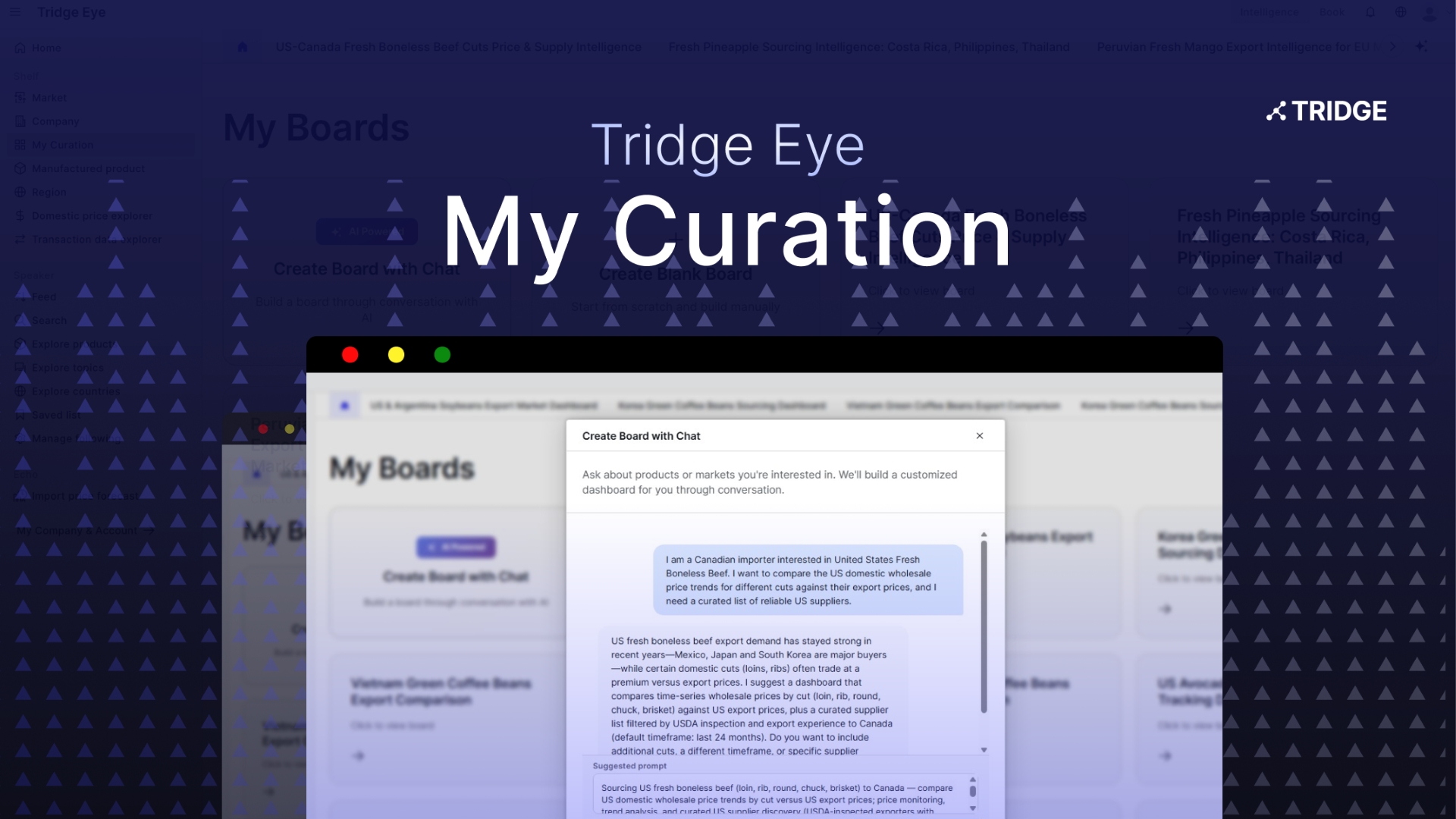
The insights in this report are just the starting point. Tridge Eye is the data intelligence solution that gives procurement and sourcing leaders real-time market signals, price benchmarks, and supply risk alerts — so you can act before the market moves.
Explore Tridge Eye →

References

  1. hfpappexternal.fda.gov
  2. bcz-cbl.be
  3. promarketreports.com
  4. cvssuppliers.com
  5. swasthum.com
Subscribe
By subscribing you agree to with our Privacy Policy and provide consent to receive updates from our company.
Thank you! Your submission has been received!
Oops! Something went wrong while submitting the form.
Subscribe to receive the latest blog posts, updates, promotions, and announcements from Tridge.