

Quick Win (this week): Ask every incumbent for a 1-page “cost movement narrative” covering the last 90 days (greens, chili seasoning, packaging, reefer freight) and explicitly require them to state which inputs they’re indexing and which they’re not—then benchmark that story across suppliers.
Quick Win (next QBR): Convert defects into dollars: require suppliers to report credits/claims as $/1,000 lb shipped and trend it quarterly. Tie commercial terms to performance bands (e.g., automatic rebate if credits exceed an agreed threshold).
Quick Win (this month): Build a two-lane negotiation model: one lane for base product price, one lane for freight/packaging pass-through with caps, floors, and a defined reset cadence.
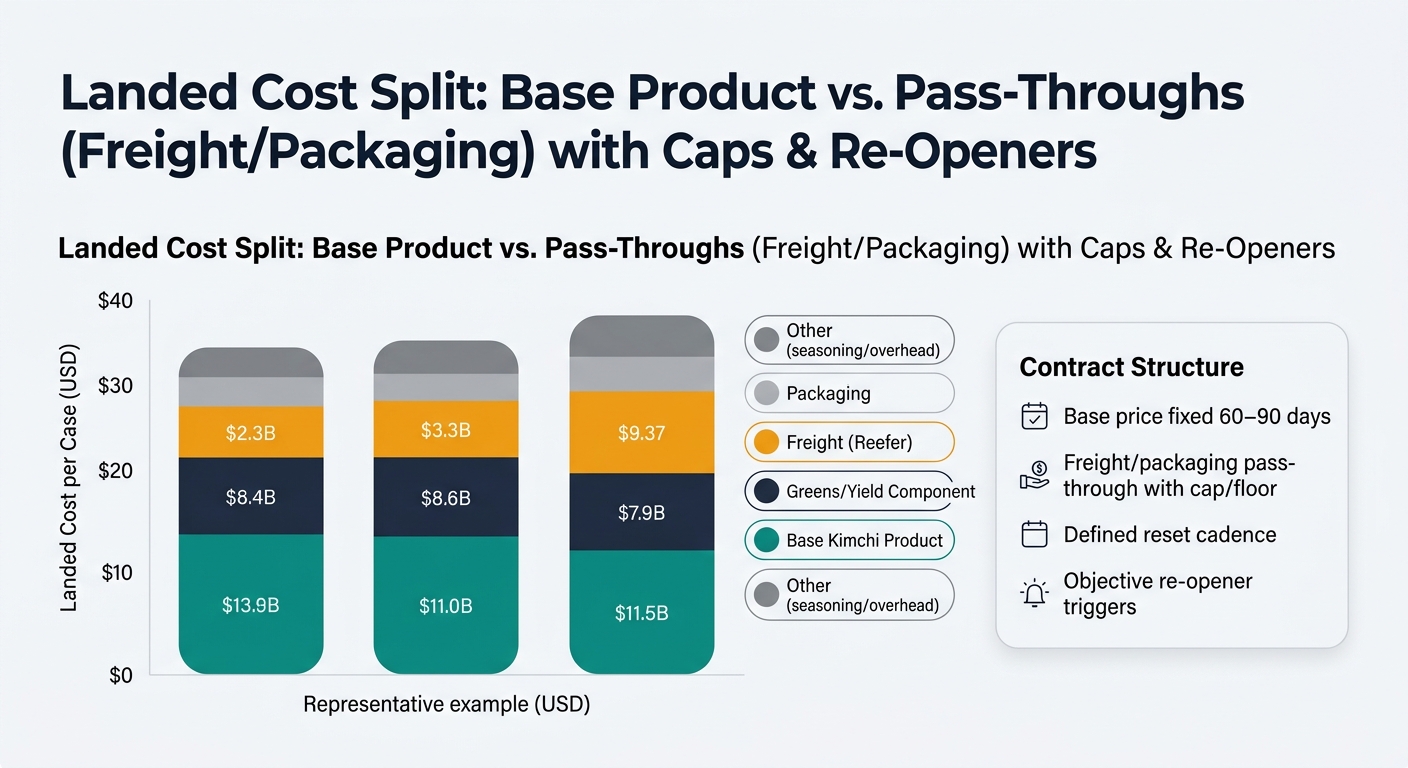
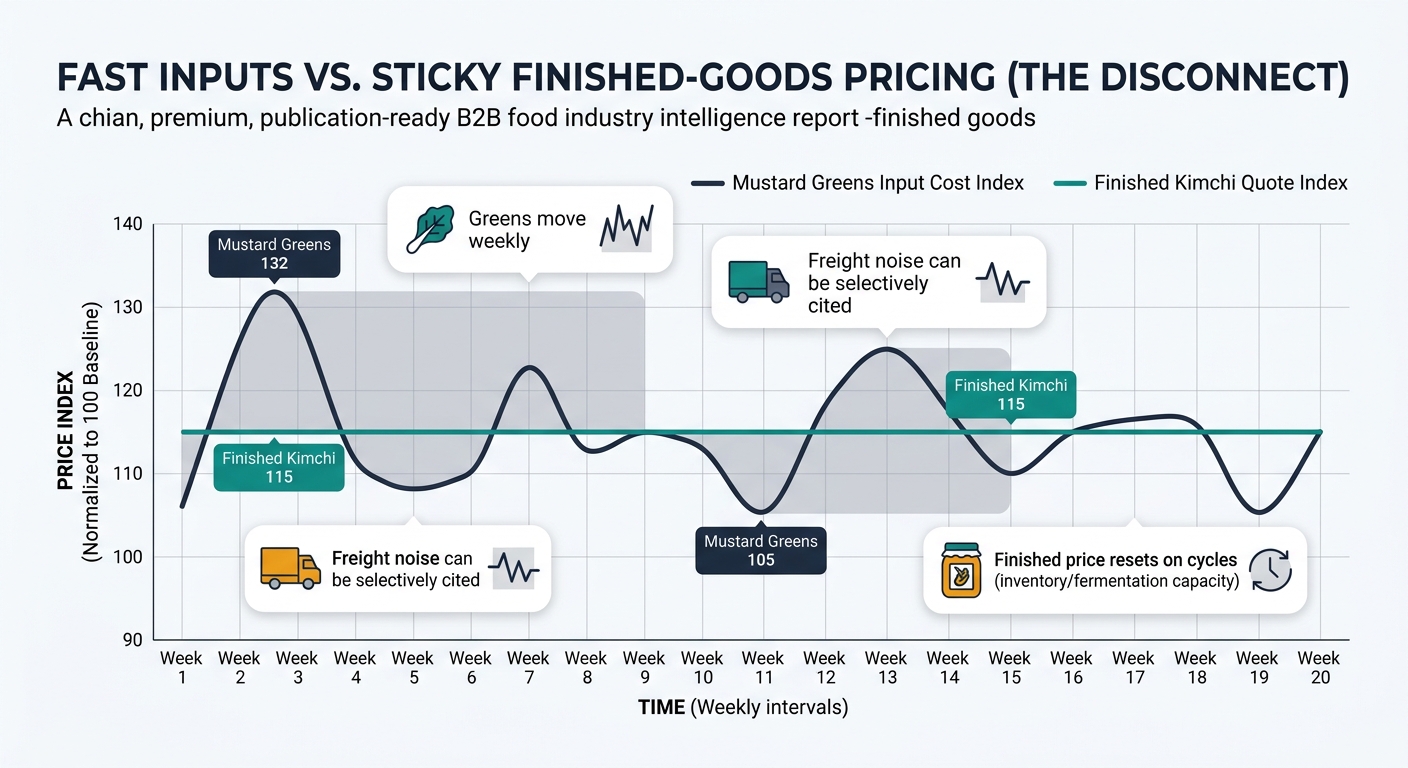
Use the current raw-to-finished disconnect to negotiate a shorter reset window (60–90 days) with a defined re-opener tied to greens movement and refrigerated freight conditions, rather than signing a long fixed price built on blended, backward-looking costs. The window exists because greens can soften quickly at terminal markets while finished kimchi pricing lags on inventory and capacity cycles [2]. Teams that institutionalize these resets typically capture several points of variance reduction versus spot-reactive buyers—while also cutting the frequency of “surprise” surcharges.
(Analyzed at: Sep, 2026)
Right now, the cleanest leverage move is to shorten your pricing commitment and formalize the re-opener: lock a 60–90 day base price, then reopen using a simple greens + reefer check tied to objective signals. USDA AMS terminal-market reporting (as aggregated) shows mustard greens can sit anywhere from $15 to $22 per package (Aug 28, 2026) with a U.S. average around $17.45/package (Sep 8, 2026)—wide enough that a “one number for 12 months” is usually a transfer of volatility to you [1][2]. At the same time, DAT documented record June-to-July 2026 contract reefer increases and ongoing spot/contract spreads, so freight is exactly where suppliers can over-collect if you don’t cap and reset it [3]. If you run meaningful volume, this contract structure is often the difference between giving away (or clawing back) low-to-mid single-digit points of landed cost over a year.


