INDUSTRY TRENDS

Guacamole Sourcing Intelligence (2026): Managing Avocado Volatility, HPP/Frozen Trade-offs, and Mexico-Weighted Supply Risk

Author
Team Tridge
DATE
April 9, 2026
9 min read
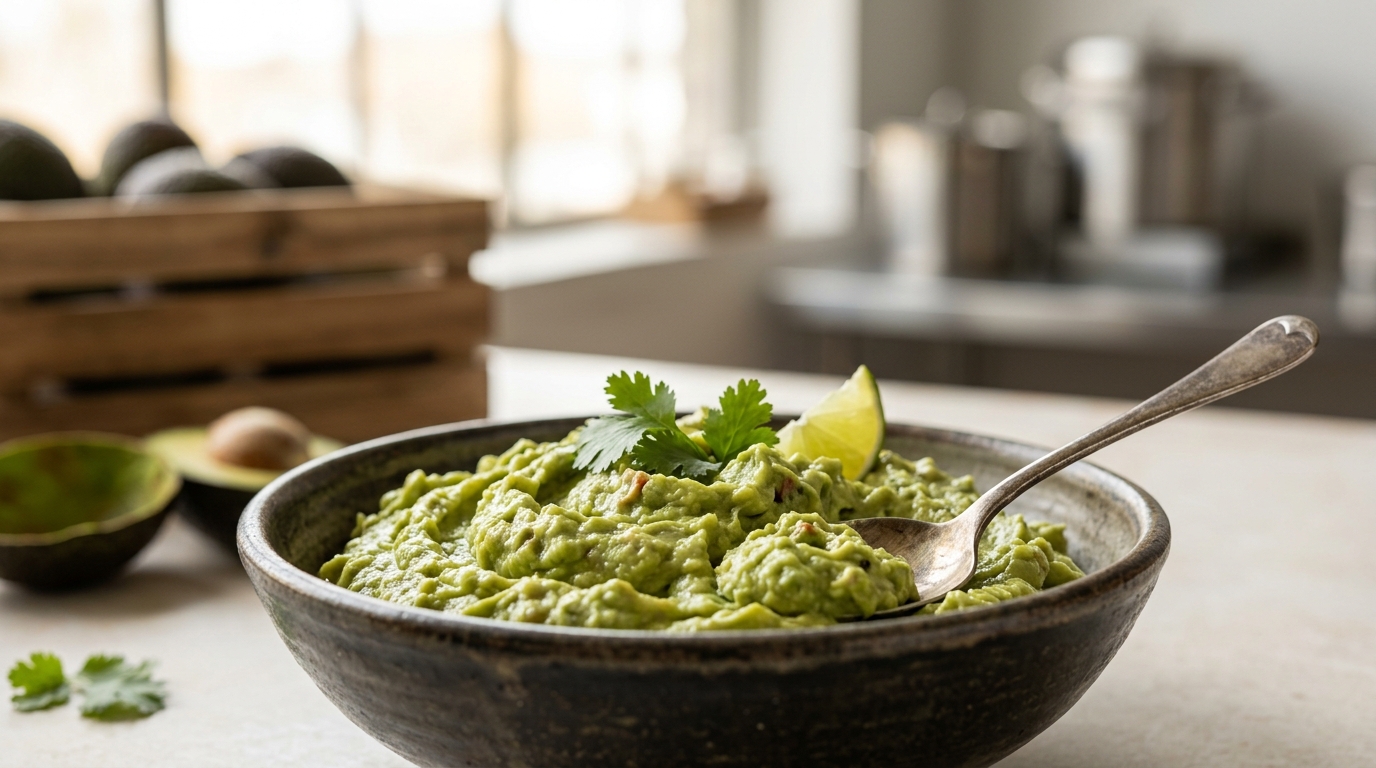
guacamole Cover
Tridge Eye Data Intelligence Solution

This report is powered by Tridge Eye Data Intelligence.

Every data point, price signal, and supply risk insight in this analysis comes from the same platform that procurement and sourcing leaders worldwide rely on daily. As you read, consider what this level of market intelligence could do for your sourcing decisions.

Explore Tridge Eye →

Guacamole looks like a simple refrigerated dip on the shelf, but for Procurement & Sourcing Management it behaves more like a short-life, cold-chain RTE product whose delivered cost and continuity are dominated by avocado yield, processing capacity (often HPP), and Mexico→U.S. flow stability. This guide translates those realities into practical sourcing decisions: how to structure your supplier portfolio, how to normalize specs for apples-to-apples bids, and how to build a defensible “should-cost + risk” narrative that holds up in governance reviews.

Executive Summary

  • Supply concentration is structural (not a temporary anomaly): USDA ERS reports Mexico accounted for ~91% of U.S. fresh avocado import value (in a recent Fruit & Tree Nuts outlook). [1]
  • Donut chart showing the share of U.S. fresh avocado import value by origin, highlighting Mexico as the dominant share (~91%). Includes a callout box titled “Why it matters for guacamole continuity” with bullets explaining binary disruption risk, fragility of spot-buys, and resilience from pre-qualified alternates such as frozen guac/pulp backstops.
  • Mexico’s dependency on the U.S. market cuts both ways: USDA/APHIS notes Mexico reported ~79% of avocado export value going to the U.S. (using 2020 data in a resumption announcement), reinforcing bilateral exposure. [2]
  • Process choice is a procurement risk lever: FDA’s multi-year sampling (Nov 2017–Sep 2019) found higher estimated prevalence of Salmonella and Listeria monocytogenes in non-HPP samples vs HPP-treated samples (sampling data; not a guarantee of safety). [3]
  • “Avocado down” does not always mean “guac down”: yield/defects, HPP throughput constraints, and inventory timing can decouple guacamole pricing from fruit indices.
  • Most common avoidable failure mode: single-sourcing a capacity-constrained step (HPP access, a single co-packer, or a single packaging converter) and discovering it only during disruption.

Key Insights

Analyzed at: Apr, 2026

  • Strategy: Hold
  • Reliability: Medium
  • Potential Saving: 4% ~ 10%
  • Insight: Given the structural Mexico weighting of U.S. avocado imports (~91% of import value), the best near-term value is rarely “switch suppliers for pennies”—it’s to lock continuity options: qualify a frozen guac or frozen pulp backstop and negotiate pre-approved spec flex + surge capacity terms with your primary refrigerated program. This typically reduces expedite freight, shrink, and emergency spot buys enough to create mid-single-digit total-cost improvement even when unit prices are flat. [1]

1) The Ground Truth: What You’re Actually Buying When You Buy “Guacamole”

Most procurement teams treat guacamole as a simple “processed produce” item. In practice, it’s a short-shelf-life, cold-chain-dependent, pathogen-sensitive product whose economics are dominated by avocado yield and processing/packaging choices.

The real supply chain flow (simplified)

Flowchart diagram of the guacamole supply chain with stages: fresh avocado supply (Mexico-weighted), ripening and sorting/grading, pulp/chunk conversion (yield/defects), secondary processing split (HPP vs non-HPP vs frozen), packaging (oxygen barrier/seal integrity), and cold-chain distribution (FEFO). Includes risk tags for border/inspection risk, yield loss, HPP throughput constraints, browning/shelf-life, and temperature abuse/shrink.
  1. Fresh avocado supply (mostly Hass)
  2. Sourced heavily from Mexico for U.S. demand; Mexico’s export flows are structurally important for North America. USDA/APHIS cites Mexico reporting ~79% of avocado export value going to the U.S. (2020 data, in a program resumption notice). [2]
  3. U.S. import concentration matters because disruption is often binary (inspection/security events can pause supply).
  4. Primary processing (ripening + pulp conversion)
  5. Ripening rooms + sorting/grading to hit a narrow “ready-to-process” window.
  6. Conversion to pulp/chunks creates immediate yield economics (defects, bruising, dry matter/oil content).
  7. Secondary processing (formulation + lethality step)
  8. Two dominant paths for “fresh-like” refrigerated guac:
  9. HPP (High Pressure Processing): preserves fresh attributes; adds tolling/capex and throughput constraints.
  10. Non-HPP (acidification/preservatives/thermal approaches): often cheaper, but higher sensory trade-offs and governance scrutiny.
  11. FDA sampling data (Nov 2017–Sep 2019) found higher estimated pathogen prevalence in non-HPP samples than HPP-treated samples, reinforcing why process choice is a procurement risk lever, not just a QA detail. [3]
  12. Packaging & QA (oxygen control is not optional)
  13. High oxygen barrier packaging, headspace control, and seal integrity are directly tied to browning and shelf-life loss.
  14. Logistics & distribution (cold chain + FEFO discipline)
  15. Refrigerated guac is a “race against time.” Even small temperature abuse reduces remaining shelf life and raises shrink.

Practical implication for Procurement & Sourcing Management

Your primary sourcing decision is not “which supplier is cheapest?” It’s:

  • Which product form & process architecture (HPP refrigerated vs frozen pulp/guac vs non-HPP) best fits your margin volatility tolerance and service-level expectations.

2) Where the Money Really Goes: Cost & Margin Build-Up by Supply Chain Node

Below, each node describes what drives true delivered cost (not just the quoted unit price).

2.1 Upstream / Raw Materials (Fresh Avocados + Minor Ingredients)

Key insight: Avocados dominate COGS, but usable yield (defect rate, ripeness window, dry matter) is the silent multiplier. Two suppliers can quote the same avocado input basis and still deliver very different effective costs due to yield loss.

What moves cost here

  • Avocado spot/contract price swings (seasonality, weather, demand surges)
  • Size curve shifts (smaller fruit increases handling cost per usable pulp unit)
  • Origin concentration: USDA ERS reports Mexico accounted for ~91% of U.S. fresh avocado import value (recent outlook). [1]

2.2 Primary Processing (Ripening, Sorting, Pulp/Chunk Conversion)

Key insight: Primary processing is where procurement “loses” money invisibly—through yield loss, labor intensity, and throughput constraints.

What moves cost here

  • Labor for handling/peeling/pitting (or mechanized lines where available)
  • Sanitation + water + waste disposal (skins/pits)
  • Yield loss from bruising/rot and over/under-ripeness
  • Capacity constraints during peak demand windows (promotions/events)

2.3 Secondary Processing (Formulation + Lethality Technology)

Key insight: HPP is often treated as a premium feature; operationally it’s a capacity and continuity constraint. If your supplier’s HPP access is tight (owned or tolled), you inherit their bottleneck risk.

What moves cost here

  • HPP tolling/capex recovery + scheduling constraints
  • Formulation inputs (lime/lemon, salt, spices, antioxidants)
  • QA testing and validation burden (especially for refrigerated RTE dips)

Shelf-life reality check: Refrigerated guacamole shelf-life varies widely by formulation, packaging, distribution temperature, and handling. Treat any single number as spec-specific, and always define minimum remaining shelf-life at receipt in your contracts.

2.4 Packaging & Quality Assurance

Key insight: Packaging is not a “nice-to-have cost.” In guac it’s a performance component (oxygen barrier + seal integrity + tamper evidence) that directly drives shrink and claims.

What moves cost here

  • High-barrier films/cups/tubs; MAP capability
  • Labeling/compliance complexity (retail vs foodservice)
  • Environmental monitoring, micro testing, and release procedures

2.5 Logistics & Distribution

Key insight: Logistics cost is amplified by shelf-life. A 1–2 day delay can convert into write-offs rather than “just late.”

What moves cost here

  • Reefer freight, cold storage, cross-dock handling
  • Border/inspection delays for upstream fruit and ingredients
  • FEFO compliance at DC and customer locations

2.6 End-Market Margins (Distributor/Retail/Foodservice)

Key insight: Downstream margins often mask upstream volatility—until a disruption forces spot buys, expedite freight, or spec exceptions.

Product-level cost breakdown (illustrative ratios)

Modeled to show where costs concentrate by product form. Actual ratios vary by origin, pack size, customer requirements, and market conditions.

A) Refrigerated HPP Guacamole (Retail tubs/cups)

Supply Chain Node Cost Ratio (% of delivered cost) Notes
Raw materials (avocados + minor ingredients) 55% Avocado price + usable yield dominate
Primary processing 12% Ripening, sorting, conversion labor/yield
Secondary processing (incl. HPP) 12% HPP tolling/capex + formulation
Packaging & QA 10% High barrier packaging + QA release
Logistics & distribution 6% Cold chain + short shelf-life handling
Channel margin (wholesale/retail) 5% Varies by program

B) Frozen Guacamole (Foodservice bags or retail packs)

Supply Chain Node Cost Ratio (% of delivered cost) Notes
Raw materials 50% Still avocado-led
Primary processing 10% Similar yield dynamics
Secondary processing 8% No HPP; freezing/IQF or block costs
Packaging & QA 8% Bags/films; QA still meaningful
Logistics & distribution 14% Frozen storage + freight higher
Channel margin 10% Often distributor-heavy

C) Frozen Avocado Pulp (Industrial input)

Supply Chain Node Cost Ratio (% of delivered cost) Notes
Raw materials 60% Pulp is closer to the avocado cost base
Primary processing 15% Yield + conversion are the product
Secondary processing 3% Minimal formulation
Packaging & QA 7% Bulk packs, specs, testing
Logistics & distribution 10% Frozen chain
Supplier margin 5% Varies by contract/capacity

3) The Structural Fact That Drives Most Guacamole Risk: U.S. Supply Is Mexico-Weighted

Why it matters: If your guacamole program is “fresh-like” and avocado-led, your continuity is tied to Mexico→U.S. flow stability.

  • USDA ERS reports Mexico accounted for ~91% of U.S. fresh avocado import value (recent outlook). [1]
  • USDA/APHIS cites Mexico reporting ~79% of avocado export value going to the U.S. (2020 data). [2]

Operational translation

  • A procurement strategy that assumes “we can always spot-buy fruit” is fragile.
  • Your resilience comes from pre-qualified alternates (product form, process, pack format) more than from last-minute supplier searches.

4) The Critical Insight: Why Avocado Market Moves Don’t Translate Cleanly to Guacamole Price

Procurement teams often expect guacamole pricing to track avocado pricing linearly. It doesn’t—because guacamole has conversion economics.

The three disconnect drivers

  1. Yield and defect variability
  2. A cheaper avocado market can coincide with worse quality (rain/heat impacts), raising defects and lowering usable pulp.
  3. Throughput constraints (especially HPP access)
  4. When HPP capacity is tight, suppliers price for scarcity and scheduling risk, not just fruit.
  5. Shelf-life and inventory timing
  6. Suppliers may be working through higher-cost pulp/packaging inventory even when fruit prices soften.

Procurement takeaway

You need a should-cost narrative that separates:

  • fruit index movement
  • yield loss movement
  • processing/packaging/freight movement
  • supplier margin movement

5) Where Procurement Teams Typically Get Guacamole Wrong (Even When They’re Strong in Other Categories)

  1. Comparing quotes without normalizing the spec
  2. HPP vs non-HPP, shelf-life expectation, pack format, distribution temperature assumptions.
  3. Optimizing unit price instead of total cost
  4. Shrink, claims, chargebacks, and emergency freight erase “savings.”
  5. Single-sourcing a capacity-constrained step
  6. One co-packer + one HPP access path = hidden single point of failure.
  7. Treating food safety as “QA’s problem”
  8. FDA’s processed avocado/guacamole sampling summary reinforces that pathogen presence is a real consideration and differs by process (HPP vs non-HPP). [3]
  9. Building contingency plans after disruption
  10. Cross-border and inspection-related events have caused real-world pauses/suspensions in the past; treat these as plausible recurrence risks and design your supplier bench accordingly.

6) What Changes When You Run Guacamole as an Intelligence-Led Category (Not an Annual RFP)

Start from the decision you need to make, then apply the minimum intelligence needed.

Decision A: “How do we reduce cost volatility without breaking service levels?”

Use intelligence to:

  • Track market signals (avocado supply tightness, origin shifts, size curve changes) and translate into budget/renegotiation timing
  • Benchmark suppliers apples-to-apples (HPP vs frozen, pack sizes, shelf-life, certifications)
  • Structure contracts with clearer levers:
  • indexed fruit component + fixed conversion component
  • volume bands and surge capacity terms
  • pre-approved spec flex (chunk size, heat level, pack substitutions)

Decision B: “How do we avoid a single point of failure?”

Use intelligence to:

  • maintain a living bench of alternates by capability (HPP, frozen, pulp supply)
  • pre-negotiate contingency terms (MOQ, lead time, pack format)
  • quantify trade-offs (fresh perception vs frozen resilience; unit cost vs shrink)

Decision C: “How do we make governance defensible?”

Use intelligence to:

  • keep decision traceability: why supplier A was selected, what risks were accepted
  • maintain a category scorecard: OTIF, claims, price variance vs benchmark, concentration risk

7) Strategic Use Cases Procurement Leaders Actually Run (Guacamole-Specific)

Use case 1: Dual-track portfolio (Refrigerated HPP + Frozen backstop)

  • Goal: protect service levels during fruit tightness or capacity constraints
  • Mechanism: qualify frozen guac/pulp as a contingency SKU for specific channels/customers
  • Trade-off: frozen resilience vs “fresh” perception

Use case 2: Spec governance to prevent hidden cost

  • Define a “spec hierarchy”:
  • food safety and compliance (non-negotiable)
  • shelf-life at receipt
  • sensory (color/texture)
  • pack format convenience
  • Pre-align what can flex during disruption (e.g., pack size, mild/medium)

Use case 3: Capacity mapping around peak demand

  • Build a calendar around:
  • promotions
  • major sports/holiday demand spikes
  • supplier maintenance windows (HPP and filling lines)
  • Lock capacity earlier than you would in shelf-stable categories

Use case 4: Supplier risk monitoring tied to the Mexico-weighted system

  • Monitor indicators that matter operationally:
  • border/inspection timing risk
  • weather/crop quality signals
  • supplier financial stress and labor constraints

8) Why This Matters Beyond Guacamole (And Where You’ll Reuse the Same Playbook)

If you source guacamole, you likely also source other categories with the same “physics”:

  • Fresh salsa / refrigerated dips (RTE)
  • Similar cold-chain + pathogen governance + shelf-life economics
  • Fresh berries (e.g., strawberries/raspberries)
  • High shrink risk; price volatility; service-level sensitivity to logistics delays
  • Leafy greens / salad kits
  • Food safety governance intensity; supplier concentration; short shelf-life
  • Frozen fruit blends / IQF vegetables
  • Frozen as a resilience lever (inventory buffer) vs fresh-like perception

The transferable lesson: the best category strategies are built on (1) normalized spec benchmarking, (2) risk-adjusted supplier portfolio design, (3) continuous market signals, not just periodic RFPs.

9) Why This Example Is Powerful for Procurement Intelligence Buyers

Guacamole is a clean demonstration of why intelligence changes outcomes because:

  • Cost is dominated by a volatile commodity input (avocados), but delivered price is shaped by conversion constraints.
  • Process choice (HPP vs non-HPP vs frozen) is both a cost decision and a governance decision.
  • Supply concentration is real (Mexico-weighted U.S. imports), so resilience must be designed, not hoped for. [1]
  • Service-level failures are expensive fast due to shelf-life and cold-chain sensitivity.

Clarifying inputs (to tailor the model, if you want this report adapted)

  • Is your program retail, foodservice, or industrial ingredient?
  • Refrigerated HPP or frozen (or both)? Required shelf-life at customer receipt?
  • Pack formats (single-serve cups vs tubs vs 2–5 lb bags) and annual volume?
  • Current supplier footprint and your biggest single point of failure (origin, co-packer, HPP access, packaging converter)?
Tridge Eye Data Intelligence Solution

Make Faster, Data-Driven Sourcing Decisions

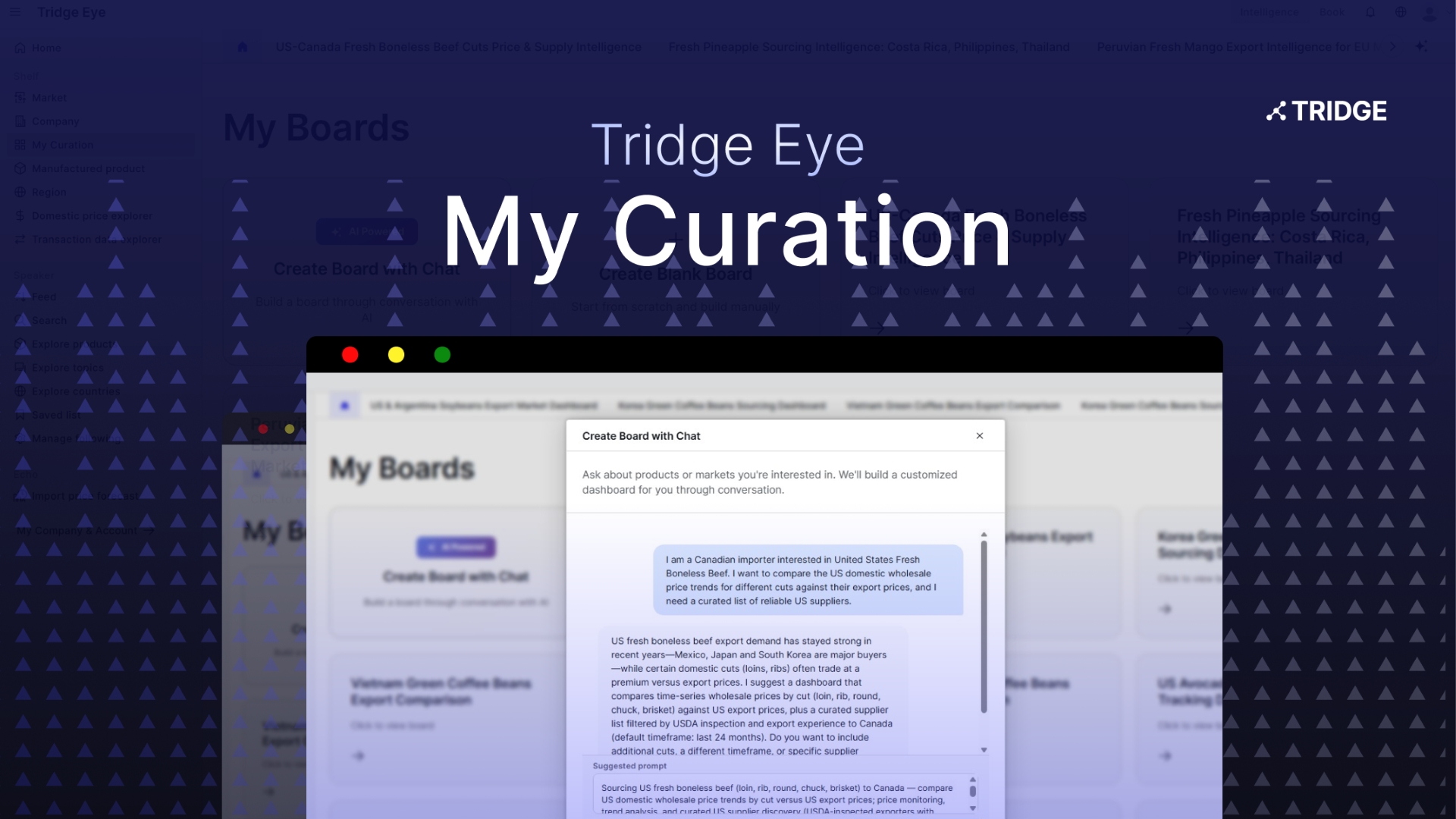
The insights in this report are just the starting point. Tridge Eye is the data intelligence solution that gives procurement and sourcing leaders real-time market signals, price benchmarks, and supply risk alerts — so you can act before the market moves.
Explore Tridge Eye →

References

  1. esmis.nal.usda.gov
  2. content.govdelivery.com
  3. fda.gov
Subscribe
By subscribing you agree to with our Privacy Policy and provide consent to receive updates from our company.
Thank you! Your submission has been received!
Oops! Something went wrong while submitting the form.
Subscribe to receive the latest blog posts, updates, promotions, and announcements from Tridge.