INDUSTRY TRENDS

Frozen Avocado Sourcing (2026): How to Control Landed Cost, Quality Claims, and Supply Risk

Author
Team Tridge
DATE
March 27, 2026
10 min read
frozen-avocado Cover
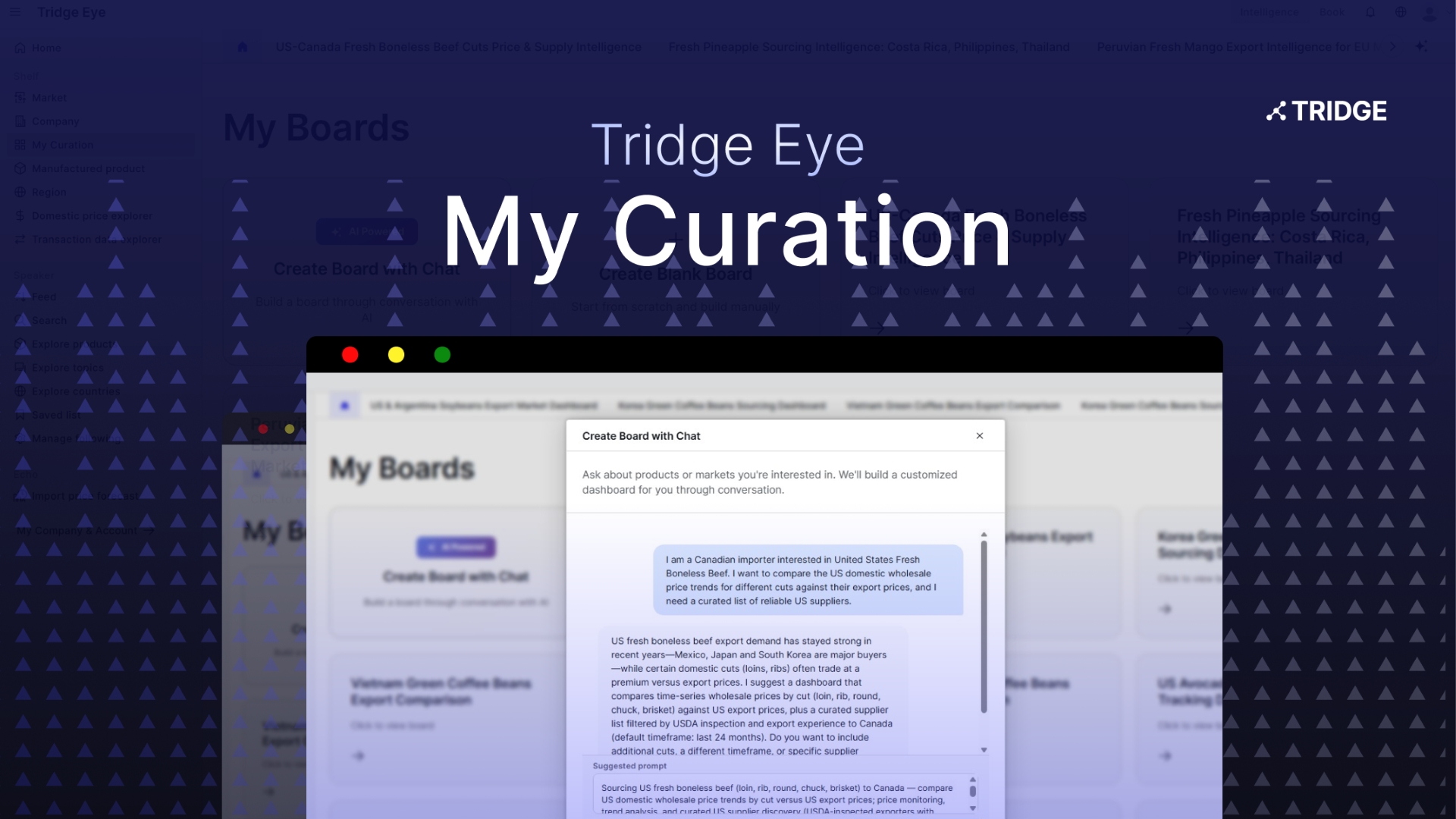
Tridge Eye Data Intelligence Solution

This report is powered by Tridge Eye Data Intelligence.

Every data point, price signal, and supply risk insight in this analysis comes from the same platform that procurement and sourcing leaders worldwide rely on daily. As you read, consider what this level of market intelligence could do for your sourcing decisions.

Explore Tridge Eye →

Frozen avocado looks deceptively simple—until you manage it through a fresh-avocado price swing, a cold-chain excursion, or a quality dispute. This guide is written for procurement and sourcing leaders who know food sourcing well, but want a clear, defensible way to run frozen avocado (IQF pieces and pulp/puree) across cost, continuity, and governance.

Executive Summary

  • Cold-chain reference point is real and enforceable: International guidance for quick-frozen foods uses −18°C as the reference temperature for storage/distribution, and expects any rises above that to be minimized—this matters for acceptance criteria, claims, and logistics control. [1]
  • U.S. exposure is structurally Mexico-driven: Multiple sources consistently put Mexico at ~88–90% share of U.S. avocado imports/consumption in recent years—so Mexico-driven fresh cycles and disruptions can spill into frozen availability and pricing. [2]
  • Maturity is a controllable quality lever:Dry matter is widely used as a maturity index and correlates strongly with oil content—procurement can translate this into measurable incoming-spec discipline to reduce texture/color complaints. [3]
  • Your biggest hidden costs are usually not “FOB”: temperature excursions, dwell time, and claim/credit friction often erase small supplier price deltas.
  • Cost tables are illustrative: They sum correctly and reflect typical concentration in fruit + conversion + cold chain; treat them as a starting model to calibrate with your actual lanes, pack formats, and claim history.

Key Insights

Analyzed at: Mar, 2026

  • Strategy: Hold
  • Reliability: Medium
  • Potential Saving: 4% ~ 10%
  • Insight: Avoid over-committing to a single long-term fixed price right now; instead, rebalance to a “contract core + indexed/triggered flex” structure while you pre-qualify at least one activation-ready backup supplier. The rationale is structural: (1) the U.S. avocado system remains highly Mexico-concentrated (~88–90%), so origin shocks can still propagate quickly into processed inputs; and (2) frozen quality/claims are highly sensitive to maturity (dry matter/oil) and cold-chain control (−18°C reference), so the best near-term savings usually come from reducing claims + logistics step-costs rather than chasing marginal FOB reductions. [2]

1) What You’re Really Buying: The Frozen-Avocado Supply Chain (Ground Truth)

Frozen avocado is not simply “fresh avocado, but frozen.” It’s a yield-sensitive, oxidation-prone ingredient whose economics are shaped by (a) fresh avocado cycles and (b) the integrity of a cold chain that is expected to hold quick-frozen foods at −18°C as a reference temperature.

Typical supply chain flow (from orchard to your DC)

  1. Upstream / Raw material: Fresh Hass (and some other varieties), including processing-grade fruit (cosmetic outgrades, size outgrades, and certain maturity windows).
  2. Primary processing: Wash/sanitize → ripen/condition (varies by processor) → peel/pit → cut (halves/dice/chunks) or pulp.
  3. Secondary processing: IQF (individual quick freezing) for pieces; block freezing for pulp/puree; optional formulation steps for guacamole bases.
  4. Packaging & QA: Retail or foodservice bags; bulk bag-in-box/drums/totes; COAs, micro testing, metal detection/X-ray.
  5. Logistics & distribution: Frozen storage, reefer trucking, ocean reefer (for imports), import clearance, distributor handling.
  6. End markets: Retail, foodservice, industrial (dips/sauces/ready meals/smoothie blends).
A left-to-right flowchart showing the frozen avocado supply chain from orchard/farmgate through aggregator/packhouse, primary and secondary processing (IQF or block freezing), packaging & QA, cold storage and transport, to the customer DC/plant, with callouts for oxidation/browning control, maturity (dry matter) driving texture, and the −18°C cold chain reference temperature.

Category realities procurement teams underestimate

  • Maturity drives texture: Avocado maturity is commonly assessed via dry matter (a proxy for oil and eating quality). If maturity is off, you see watery thaw, fibrous texture, bland flavor, and higher downstream waste. [3]
  • Oxidation is the core technical risk: Cut surfaces brown fast due to enzyme activity; processors rely on oxygen management + anti-browning systems (often citric/ascorbic and process controls) to maintain color.
  • Cold chain is not a “nice-to-have”: A single weak link (port dwell, cross-dock, warehouse excursions) can create partial thaw/refreeze, accelerating drip loss and browning.
  • Origin concentration is structural: Mexico and Peru are major global suppliers; Mexico is also the dominant supplier into the U.S. fresh market (important because fresh-market cycles influence frozen input availability and price). [4]

2) Where the Money Actually Goes: Cost & Margin Build-Up by Supply-Chain Node

Below is a procurement-oriented view of how cost and margin accumulate across the frozen-avocado chain.

2.1 Upstream / Raw Material (Fresh Avocado Procurement)

Key insight: Frozen avocado is anchored to fresh avocado economics—even when processors use “outgrades,” the category still competes with fresh channels when fresh prices are strong.

What moves cost here:

  • Farmgate fruit price (largest driver; cyclical)
  • Maturity / dry matter distribution (impacts yield and finished texture)
  • Defect load (rot, bruising, vascular browning) → trimming loss
  • Security / disruption risk in certain producing regions (harvest and trucking interruptions)

Margin dynamics: Aggregators/packhouses may take margin before fruit reaches the processor.

2.2 Primary Processing (Peel/Pit/Cut or Pulping)

Key insight: This is the most labor- and yield-sensitive node. Small changes in fruit quality can swing usable yield materially.

What moves cost here:

  • Labor intensity (peeling/pitting/cutting)
  • Yield loss: peel + pit + trimming + defect removal
  • Anti-browning inputs and controls (ingredient + process)
  • Food safety programs: sanitation, environmental monitoring, micro testing

Margin dynamics: Processors price in yield risk and claim risk (rejections/chargebacks).

2.3 Secondary Processing (IQF / Freezing + Standardization)

Key insight: IQF is a capex- and energy-intensive conversion step; freezing performance affects both quality and cost (rework, waste, claims).

What moves cost here:

  • Energy (freezing tunnels, cold rooms)
  • Throughput and downtime (line efficiency)
  • Piece integrity (breakage fines → downgrade)
  • Moisture/ice management (glazing targets vs. disputes)

Margin dynamics: Processors with scale and efficient plants can sustain lower conversion cost per lb/kg.

2.4 Packaging & Quality Assurance (Spec Compliance Becomes Cost)

Key insight: Packaging is not just materials—it’s spec enforcement (net weight control, seal integrity, traceability, COA discipline).

What moves cost here:

  • Film/bags/cartons, labeling, coding
  • Metal detection/X-ray, foreign matter controls
  • COAs, micro testing frequency, retain samples
  • Certifications (BRCGS/SQF/FSSC 22000; organic where applicable)

Margin dynamics: Retail-ready packing carries higher packaging and compliance overhead than bulk.

2.5 Logistics & Distribution (Cold Chain as a Cost Multiplier)

Key insight: Frozen avocado is a cold-chain dependent ingredient; logistics costs are not linear—disruptions create step-changes via demurrage, re-handling, and claims.

What moves cost here:

  • Frozen warehousing and handling fees
  • Reefer trucking and ocean reefer rates
  • Port dwell time and inspection delays
  • Temperature monitoring, insurance, claims administration

Reference reality: International guidance for quick-frozen foods commonly uses −18°C as the reference storage/distribution temperature, and expects temperature rises above that to be minimized—use this as a governance anchor for your acceptance/claims language and lane controls. [1]

2.6 End-Market Margin (Distributor + Customer Risk Premium)

Key insight: Downstream margin often reflects service-level risk (allocation, short ships) and quality risk (complaints, credits).

What moves cost here:

  • Distributor markup and repacking (if any)
  • Retail/foodservice margin expectations
  • Penalties/chargebacks tied to OTIF or quality
A three-bar 100% stacked bar chart comparing landed cost composition for (A) IQF avocado chunks/dice, (B) frozen avocado pulp/puree, and (C) frozen avocado halves, with consistent color-coded segments for raw material, primary processing, secondary processing, packaging & QA, logistics & distribution, and distributor/wholesale margin, labeled with the percentages from the article tables and a footnote noting the ratios are illustrative modeled values.

Product-Level Cost Breakdown (Illustrative, Modeled)

A) IQF Avocado Chunks/Dice (Foodservice bag, imported)

Supply Chain Node Cost Ratio (% of Final Cost) What to watch in sourcing
Raw material (fruit) 45% Fresh-market cycles, maturity/dry matter distribution
Primary processing 18% Yield loss, labor, anti-browning controls
Secondary processing (IQF) 10% Energy, throughput, piece integrity
Packaging & QA 7% Net weight, seals, COA discipline
Logistics & distribution 12% Reefer costs, port dwell, temperature excursions
Distributor/wholesale margin 8% Service-level risk premium

B) Frozen Avocado Pulp/Puree (bulk bag-in-box/drum)

Supply Chain Node Cost Ratio (% of Final Cost) What to watch in sourcing
Raw material (fruit) 50% Fruit cost and availability; blending flexibility
Primary processing (pulping) 15% Yield + oxidation control
Secondary processing (block freezing) 7% Energy, block uniformity
Packaging & QA 6% Bulk packaging integrity; micro testing
Logistics & distribution 14% Heavy-weight freight; frozen storage
Distributor/wholesale margin 8% Lane reliability

C) Frozen Avocado Halves (higher spec, lower yield efficiency)

Supply Chain Node Cost Ratio (% of Final Cost) What to watch in sourcing
Raw material (fruit) 42% Size/maturity requirements reduce eligible fruit
Primary processing 22% Higher labor + higher breakage/defect sensitivity
Secondary processing (IQF) 10% Surface protection, freezing quality
Packaging & QA 8% Visual spec disputes are common
Logistics & distribution 10% Cold chain stability
Distributor/wholesale margin 8% Higher claim risk premium

3) The Structural Fact That Governs Frozen Avocado: It’s a “Fresh-Market Shock Absorber”

Frozen avocado capacity expands and contracts based on what the fresh market leaves behind.

What this means for procurement

  • When fresh avocado prices spike, processors face higher fruit input cost and may divert fruit away from processing → frozen tightness can show up later (lag effect).
  • When fresh prices crash or there’s oversupply, processors can secure cheaper fruit → frozen input cost can ease, but contract pricing and existing inventories delay the benefit.
  • Because major supply is concentrated (Mexico/Peru leading), regional shocks (weather, port congestion, inspections, security events) can ripple quickly.

Data anchor (fresh market, relevant to frozen)

Recent U.S. trade/market reporting regularly shows Mexico supplying roughly ~89–90% of U.S. fresh avocado import volume (depending on the dataset and period), reinforcing how a Mexico-driven fresh cycle can spill into frozen availability and price. [4]

4) The Critical Insight: Why Frozen-Avocado Prices Don’t Track Fresh Avocados Cleanly

Procurement teams often expect frozen avocado to move “in sync” with fresh. In reality, the linkage is real but imperfect.

Why the disconnect happens

  1. Inventory buffering: Frozen is storable; processors and distributors carry inventory that can temporarily mute (or delay) price moves.
  2. Yield and spec effects: A “cheap fruit” period can still produce expensive frozen if defect rates are high (more trimming) or maturity is inconsistent.
  3. Conversion constraints: Freezing capacity (IQF throughput, labor availability) can bind even when fruit is plentiful.
  4. Logistics step-changes: Reefer availability, port dwell, and frozen warehouse congestion can push landed costs up independent of fruit price.
  5. Claims/quality cost: If a supplier has rising rejections (browning, texture, foreign matter), they may embed a risk premium—or you pay later via credits and waste.

Practical takeaway: Treat “frozen avocado price” as fruit + conversion + cold chain reliability + risk premium, not fruit alone.

5) Where Procurement Teams Usually Get Burned (And Why)

Common failure modes are predictable—and fixable.

Mistake 1: Buying against an incomplete spec

  • “IQF avocado dice” is not a spec.
  • Missing controls: cut size tolerance, glazing %, color targets, allowable browning score, oil/dry matter expectations, defects (fibers, black spots), micro limits, foreign matter thresholds.

Mistake 2: Treating all origins as interchangeable

  • Origin affects dry matter curve, flavor, and texture after thaw; it also affects lane risk and lead time volatility.

Mistake 3: Over-indexing on FOB price

  • Frozen avocado is a landed-cost category: temperature monitoring, dwell time, and warehouse handling can outweigh small FOB deltas.

Mistake 4: “Backup supplier” that isn’t activation-ready

  • Many teams have a name on a slide, not a qualified alternate with approved spec, trial lots, validated shelf life, and a proven logistics lane.

Mistake 5: No governance trail for trade-offs

  • After a quality incident or allocation event, leadership asks: “Why this supplier?” If the decision logic isn’t documented, procurement loses credibility.

6) What an Intelligence-Driven Approach Changes (Decision-First, Not Feature-First)

Decision you’re making: how to structure supply (incumbent renew vs rebid, contract vs spot mix, and whether to add multi-origin optionality) without increasing quality claims.

Capability 1: Price Intelligence + Cost Driver Attribution

How it changes the decision:

  • Separates fruit cycle effects from conversion/logistics effects so negotiations target the right lever.
  • Supports contract design such as:
  • Index-linked components (where defensible)
  • Trigger clauses for reefer surcharges or extreme lead-time changes
  • Volume bands with allocation protections

What you can measure:

  • Reduced variance of landed cost quarter-to-quarter
  • Fewer “surprise” surcharges and expedited freight events

Capability 2: Supplier Benchmarking + Comparable Terms (Spec/Service/Risk)

How it changes the decision:

  • Moves supplier evaluation from anecdotes to a consistent scorecard:
  • Spec capability (color/texture performance)
  • QA maturity (audit history, COA reliability)
  • OTIF and lead time stability
  • MOQ flexibility and pack formats
  • Claims responsiveness (credit cycle time)

What you can measure:

  • Claim rate trend (credits per $ spend)
  • OTIF trend and backorder frequency

Governance output (what leadership actually wants)

  • A documented shortlist rationale and a decision log showing why cost was accepted/rejected relative to risk and quality.

7) Strategic Use Cases Procurement Leaders Actually Run in Frozen Avocado

  1. Contract vs. spot mix redesign (12-month horizon)
  2. Objective: reduce volatility without stockouts.
  3. Action: build a baseline contract with pre-priced volume, plus a controlled spot tranche with clear triggers.
  4. Multi-region optionality (Mexico/Peru + complementary origins)
  5. Objective: reduce single-origin disruption exposure.
  6. Action: qualify at least one alternate origin/supplier with trial lots and validated lanes.
  7. Spec tightening that reduces waste (without shrinking the supplier pool too much)
  8. Objective: reduce browning/texture complaints.
  9. Action: align specs to measurable inputs (e.g., maturity/dry matter expectations) and enforce via COA + incoming QC.
  10. Cold-chain risk containment program
  11. Objective: stop paying for temperature abuse.
  12. Action: require temperature logging, define excursion thresholds, and link them to acceptance/credit rules.
  13. Supplier governance pack for cross-functional alignment (QA/Ops/Finance)
  14. Objective: speed decisions during disruptions.
  15. Action: standard scorecard + escalation triggers + pre-approved substitutions (e.g., pulp vs dice in certain SKUs).

8) Why This Matters Beyond Frozen Avocado (Adjacent Categories You Likely Also Buy)

Frozen avocado is a clean example of a broader procurement truth: in processed foods, the cheapest unit price often carries the highest hidden total cost.

Where the same intelligence pattern applies

  • Frozen berries / smoothie blends: food safety incidents and recalls can reshape approved-supplier lists overnight; traceability and sanitation signals matter as much as price.
  • Frozen mango/pineapple: cut-size specs, brix/acid balance, and cold-chain handling drive downstream yield and customer complaints.
  • Tomato paste / puree: commodity indices matter, but spec (brix, color, defect) + origin risk + logistics often explain supplier-to-supplier deltas.
  • Nuts (almonds/cashews): price indices exist, but grade, moisture, aflatoxin controls, and freight can dominate landed-cost outcomes.

Transferable procurement lesson

Build sourcing decisions around (1) cost drivers, (2) process capability, (3) logistics reliability, and (4) governance evidence—not around last paid price.

9) Why Frozen Avocado Is the Best “Proof Category” for Intelligence-Led Sourcing

Frozen avocado compresses multiple procurement challenges into one category:

  • High volatility input (fresh avocado cycles)
  • High conversion sensitivity (yield + oxidation control)
  • Cold-chain fragility (−18°C reference expectations; excursion risk) [1]
  • Cross-functional stakes (QA acceptance, Ops performance, Finance COGS stability)

If you can run frozen avocado with discipline, you can scale the same model across your frozen fruit portfolio:

  • Clear specs that prevent disputes
  • Comparable supplier benchmarks that hold up in governance reviews
  • Contract structures that reduce “surprise” costs
  • Backup suppliers that are truly activation-ready

Assumptions & what to verify in your own context (before acting)

  • Your exact product form (IQF dice/chunks/halves vs pulp) and pack format (retail vs foodservice vs bulk)
  • Acceptance criteria for color/texture after thaw (and how it’s measured)
  • Your lane risk (origin → port → warehouse) and historical temperature excursion/claim data
  • Whether your demand profile can support multi-origin blending or requires tight sensory consistency
Tridge Eye Data Intelligence Solution

Make Faster, Data-Driven Sourcing Decisions

The insights in this report are just the starting point. Tridge Eye is the data intelligence solution that gives procurement and sourcing leaders real-time market signals, price benchmarks, and supply risk alerts — so you can act before the market moves.
Explore Tridge Eye →

References

  1. who.int
  2. cnbc.com
  3. postharvest.ucdavis.edu
  4. ers.usda.gov
Subscribe
By subscribing you agree to with our Privacy Policy and provide consent to receive updates from our company.
Thank you! Your submission has been received!
Oops! Something went wrong while submitting the form.
Subscribe to receive the latest blog posts, updates, promotions, and announcements from Tridge.