INDUSTRY TRENDS

Dried Basil Sourcing (2026): Where Landed Cost, Spec Risk, and Qualified Capacity Really Accumulate

Author
Team Tridge
DATE
April 16, 2026
9 min read
dried-basil Cover
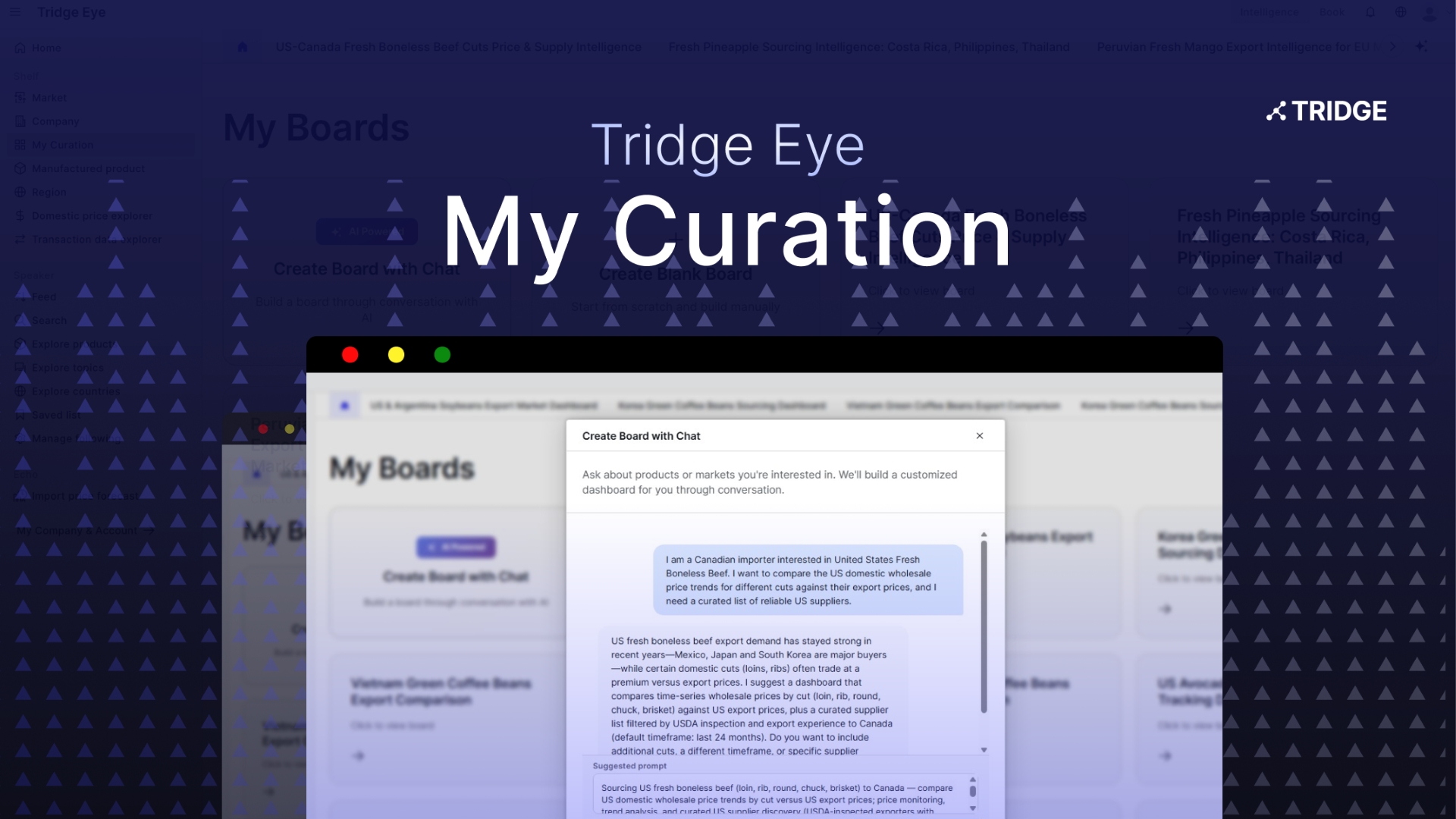
Tridge Eye Data Intelligence Solution

This report is powered by Tridge Eye Data Intelligence.

Every data point, price signal, and supply risk insight in this analysis comes from the same platform that procurement and sourcing leaders worldwide rely on daily. As you read, consider what this level of market intelligence could do for your sourcing decisions.

Explore Tridge Eye →

Dried basil is often treated like a simple, shelf-stable commodity—but most procurement outcomes (cost, continuity, and quality consistency) are determined downstream: drying discipline, cleaning/cut control, and whether a validated pathogen-reduction step is available at scale. This guide translates those supply-chain realities into practical sourcing decisions procurement leaders actually make: how to spec, how to qualify suppliers, where to negotiate, and how to build resilience without overpaying.

Executive Summary

  • Most surprises come from downstream processing, not farming: Drying profile, cleaning intensity, cut-size control, and microbial-reduction capacity drive lot acceptance and true supply availability.
  • “Low moisture” is not “low risk”: FDA has documented that Salmonella prevalence is significantly lower at retail than in import shipments for many spices, consistent with pathogen-reduction interventions later in the chain (e.g., steam/irradiation) [1].
  • Microbial-reduction is a structural bottleneck: When customer micro specs tighten, demand shifts to treated material; the constraint becomes qualified treatment throughput, not acreage.
  • Specs shrink the supplier pool faster than expected: Tight micro limits + tight color + tight cut distribution can quickly reduce eligible supply and expand premiums.
  • Moisture control is a frequent claims driver: Many commercial basil specs target moisture at or below ~12% (typical industry expectation; confirm per your spec and method) [2].
  • Governance is a sourcing lever: Tiered specs (primary vs contingency), auditable supplier scorecards, and pre-qualified alternates reduce emergency buys and expedite costs.

Key Insights

(Analyzed at: Apr, 2026)

  • Strategy: Hold
  • Reliability: Medium
  • Potential Saving: 4% ~ 10%
  • Insight: If you are already dual-sourcing and have at least one validated microbial-reduction option, prioritize spec governance and competitive tension over aggressive “new crop” price anchoring. The most repeatable savings in 2026 tend to come from (1) rebalancing awards toward suppliers with lower rework/claim risk, (2) tightening logistics moisture controls to reduce landed-cost leakage, and (3) negotiating treatment-slot priority and packaging/logistics terms rather than chasing farmgate narratives—because FDA’s spice safety context and industry practice continue to reinforce downstream interventions as the differentiator [1].

1) What You’re Actually Buying: The Real Dried‑Basil Supply Chain (Ground Truth)

Dried basil looks like a simple, shelf‑stable commodity, but procurement outcomes are determined by post‑harvest handling and secondary processing more than by farming alone. The “same” basil can behave very differently in production depending on drying profile, cleaning intensity, cut size control, and whether a validated microbial‑reduction step is applied.

Typical end-to-end flow (and why each node matters)

  1. Cultivation & harvest (field-grown basil)
  2. Basil is cut at maturity for leaf yield and aroma; timing impacts volatile oil profile and color.
  3. Harvest is labor-heavy; field hygiene and drying conditions drive downstream micro risk.
  4. Primary processing (cleaning + drying + baling/bulk packing)
  5. Drying is the first “quality lock”: too slow → mold risk & discoloration; too hot → aroma loss.
  6. Bulk dried herb is often packed for export to a processor/repacker.
  7. Secondary processing (cut & sift / rubbed / milling / blending / microbial reduction)
  8. This is where most spec compliance happens: cut size distribution, stem removal, metal detection.
  9. Microbial reduction (e.g., steam) can be a capacity bottleneck and adds cost/lead time [3].
  10. QA + packaging (bulk cartons/bags; retail/foodservice packs)
  11. COA, traceability, and testing (micro, residues, identity) convert “herb” into “approved ingredient.”
  12. Logistics + warehousing (ambient, moisture-controlled)
  13. Dried basil doesn’t need cold chain, but it is humidity-sensitive; moisture ingress creates caking, mold risk, and aroma loss.

Basil-specific quality reality (what drives acceptance/rejection)

  • Form: whole leaf vs. cut & sift vs. rubbed vs. powder (powder has higher authenticity risk).
  • Color: buyers often target greener lots; color is sensitive to drying and storage.
  • Aroma / volatile oils: overdrying and heat exposure reduce perceived potency.
  • Foreign matter & stems: cleaning intensity and sieving/aspiration capability matter.
  • Microbiological limits: low-moisture foods don’t support growth, but can carry pathogens; FDA notes Salmonella prevalence is significantly lower at retail than at import for many spices, consistent with decontamination steps later in the chain [1].
Left-to-right dried basil supply chain diagram from cultivation and harvest through primary processing, secondary processing (including microbial reduction), QA and packaging, and logistics and warehousing, with overlays showing cost accumulation thickening at secondary processing and logistics and spec risk spiking at drying and microbial reduction/QA, plus icons for moisture ingress, foreign matter/stems, cut-size variability, and microbiological nonconformance.

2) Where Your Landed Cost Builds Up (and Where Suppliers Make Margin)

Below is a procurement-oriented view of cost build-up and margin capture by node. The point is not exact percentages (they vary by origin, spec and market), but to show where negotiation levers and failure modes actually sit.

2.1 Upstream: Farming & Harvest (Fresh Basil for Drying)

Key insight: Farmgate basil is not the whole story—yet farm practices determine residue compliance risk and the baseline microbial/foreign-matter load that downstream processors must “work off.”

What typically drives cost:

  • Harvest labor availability and wage inflation
  • Yield swings (heat, drought, unseasonal rain)
  • Crop protection intensity (can increase residue risk)

Where margin sits:

  • Usually thin at farm level unless vertically integrated; margins expand when growers also control drying.

2.2 Primary Processing: Cleaning + Drying + Bulk Packing

Key insight: Drying is both a cost center (energy + shrink) and a quality gate. This is where green color and aroma are either preserved—or permanently lost.

Cost drivers:

  • Energy for dryers (fuel/electricity)
  • Throughput constraints during peak harvest
  • Shrink (moisture removal + trimming)
  • Initial cleaning/sorting labor

Margin dynamics:

  • Primary processors can earn premiums for consistent color and low foreign matter because they reduce downstream rework.

2.3 Secondary Processing: Cut/Sift, Rubbed, Milling, Blending, Microbial Reduction

Key insight: For most industrial buyers, this is where “commodity herb” becomes a spec-managed ingredient. It’s also where supplier differentiation is real.

Cost drivers:

  • Milling/sieving losses (fines/dust)
  • Metal detection, magnets, optical sorting (where used)
  • Microbial reduction (often steam): equipment capex, energy, validation, throughput time [3]

Margin dynamics:

  • Suppliers with validated microbial reduction and tight cut-size control can sustain premiums, especially when buyers tighten micro specs.

Safety context (why this step is non-negotiable for many buyers):

  • FDA notes Salmonella prevalence is significantly lower at retail than at import for many spices, consistent with interventions like steam/irradiation applied later in the chain [1].

2.4 QA + Packaging (Bulk industrial vs retail)

Key insight: QA and packaging costs look “small” until you tighten requirements (organic, customer-specific micro limits, residues, authenticity). Then QA becomes a lead-time and cost driver.

Cost drivers:

  • Micro testing, residues, identity/adulteration screening
  • Traceability, lot segregation, rework
  • Packaging barrier materials and labeling

Quality minima reference points (useful for spec conversations):

  • European Spice Association (ESA) quality minima provide non-legal reference parameters for spices/herbs (including basil) such as moisture and other basic quality markers; many commercial basil specs target moisture at or below ~12% (confirm your method and limit by form and application) [2].

2.5 Logistics + Warehousing

Key insight: Dried basil is “ambient,” but not “care-free.” Humidity exposure in transit is a frequent root cause of claims.

Cost drivers:

  • Ocean freight + inland trucking + warehousing
  • Moisture protection (liners, desiccants) and container cleanliness
  • Working capital (inventory carry is common to buffer seasonality)

Product-Level Cost Breakdown (Illustrative, Procurement-Facing)

Grouped stacked bar chart showing delivered cost build-up by basil form: A) Industrial cut and sift basil (non-sterilized), B) steam-treated/microbial-reduced cut and sift basil, and C) ground/powdered basil, with segments for farming and harvest, primary drying and bulk prep, secondary processing (including treatment where applicable), QA and packaging, and logistics and warehousing, labeled with the percentage ranges from the tables and a note that ranges are illustrative and vary by origin, spec, and QA policy.

Values below are modeled ranges to show where cost concentrates by product form. Actual ratios shift by origin, sterilization requirement, certification, and buyer QA policy.

A) Industrial Cut & Sift (C/S) Basil (non-sterilized)

Supply Chain Node Cost Ratio (% of delivered cost) What to watch
Farming & Harvest 25–40% Yield + labor; residue practices
Primary Drying & Bulk Prep 15–25% Dryer capacity; color retention
Secondary Processing (C/S) 15–25% Stem removal, cut distribution, losses
QA + Packaging 5–10% COA, basic micro/residue testing
Logistics + Warehousing 10–20% Humidity protection, inventory carry

B) Industrial Steam-Treated / Microbial-Reduced C/S Basil

Supply Chain Node Cost Ratio (% of delivered cost) What to watch
Farming & Harvest 20–35% Baseline contamination load
Primary Drying & Bulk Prep 15–25% Mold risk if drying is slow
Secondary Processing (C/S + treatment) 20–35% Treatment capacity bottleneck; quality impact
QA + Packaging 7–12% Validation docs; tighter micro testing
Logistics + Warehousing 10–18% Lead time + storage conditions

C) Ground / Powdered Basil (highest authenticity exposure)

Supply Chain Node Cost Ratio (% of delivered cost) What to watch
Farming & Harvest 20–35% Residues; origin traceability
Primary Drying & Bulk Prep 12–22% Aroma loss vs drying profile
Secondary Processing (milling + blending) 25–40% Fines losses; authenticity/identity controls
QA + Packaging 8–15% Identity testing; lot segregation
Logistics + Warehousing 8–15% Odor taint risk; humidity

3) The Structural Fact That Explains Most Supplier Surprises

Dried basil is a “low-moisture, high-variability” ingredient. That combination creates a recurring procurement pattern:

  • You can store it (buffer inventory), so market shocks transmit with a lag.
  • But you can’t “fix” poor drying or contamination later without cost and lead time, so supply that truly meets your spec can tighten abruptly.
  • Spec tightening (micro, residues, color, cut) shrinks the supplier pool faster than buyers expect.

This is why two suppliers quoting the same price can produce radically different outcomes in:

  • complaint rate
  • rework needs (re-sieving, re-cleaning)
  • micro failures
  • line performance (dusting, clumping)

4) The Critical Insight: Why “Raw Basil Price” and “Your Delivered Price” Disconnect

Procurement teams often try to anchor negotiations on farmgate or “new crop” talk. In dried basil, delivered pricing frequently moves for reasons that have little to do with the leaf price.

Main drivers of the disconnect

  1. Microbial reduction capacity and scheduling
  2. When customers tighten micro specs or audits increase scrutiny, demand shifts to treated material and the premium expands.
  3. The bottleneck is not basil acreage—it’s throughput at qualified facilities [3].
  4. Basis volatility by form and cut
  5. Rubbed vs C/S vs powder have different yield losses and process times.
  6. Quality normalization costs
  7. If incoming lots have higher stems/foreign matter, processors either reject, downgrade, or spend more on cleaning—cost that shows up downstream.
  8. QA policy changes
  9. A buyer adding routine residues + identity testing can shift “acceptable supply” overnight.

Regulatory/food safety backdrop that keeps this relevant

  • FDA has explicitly discussed spice safety and noted differences between import and retail Salmonella prevalence that are consistent with supply-chain interventions [1].

5) Where Procurement Teams Typically Misstep (and Pay for It Later)

These are common failure modes when a strong procurement team enters dried basil without deep category context:

  1. Over-specifying the primary spec with no contingency spec
  2. Result: tiny supplier pool; every disruption becomes a premium expedite.
  3. Treating “steam sterilized” as a checkbox instead of a capability
  4. Not all suppliers can do validated treatment at scale with consistent post-treatment handling.
  5. Using powder for price savings without upgrading authenticity controls
  6. Powder is easier to adulterate than leaf forms; controls cost money and time.
  7. Ignoring moisture protection in logistics because it’s “ambient”
  8. Humidity exposure drives caking, mold risk, and aroma loss—often discovered only after receipt.
  9. Single-origin comfort for flavor consistency without quantifying concentration risk
  10. You may be consistent—until you’re out of stock.

6) What an Intelligence-Driven Approach Changes (Decision by Decision)

This is not about “more data.” It’s about making the core procurement decisions—award, qualify, contract, and contingency—more defensible and less reactive.

Decision A: Supplier shortlisting (who can actually meet the spec?)

How intelligence helps:

  • Build a longlist by form capability (leaf/C/S/rubbed/powder), microbial reduction availability, and certifications.
  • Separate “traders” from processors with demonstrated cleaning/cut control.

Outcome: faster RFQ cycles; fewer dead-end qualifications.

Decision B: Portfolio design (how many suppliers, which origins?)

How intelligence helps:

  • Map your spend and volume by supplier/origin and quantify concentration.
  • Identify alternates in different processing hubs to reduce single-point failures.

Outcome: improved continuity; measurable reduction in concentration risk.

Decision C: Negotiation strategy (what levers are real?)

How intelligence helps:

  • Translate cost drivers into negotiation levers:
  • packaging and logistics terms
  • treatment scheduling and minimum runs
  • spec tiering (primary vs contingency)
  • allocation commitments in exchange for capacity priority

Outcome: lower total landed cost variance; fewer emergency buys.

Decision D: Governance (how do you make decisions auditable?)

How intelligence helps:

  • Standardized scorecards that combine:
  • capability fit (cut size, treatment, traceability)
  • risk signals (origin/corridor, compliance exposure)
  • performance (OTIF, defects, claims)

Outcome: fewer exceptions; stronger defensibility in supplier reviews.

7) Strategic Use Cases Procurement Leaders Actually Fund

  1. Dual-source program for microbial-reduced basil
  2. Pre-qualify a second processor with proven treatment throughput.
  3. Put an allocation rule in place (e.g., 70/30) to keep the backup warm.
  4. Tiered specification strategy (Primary vs Contingency)
  5. Primary spec protects brand quality.
  6. Contingency spec protects continuity (with pre-approved labeling/QA rules).
  7. Powder risk-control upgrade
  8. If you must buy powder, add identity/adulteration controls and tighter chain-of-custody.
  9. Moisture-control logistics standard
  10. Contract language for container cleanliness, liners/desiccants, and humidity exposure handling.
  11. Supplier capability benchmarking for cut-size consistency
  12. Reduce plant variability: dusting, sieve-outs, seasoning distribution issues.

8) Why This Matters Beyond Basil (Examples Your Team Likely Also Buys)

The same “cost builds downstream + spec shrinks supply” pattern shows up across other procurement-managed ingredients:

  • Oregano and parsley (dried herbs): similar micro and foreign-matter risks; treated vs untreated supply can bifurcate.
  • Black pepper and paprika (spices): microbial reduction and cleanliness standards can drive premiums; FDA discusses retail vs import prevalence dynamics for spices broadly [1].
  • Onion/garlic powders: powder forms amplify authenticity and cross-contamination controls; QA policy changes can tighten supply quickly.

The transferable lesson: your delivered price is often a function of “qualified capacity” more than raw material.

9) Why This Basil Example Is a Strong Proof Case for Intelligence-Led Sourcing

Dried basil is a compact case study because it forces procurement to manage all three realities at once:

  • Cost: farmgate is only part of the story; processing and treatment basis matter.
  • Risk: low-moisture doesn’t mean low-risk; preventive controls and interventions are central in the spice/herb category [1].
  • Governance: specs, testing, and supplier capability must be documented and repeatable.

If your team can build a resilient, auditable sourcing program for dried basil—balancing cost, continuity, and quality—you can replicate the same operating model across the rest of herbs, spices, and other spec-sensitive ingredients.

Tridge Eye Data Intelligence Solution

Make Faster, Data-Driven Sourcing Decisions

The insights in this report are just the starting point. Tridge Eye is the data intelligence solution that gives procurement and sourcing leaders real-time market signals, price benchmarks, and supply risk alerts — so you can act before the market moves.
Explore Tridge Eye →

References

  1. fda.gov
  2. trueceylonspices.com
  3. astaspice.org
Subscribe
By subscribing you agree to with our Privacy Policy and provide consent to receive updates from our company.
Thank you! Your submission has been received!
Oops! Something went wrong while submitting the form.
Subscribe to receive the latest blog posts, updates, promotions, and announcements from Tridge.