INDUSTRY TRENDS

Cured Whole Cockle: Supply Chain Map and Structural Cost Drivers (What Procurement Can Control vs. What It Can’t)

Author
Team Tridge
DATE
July 14, 2026
7 min read
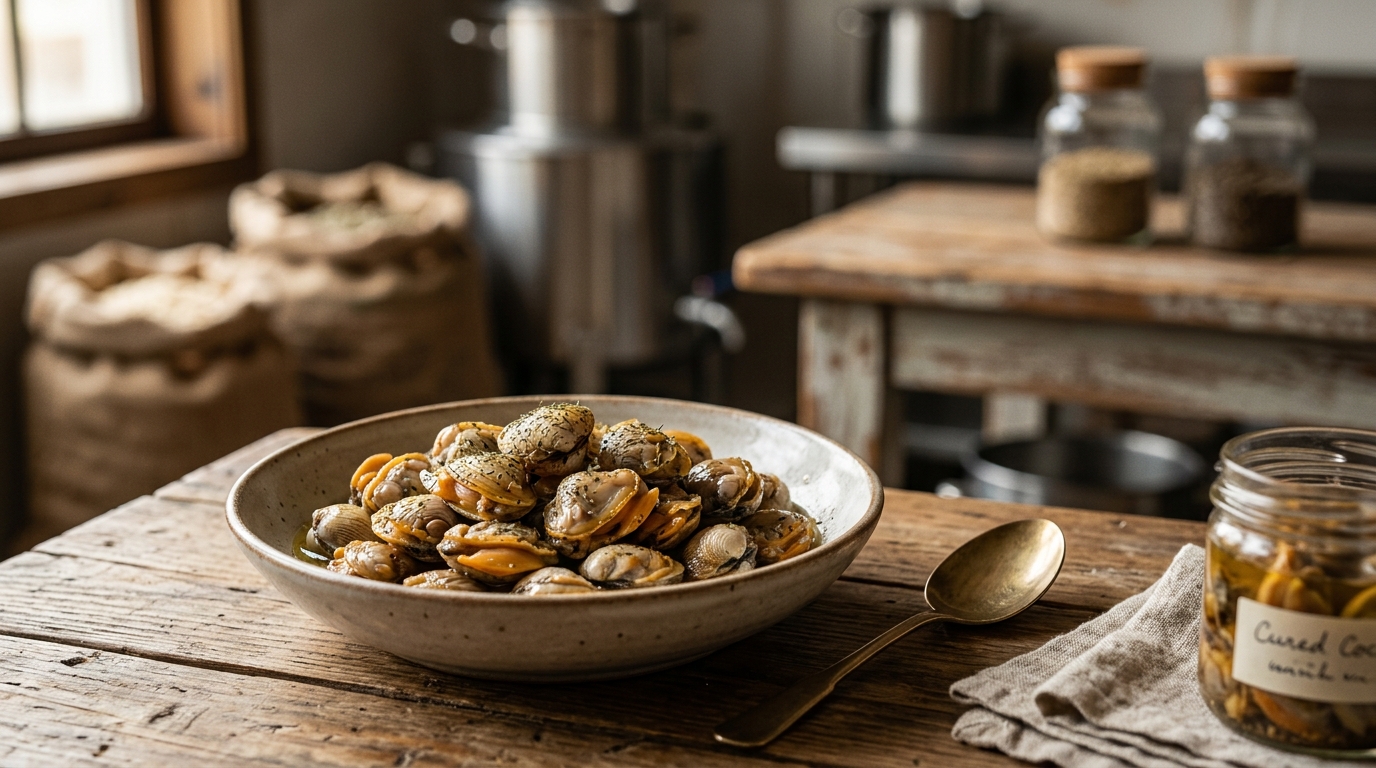
cured-whole-cockle Cover
Unlock Full Data
Cured Whole Cockle Market Intelligence
Prices · Trends · Origins · Forecasts

This guide maps how cured whole cockle physically moves from harvest area to import clearance—and where costs become structurally “locked in.” It’s written for procurement and sourcing managers who know professional buying well, but want a clear, category-specific model for cockles: what drives availability, what drives landed cost, and which spec choices quietly narrow (or widen) your supplier universe.

Executive Summary

  • Capacity constraint is upstream governance, not factory count: harvest-area classification, microbiological monitoring (e.g., E. coli thresholds), and biotoxin closures can shut supply quickly and non-linearly. [1]
  • Yield is the hidden price multiplier: in-shell handling, grading, mortality/ breakage, and cook loss can move effective finished cost materially even when raw input €/kg looks similar.
  • Format choice sets your “logistics physics”: chilled MAP is fastest but least tolerant of border delays; retorted ambient is most delay-tolerant but adds validated thermal processing + records burden. [2]
  • Risk is currently “live” (as of Jul 2026): regulators continue to manage closures and seasonal access (e.g., UK cockle fishery management changes; PSP-related closures in US regions), reinforcing the need for pre-qualified backups. [3]

1) How the Product Physically Moves—and Where Cost Gets “Locked In”

Cured whole cockle is a wild-harvest bivalve product whose cost structure is largely set by two immovable realities: (1) harvest-area controls (classification, closures, biotoxin monitoring) that determine whether raw cockles are even legally usable, and (2) processing discipline (purification/depuration where applicable, cooking + curing + pack integrity) that determines whether the product can travel chilled, frozen, or shelf-stable. Harvest-area classification and official controls are a real gating factor for bivalves, and closures can be triggered when monitoring indicates potential public health risk. [1] Once you choose format (chilled vacuum/MAP vs frozen vs retorted ambient), you also choose your logistics physics: lead time tolerance, inspection delay sensitivity, and shelf-life buffer.

A left-to-right supply chain flow showing the physical movement and compliance gates for cured whole cockles, with format lanes (chilled, frozen, retorted ambient) and locked-in cost callouts for harvest-area status, yield loss, packaging format logistics tolerance, and border delay sensitivity.
  • Insight: The supply chain is short in “steps” but heavy in compliance and yield loss; small upstream disruptions amplify downstream because in-shell handling is bulky, fragile, and variable.
  • Data: Typical physical pinch points are harvest-bed open/close status, purification/depuration and cooking capacity at approved plants, and packaging/thermal validation capability for shelf-stable lines. (Thermal processing of hermetically sealed low-acid foods has explicit scheduled-process and recordkeeping expectations.) [2]
  • Procurement Impact: Your spec and format decisions upstream determine how many nodes can realistically supply you downstream; most “availability” constraints are structural (capacity + approvals), not commercial.

Physical flow (simplified): Harvest/landing → washing & grading → (where required/used) purification/depuration or relaying pathway → cooking/blanching → curing (dry salt or brine/seasoned) → packing (vac/MAP, jar/can, retort pouch) → storage/transport (chilled/frozen/ambient) → import clearance → distribution.

2) Where Money Accumulates: Cost and Margin by Node (with Practical Ratios)

Insight: Costs stack in three places that don’t behave like typical food categories: upstream harvesting volatility (weather/closures), yield loss in primary processing (mortality, breakage, undersize), and “format-driven” logistics/QA (chilled vs shelf-stable).

1. Harvesting & Landing (Wild Capture)

  • Insight: Raw material cost is driven by fishing days and legal access to classified beds; when beds close, supply doesn’t “shift” smoothly—it disappears.
  • Data: Cost inputs are vessel time, fuel, gear maintenance, permit/compliance costs, and landing/auction fees; storms and bed closures reduce landings while fixed vessel costs continue.
  • Procurement Impact: The chain’s base cost is set here; downstream processors can optimize labor and packaging, but they cannot manufacture raw cockles when harvest areas are closed.

2. Primary Processing (Washing, Grading, Purification/Depuration, Cooking)

  • Insight: This node converts a variable biological input into a controllable manufacturing input, but it does so with measurable yield loss and high utilities.
  • Data: Major cost drivers include labor for sand removal and sorting, purification/depuration system capex/opex (water handling, filtration/disinfection monitoring), cooking energy/steam, and yield loss from mortality/breakage/undersize discard. Depuration is widely used to reduce fecal indicator contamination (e.g., E. coli) but is not consistently effective for all hazards, which is why harvesting-area controls and monitoring remain fundamental. [4]
  • Procurement Impact: “Cheap” raw cockles can become expensive cured product if mortality and grit are high; the effective cost per packed unit is determined by graded yield and reject rates.

3. Secondary Processing (Curing / Seasoning / Stabilization)

  • Insight: Curing is both a preservation step and a texture-setting step; process control (salt %, time, temperature) determines safety margin and sensory consistency.
  • Data: Cost drivers include salt/brine ingredients, labor for handling in-shell product, process time (tank/room occupancy), and QA testing tied to microbiological controls and (where relevant) biotoxin governance; optional pasteurization/retort adds energy and validation overhead.
  • Procurement Impact: Tight sensory specs (texture, salt level, drained weight) increase rework and downgrade risk; the more “ready-to-eat” the claim, the more cost shifts into validation and QA.

4. Packaging, QA Release, and Lot Traceability

  • Insight: Packaging is not just a material choice—it sets the product’s allowable distribution physics (chilled vs ambient) and the required verification regime.
  • Data: Vacuum/MAP films and trays carry higher unit cost and require stronger cold-chain discipline; jars/cans/retort pouches add materials plus seam/seal integrity controls and (for shelf-stable) scheduled thermal process substantiation and batch record expectations. [2]
  • Procurement Impact: Packaging format determines how “fragile” your supply chain is to port delays and inspection holds; chilled formats are fastest but least tolerant, retorted formats are most tolerant but add processing and working-capital burden.

5. Logistics, Import Clearance, and Distribution

  • Insight: For shellfish, border friction is a physical cost driver: delays consume shelf-life, trigger temperature excursions, and increase inspection/handling charges.
  • Data: Chilled shipments require insulated packaging, gel/ice, and reefer-controlled legs; frozen adds blast freezing and cold storage; ambient reduces spoilage risk but increases inventory carrying cost. Import costs include documentation preparation, broker fees, and potential exam/hold fees.
  • Procurement Impact: The true “delivered cost” is often decided by shelf-life loss and claims (temperature, pack leaks, sensory drift) rather than freight rate alone.

Product-Level Cost Breakdown

A three-column 100% stacked bar chart comparing cost ratios for chilled vacuum/MAP, frozen, and retorted shelf-stable cured whole cockles using the exact table percentages, with brief annotations highlighting key cost-structure differentiators.

A) Chilled Vacuum/MAP Cured Whole Cockles (Ready-to-eat / short shelf-life)

Supply Chain Node Cost Ratio (% of Final Cost) Notes
Harvesting & Landing 35% Raw availability and first-sale pricing dominate.
Primary Processing 18% Purification/depuration and/or cooking + yield loss + labor.
Secondary Processing (Curing) 12% Brine/salt + handling labor + process time.
Packaging & QA 12% Higher unit packaging + release testing.
Logistics & Import/Distribution 13% Cold chain + shelf-life risk + clearance friction.
Wholesale/Retail Margin 10% Lower than ambient due to higher shrink risk.

B) Frozen Cured Whole Cockles (buffered supply / longer planning window)

Supply Chain Node Cost Ratio (% of Final Cost) Notes
Harvesting & Landing 32% Still dominant, but buffered by inventory.
Primary Processing 17% Similar yield dynamics; more freezing prep.
Secondary Processing (Curing) 11% Often more standardized runs.
Packaging & QA 10% Typically simpler than chilled MAP.
Logistics & Cold Storage 18% Freezing energy + storage + reefer transport.
Wholesale/Retail Margin 12% More stable shelf-life reduces shrink.

C) Retorted Shelf-Stable Cured Whole Cockles (ambient)

Supply Chain Node Cost Ratio (% of Final Cost) Notes
Harvesting & Landing 25% Lower share because processing/pack dominates.
Primary Processing 15% Pre-cook and handling remain significant.
Secondary Processing (Curing + Thermal) 20% Retort energy + scheduled-process substantiation + line time. [2]
Packaging & QA 18% Cans/jars/pouches + integrity controls + records. [5]
Logistics & Import/Distribution 10% Reduced cold-chain sensitivity.
Wholesale/Retail Margin 12% Often higher due to convenience positioning.
Unlock Full Data
Cured Whole Cockle Market Intelligence
Prices · Trends · Origins · Forecasts

3) Structural Facts Every Procurement Manager Needs (Not Trends—Constants)

Reality 1: Harvest-area governance is the real “capacity constraint”

  • Insight: The supply ceiling is set by which beds are open and compliant, not by how many factories exist.
  • Data: Shellfish harvest areas can be restricted by water quality events and biotoxin monitoring outcomes; closures can be immediate and non-linear, and competent authorities can close areas when standards are exceeded or risk is indicated. [6]
  • Procurement Impact: Supply continuity is structurally linked to origin-specific monitoring regimes; substituting origin is not always feasible without re-validating traceability and compliance documentation.

Reality 2: Yield loss is a hidden price multiplier in in-shell products

  • Insight: The economic unit is not “kg purchased” but “kg that survives grading + cooking + curing to spec.”
  • Data: Losses accumulate from undersize grading, sand/grit rejection, mortality in holding, shell breakage, and cook loss; small percentage swings materially change effective cost per packed unit.
  • Procurement Impact: Two suppliers quoting the same raw input price can produce different finished costs because their yield discipline (grading, purification/depuration, cook control) differs.

Reality 3: Packaging format determines your exposure to border delays

  • Insight: Chilled cured cockles are a race against time; shelf-stable is a race against validation and pack cost.
  • Data: Chilled formats depend on continuous 0–4°C control and fast clearance; retorted formats require validated thermal processes and tighter packaging QA/records but tolerate longer routes. [2]
  • Procurement Impact: Format choice is the single biggest structural lever on logistics risk, claims rate, and inventory strategy—long before commercial terms enter the picture.

Key Insights (What to Remember When You Read Specs and Factory Profiles)

  • Insight: Cured whole cockle is a compliance- and yield-led category; the “best” supply chain is the one that controls harvest legality, process discipline, and pack integrity with minimal handoffs.
  • Data: The highest fixed-cost nodes are (1) harvesting access and variability, (2) purification/depuration and cooking capacity plus yield loss, and (3) packaging/QA requirements that scale sharply with chilled vs shelf-stable formats.
  • Procurement Impact: When evaluating supply options, treat harvest-area eligibility, yield controls, and packaging validation capability as first-order qualifiers—because they set the physical feasibility and the cost floor of the product.

4) The Bottom Line for Your Next Contract

(Analyzed at: Jul, 2026)

Write your next contract so format and compliance evidence are non-negotiable: lock the pathway (chilled MAP vs frozen vs retorted ambient) and require lot-level traceability back to the harvest area plus documented release controls (including closure/area-status governance and, for retorted packs, scheduled-process and batch record discipline). This works because in 2025–2026 we continue to see real-world, sudden harvesting restrictions and closure management in both European cockle fisheries administration and US shellfish biotoxin events—exactly the kind of disruption where “commercially equivalent” supply fails on legality or shelf-life. [7] If you don’t harden these gates up front, the cost shows up later as expedited freight, higher rejection/claim rates, and short-notice switches that typically erode several points of delivered cost—often in the same 5–12% range teams assume they can “negotiate back” but rarely do under disruption pressure.

Unlock Full Data
Cured Whole Cockle Market Intelligence
Prices · Trends · Origins · Forecasts

References

  1. gov.uk
  2. law.cornell.edu
  3. nw-ifca.gov.uk
  4. fao.org
  5. fda.gov
  6. eur-lex.europa.eu
  7. eastern-ifca.gov.uk

Related Contents

Subscribe
→
By subscribing you agree to with our Privacy Policy and provide consent to receive updates from our company.
Thank you! Your submission has been received!
Oops! Something went wrong while submitting the form.
Subscribe to receive the latest blog posts, updates, promotions, and announcements from Tridge.
