INDUSTRY TRENDS

Coriander Seed Sourcing (2026 Guide): Cost Drivers, Risk Triggers, and Smarter Buying Decisions

Author
Team Tridge
DATE
April 16, 2026
9 min read
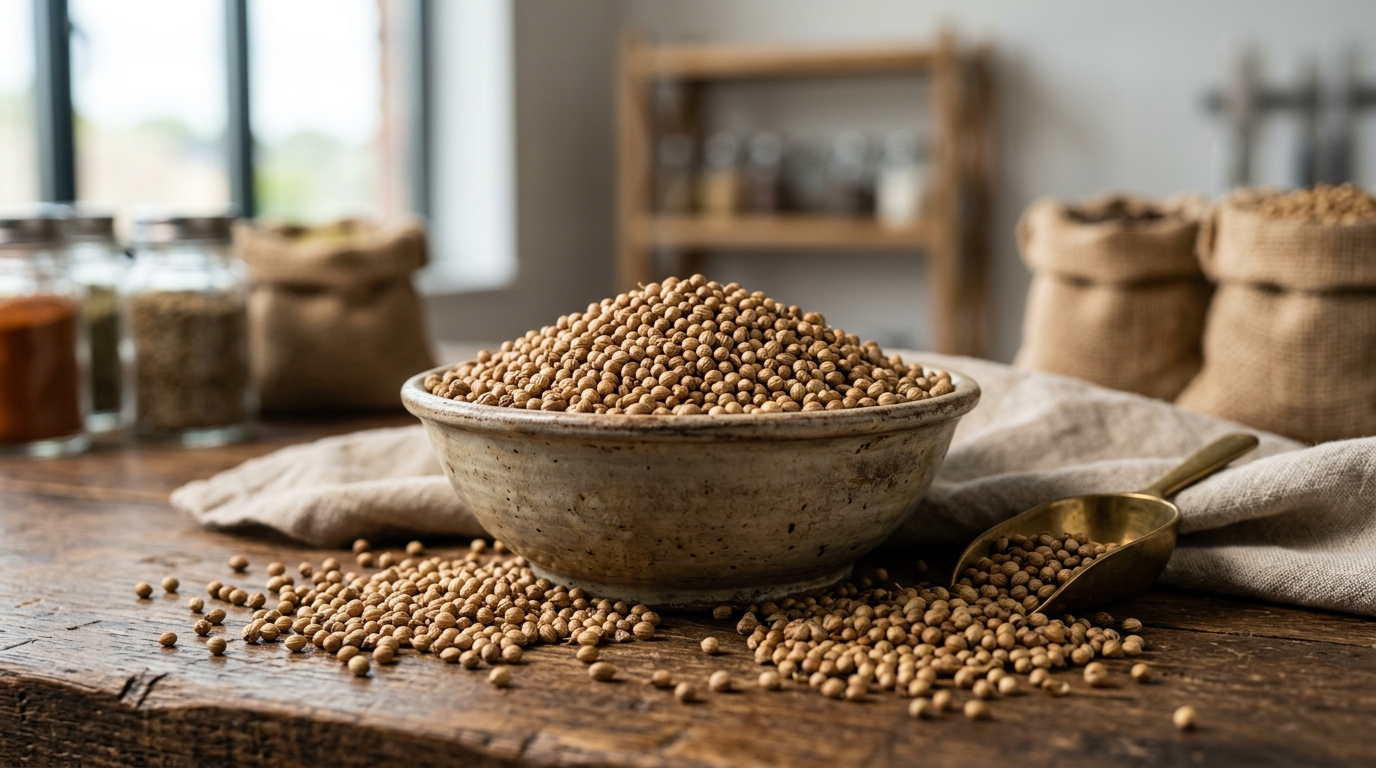
coriander-seed Cover
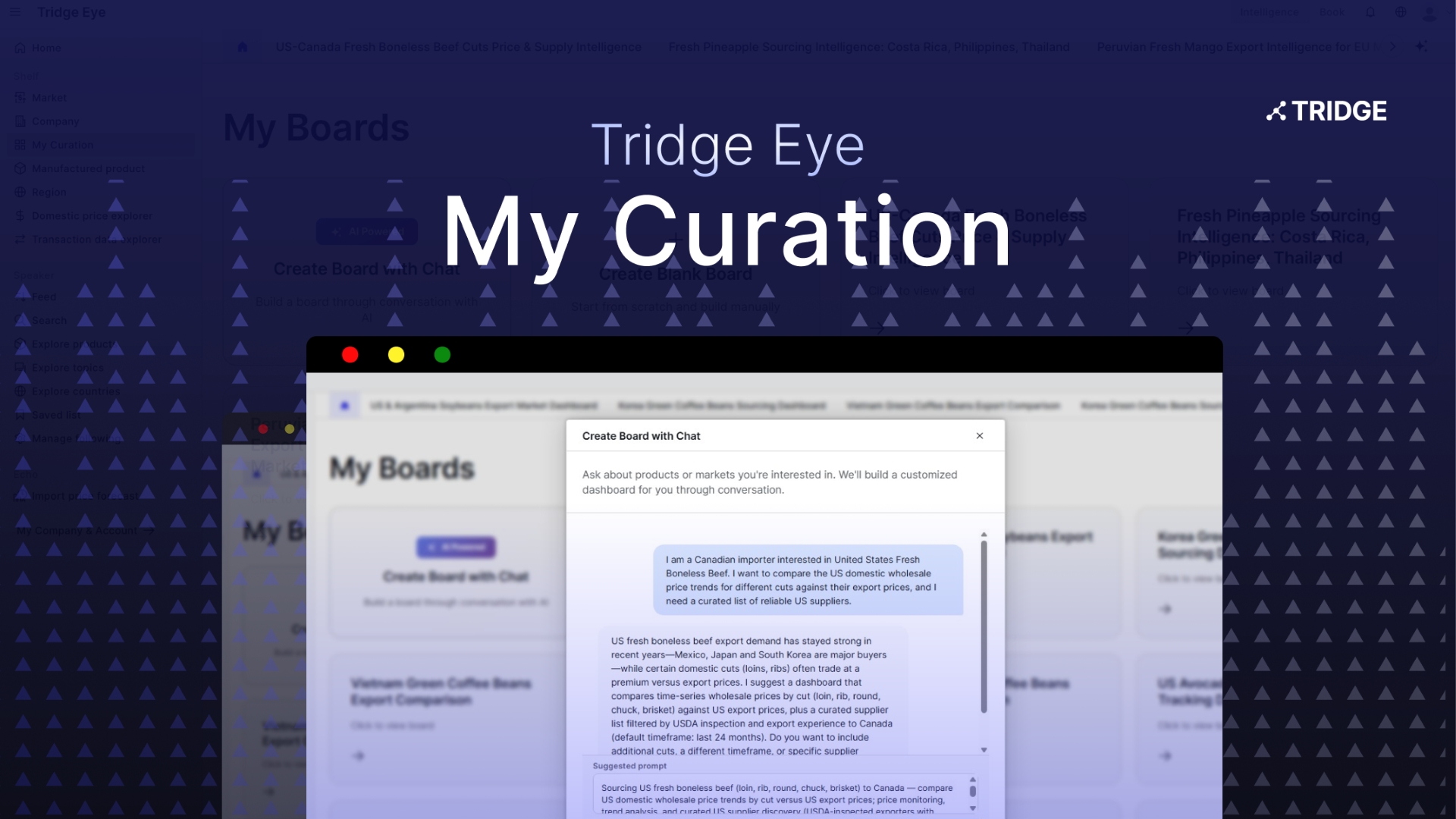
Tridge Eye Data Intelligence Solution

This report is powered by Tridge Eye Data Intelligence.

Every data point, price signal, and supply risk insight in this analysis comes from the same platform that procurement and sourcing leaders worldwide rely on daily. As you read, consider what this level of market intelligence could do for your sourcing decisions.

Explore Tridge Eye →

Coriander seed is often treated like a simple, storable ag commodity—but procurement outcomes are usually driven by process capability (cleaning + validated pathogen reduction) and compliance execution, not the lowest raw-seed quote. This guide translates coriander-specific supply chain realities into practical actions procurement leaders can govern: how to evaluate “usable landed cost,” where risk actually accumulates (whole vs. ground), and how to set decision triggers for contracting, allocation, and alternate qualification.

Executive Summary

  • “Usable landed cost” beats $/MT quotes: The biggest avoidable cost comes from shrink/yield loss, rework (re-clean/re-sterilize), import holds, and non-conformance—not the farmgate price alone.
  • Food-safety expectations are structural (not optional): FDA’s spice safety work highlights Salmonella and filth as systemic challenges in spices and notes industry reliance on pathogen reduction treatments; coriander is among spices included in FDA retail sampling. [1]
  • Validated kill steps are a real bottleneck lever: Treatment access (steam/heat, irradiation, etc.) and documentation discipline frequently determine lead time and premiums; ASTA explicitly frames a validated kill step as necessary for spices sold. [2]
  • Origin concentration + re-export hubs matter: Trade data for HS 090920 shows export concentration and the presence of re-export/processing hubs (e.g., EU countries) that add value via processing and compliance services. [3]
  • Whole vs. ground is a governance decision: Ground coriander typically carries higher fraud/adulteration exposure and higher QA burden; many buyers prefer importing whole and milling closer to use for control.
  • Practical operating model: Run coriander as an intelligence-led category with (1) coverage rules, (2) supplier capability benchmarking, (3) risk triggers, and (4) governance KPIs.

Key Insights

(Analyzed at: Apr, 2026)

  • Strategy: Buy
  • Reliability: Medium
  • Potential Saving: 6% ~ 14%
  • Insight: Post-2024 freight and compliance volatility has made the “all-in, compliant” cost spread between suppliers wider than the raw-seed spread. A practical April 2026 move is to lock 60–80% of the next 6–9 months’ coverage with suppliers that can evidence a validated kill step (or provide a clear downstream kill-step plan), while competitively bidding the remaining 20–40% across at least two origins/lanes. This captures savings by reducing rework/holds and by using credible alternates to negotiate treatment adders and lead-time premiums—while keeping controlled spot flexibility if origin prices soften.

1) What the Coriander Seed Supply Chain Actually Looks Like (Ground Truth)

Coriander seed behaves like a “storable ag commodity,” but procurement outcomes are usually determined by processing capability + compliance discipline, not just farmgate price.

Typical physical flow (whole seed → export-ready → customer-ready)

  1. Farm production (often a rabi-season crop in India) → dried seed lots sold into local aggregation.
  2. Aggregation & mandi/trader system → mixed lots consolidated; quality can drift quickly without tight intake controls.
  3. Primary processing (cleaning, de-stoning, grading, sometimes color sorting) → converts “field-run” lots into exportable grades.
  4. Microbial reduction / “kill step” (steam, irradiation, other validated methods) → increasingly required for US/EU buyers.
  5. Secondary processing (crushing/grinding, blending) → higher fraud/adulteration exposure and higher QA burden.
  6. Export logistics (containerized dry cargo) → humidity/infestation/documentation risks.
  7. Import handling / destination processing (optional re-cleaning, re-sterilization, destination milling) → many buyers prefer this for control.
Flowchart showing coriander seed process from farm production through aggregation, primary processing, validated pathogen reduction/kill step, secondary processing (crush/grind/blend), export logistics, and import/destination processing to customer use, with callouts for key risk and governance control points (lot mixing, shrink/yield loss, kill-step capacity/documentation bottleneck, higher fraud exposure in ground, and humidity/infestation plus documentation holds), and a legend distinguishing whole vs ground pathways and the decision point to import whole then mill vs buy ground.

Reality check on trade & compliance

  • FDA’s spice safety work (risk profile and follow-on efforts) identifies pathogens such as Salmonella and filth as systemic challenges in spices; it also notes that responsible manufacturers often apply a pathogen reduction treatment to many spices after entry to the U.S. [1]
  • FDA’s two-year retail sampling study included coriander among sampled products, reinforcing that coriander sits inside the same regulatory/industry risk frame as other common spices. [1]
  • ASTA frames pathogen control (including Salmonella) as a top priority and lists treatment methods such as steam/heat treatment and irradiation as controls. [2]

Why this matters to a procurement manager

  • If you buy “cheap” but non-validated product, you often pay later via rework (re-clean/re-sterilize), holds, rejects, expedited replacement buys, or customer non-conformance.

2) Where the Money Really Goes: Cost & Margin Stack by Supply-Chain Node

Key insight (the procurement takeaway)

For coriander seed, your largest controllable cost levers are usually:

  • Yield-quality seasonality (timing and origin mix)
  • Cleaning/sterilization capacity constraints (lead time premiums)
  • Compliance economics (testing, documentation, rejections)
  • Freight + FX (landed-cost volatility)

Below is a practical cost-stack view by node.

2.1 Upstream / Raw Material (Farming + Local Aggregation)

  • What happens: farmers harvest and dry; product is sold into local channels and consolidated.
  • Cost drivers:
  • Yield variability (weather) → changes supply and quality (oil/aroma, moisture, foreign matter)
  • Local demand pull (domestic consumption can tighten export availability in some years)
  • Working-capital behavior of traders (carry/hoarding post-harvest)
  • Procurement implication: your “price” is not just farmgate—it’s farmgate + the cost of turning field-run into your spec.

2.2 Primary Processing (Cleaning / Grading / Export-Ready Preparation)

  • What happens: de-stoning, aspiration, sieving, grading; sometimes optical sorting.
  • Cost drivers:
  • Cleaning losses/shrink (paying for gross weight vs net clean)
  • Plant congestion near harvest (premiums for fast slotting)
  • Specification tightness (purity, extraneous matter, moisture)
  • Procurement implication: tighter specs reduce supplier pool and can create hidden premiums during peak season.

2.3 Microbial Reduction (“Kill Step”: Steam/Irradiation/etc.)

  • What happens: validated pathogen reduction treatment; often demanded for “ready-to-eat” expectations or downstream use without a kill step.
  • Cost drivers:
  • Treatment capacity availability (bottleneck risk)
  • Validation, monitoring, documentation
  • Potential sensory impact if poorly controlled (aroma loss)
  • Compliance anchor: FDA highlights pathogens such as Salmonella as a systemic spice challenge and describes industry reliance on pathogen reduction treatments. [1]
  • Industry practice anchor: ASTA lists validated kill-step methods (e.g., steam/heat, irradiation) for Salmonella control. [2]

2.4 Secondary Processing (Crushing / Grinding)

  • What happens: milling to particle size; often blending.
  • Cost drivers:
  • Higher QA/testing frequency (micro + adulteration/fraud screening)
  • Aroma volatility (freshness degradation) and lot-to-lot drift
  • Dust/shrink and higher packaging barrier needs
  • Procurement implication: ground coriander is typically higher risk per kg than whole seed; many buyers import whole and mill closer to use to reduce risk and improve consistency.

2.5 Packaging & Quality Assurance (QA)

  • What happens: food-contact packaging, labeling, COA pack, traceability.
  • Cost drivers:
  • Lab testing (micro, residues, heavy metals as applicable)
  • Audit/certification costs (e.g., GFSI schemes)
  • Document completeness (import holds are expensive)

2.6 Logistics & Distribution (Origin → Destination)

  • What happens: inland haulage, port handling, ocean freight, insurance, import clearance.
  • Cost drivers:
  • Freight volatility; demurrage/detention risk
  • Humidity ingress/insect activity risk in transit
  • FX exposure (notably INR/USD for India-origin purchasing)

2.7 Importer/Distributor Margin (if you buy through intermediaries)

  • What happens: financing, inventory buffering, compliance services, repacking.
  • Cost drivers:
  • Inventory carry (especially when buyers want “ship now” outside harvest)
  • Value of compliance and treatment services
100% stacked bar chart comparing illustrative usable landed cost mix for (A) Whole Cleaned, Non-Sterilized, (B) Whole Cleaned + Validated Kill Step, and (C) Ground Sterilized, Customer-Ready, with segments for upstream raw seed+aggregation, primary processing, microbial reduction, secondary processing (ground only), packaging & QA, logistics (including FX/freight effects), and importer/distributor margin, plus callouts highlighting kill-step share in B and C, higher secondary processing and QA in C, and meaningful logistics across all.

Product-level cost breakdown (illustrative ratios)

These are modeled percentages of final delivered cost to your facility (not retail). Actuals vary by origin, spec, Incoterms, treatment, and market tightness.

A) Whole Coriander Seed (Cleaned, Non-Sterilized)

Supply Chain Node Cost Ratio (% of final delivered cost) What moves it most
Upstream raw seed + aggregation 55% crop size/quality, post-harvest trader behavior
Primary processing (clean/grade) 12% purity/moisture specs, shrink
Microbial reduction 0% N/A
Packaging & QA 6% testing plan, documentation
Logistics (incl. FX/freight effects) 17% ocean freight + FX
Importer/distributor margin 10% inventory carry, service level

B) Whole Coriander Seed (Cleaned + Steam Sterilized / Validated Kill Step)

Supply Chain Node Cost Ratio (% of final delivered cost) What moves it most
Upstream raw seed + aggregation 50% same as above
Primary processing (clean/grade) 11% same as above
Microbial reduction 8% capacity/validation/documentation
Packaging & QA 7% micro verification, lot release
Logistics (incl. FX/freight effects) 16% lane volatility
Importer/distributor margin 8% service level

C) Ground Coriander (Sterilized, Customer-Ready)

Supply Chain Node Cost Ratio (% of final delivered cost) What moves it most
Upstream raw seed + aggregation 40% raw material price
Primary processing (clean/grade) 9% shrink/spec
Microbial reduction 7% validated lethality + monitoring
Secondary processing (grind) 12% particle size, yield loss, energy
Packaging & QA 10% higher test frequency + packaging barrier
Logistics (incl. FX/freight effects) 14% lane + handling
Importer/distributor margin 8% inventory carry

3) The Structural Fact That Shapes Your Sourcing Strategy

Trade data shows coriander seed exports are concentrated, and “re-export hubs” matter.

  • For HS 090920 (coriander seed), WITS/UN Comtrade export listings show concentration among a limited set of exporting countries and the appearance of countries that may function as processing/re-export hubs depending on trade flows and company structures. [3]

Why procurement should care:

  • A supplier “in Europe” might still be origin-dependent (India/Black Sea/North Africa) but provides value via cleaning, sterilization, blending, documentation, and shorter lead times.

4) The Critical Insight: Why Your “Seed Price” and Your “Delivered, Usable Cost” Diverge

Procurement teams often benchmark coriander on a simple $/mt quote. The real economic driver is the gap between:

  • Quoted commodity price vs.
  • Delivered cost of compliant, usable material (net of shrink, rework, holds, and rejects)

Three common “disconnect” mechanisms

  1. Shrink and net-yield economics
  2. Two suppliers can quote the same price, but one lot yields more usable product after cleaning and sorting.
  3. Kill-step capacity premiums
  4. When sterilization slots are tight, the “treatment adder” becomes a market in itself.
  5. Compliance failure costs are nonlinear
  6. A single hold/reject can erase the savings from multiple “cheap” buys.

Why this is not theoretical

  • FDA documents that spice shipments offered for entry into the U.S. had measurable Salmonella prevalence in historical import surveillance and that pathogens in spices are a systemic challenge—driving preventive-control expectations and treatment practices. [1]

5) Where Procurement Teams Typically Misjudge Coriander Seed

  1. They negotiate price before locking the spec-to-process fit
  2. Example: buying “whole cleaned” when the internal end-use effectively requires “validated kill step.”
  3. They treat origin as a label, not a risk model
  4. What matters is how origin interacts with: harvest timing, moisture risk, residue risk, and logistics lanes.
  5. They over-index on incumbent reliability and under-invest in alternates
  6. Alternate qualification is slow (QA docs, samples, trial runs). Waiting until disruption hits creates forced spot buys.
  7. They underestimate the difference between whole vs. ground risk
  8. Ground coriander typically demands tighter governance (fraud screening, micro validation, freshness control).

6) What Changes When You Run Coriander as an Intelligence-Led Category (Not a Quote-Chasing Exercise)

This is how procurement teams use intelligence capabilities to change decisions—mapped to coriander realities.

A) Price intelligence → contract timing and coverage mix

  • Decision improved: when to lock volume vs keep spot flexibility.
  • Practical action: set guardrails (e.g., target coverage % pre-/post-harvest; triggers based on price trend + freight/FX moves).

B) Supplier benchmarking → choose suppliers that match your risk posture

  • Decision improved: who gets primary vs secondary allocation.
  • Practical action: benchmark suppliers on:
  • cleaning/grading capability and throughput
  • sterilization access/validation discipline
  • documentation quality (COA completeness, traceability)
  • lead times and Incoterms norms

C) Risk monitoring → earlier triggers, fewer emergencies

  • Decision improved: when to shift origin mix, increase safety stock, or activate alternates.
  • Practical action: monitor:
  • harvest/weather anomalies (yield/quality risk)
  • port congestion and lane disruptions
  • compliance alerts and regulatory enforcement shifts

D) Governance analytics → make decisions auditable

  • Decision improved: justify allocation shifts and spec changes internally.
  • Practical action: track:
  • supplier/origin concentration
  • contract coverage vs consumption
  • price variance vs internal benchmark
  • non-conformance rate (holds/rejects) and corrective actions

7) Strategic Use Cases (What a Procurement Leader Can Operationalize)

  1. Reduce landed-cost volatility without raising stockout risk
  2. Build a policy: “X% contract coverage + Y% controlled spot,” with triggers tied to seasonality and logistics.
  3. Pre-qualify alternates before disruption
  4. Maintain a ready bench of 2–3 alternates per spec tier:
  5. Whole cleaned
  6. Whole sterilized
  7. Ground sterilized
  8. Design an origin portfolio, not a single-origin dependency
  9. Use a “primary/secondary” model where secondary origin is qualified for continuity, not just price.
  10. Tighten quality/compliance governance (especially for ground coriander)
  11. Align procurement + QA on:
  12. kill-step expectations and documentation
  13. risk-based testing plan
  14. acceptance criteria and deviation workflow
  15. Negotiate from a should-cost view (not last price paid)
  16. Break quotes into: raw seed, cleaning yield, sterilization adder, packaging/QA, freight/FX assumptions.

8) Why This Matters Beyond Coriander (Examples Procurement Teams Also Recognize)

The same intelligence-led approach generalizes well to other “high-variability, compliance-sensitive” categories procurement leaders often manage:

  • Cumin seed: similar seasonality and origin concentration dynamics; price spikes often driven by acreage shifts and crop outcomes.
  • Paprika/chili powders: higher fraud/adulteration and color-value manipulation risk; requires stronger supplier QA benchmarking.
  • Black pepper: global logistics and quality differentials matter; treatment/validation discipline is a frequent differentiator.
  • Turmeric: residue compliance and quality variability; processing controls and documentation quality often determine eligibility.

Common pattern: the cheapest quote is rarely the cheapest compliant, usable supply—and intelligence helps you quantify that before you commit.

9) Why Coriander Seed Is a Particularly Strong “Proof Category” for Intelligence-Driven Sourcing

Coriander is a powerful example because it combines four procurement realities in one category:

  • Commodity behavior (seasonality + tradable inventories)
  • Processing bottlenecks (cleaning and validated kill steps)
  • Compliance risk (pathogens like Salmonella are a known spice hazard focus area; coriander is included in FDA sampling) [1]
  • Form-factor trade-offs (whole vs ground changes risk, QA burden, and freshness economics)

If a procurement organization can run coriander with disciplined coverage strategy, supplier benchmarking, and risk triggers, it usually becomes easier to replicate the same operating model across the broader spices and dried-ingredients portfolio.

Tridge Eye Data Intelligence Solution

Make Faster, Data-Driven Sourcing Decisions

The insights in this report are just the starting point. Tridge Eye is the data intelligence solution that gives procurement and sourcing leaders real-time market signals, price benchmarks, and supply risk alerts — so you can act before the market moves.
Explore Tridge Eye →

References

  1. fda.gov
  2. astaspice.org
  3. wits.worldbank.org
Subscribe
By subscribing you agree to with our Privacy Policy and provide consent to receive updates from our company.
Thank you! Your submission has been received!
Oops! Something went wrong while submitting the form.
Subscribe to receive the latest blog posts, updates, promotions, and announcements from Tridge.