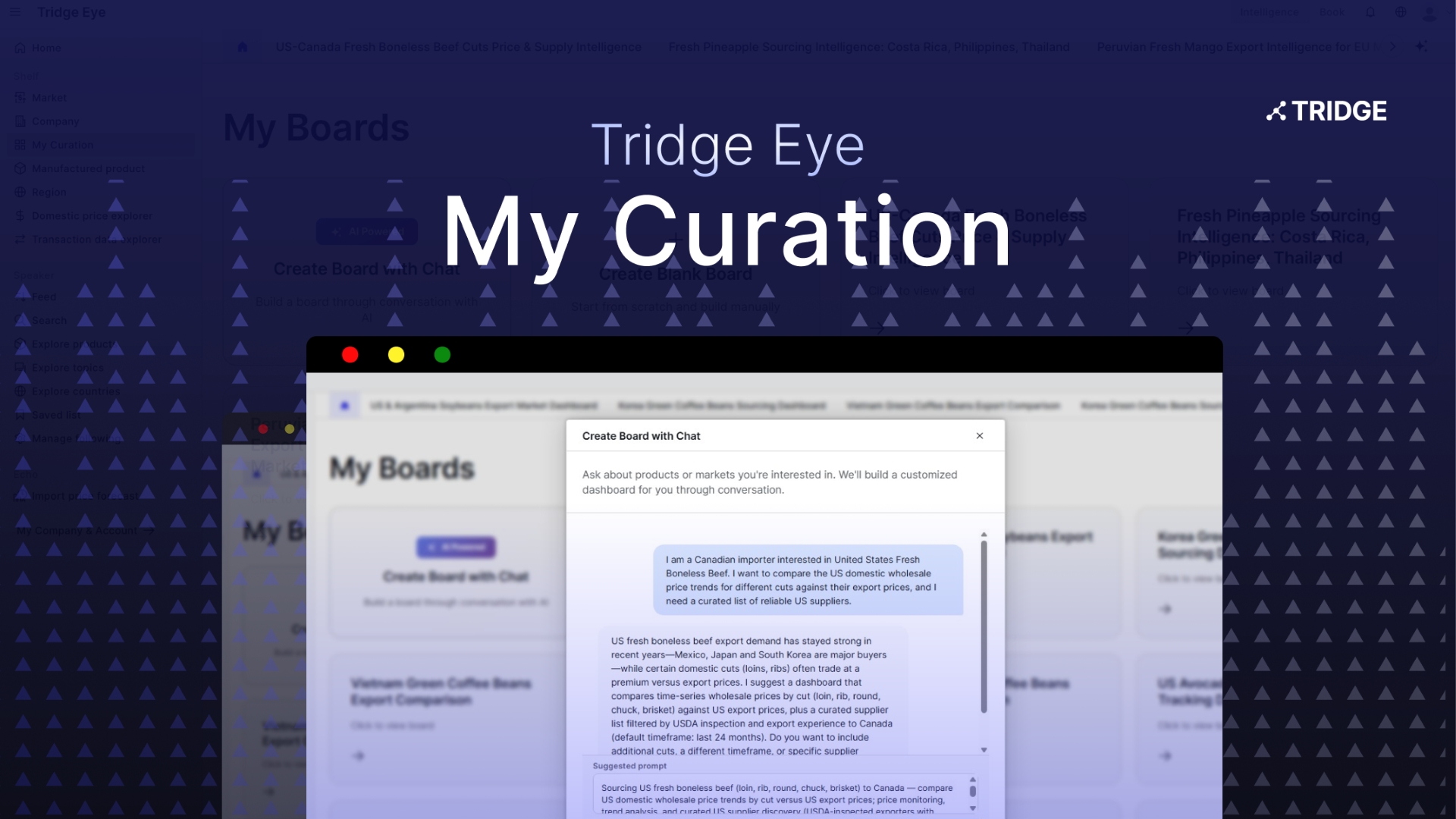

This report is powered by Tridge Eye Data Intelligence.
Every data point, price signal, and supply risk insight in this analysis comes from the same platform that procurement and sourcing leaders worldwide rely on daily. As you read, consider what this level of market intelligence could do for your sourcing decisions.
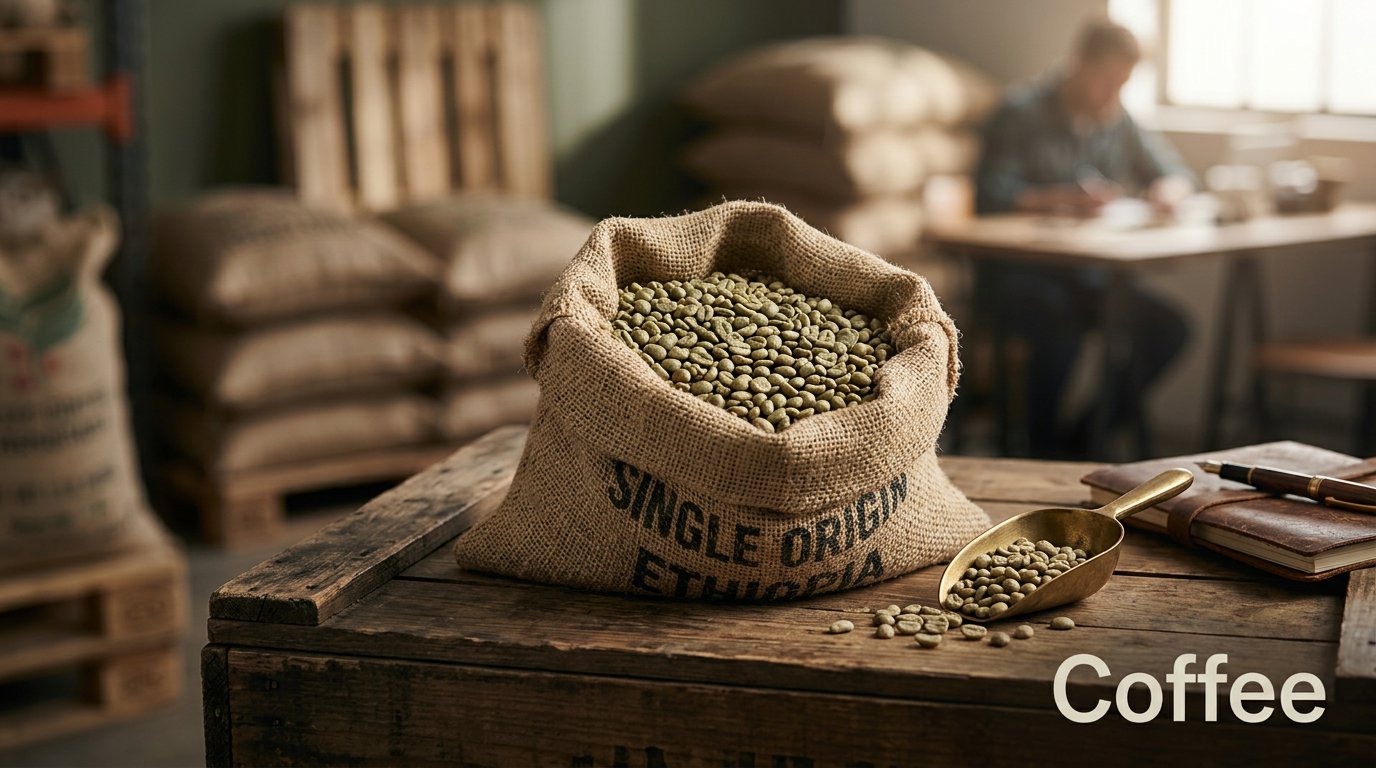
Coffee looks like a simple commodity until you map (1) the physical “forms” it takes (cherry → parchment → green → roasted/ground/soluble), and (2) the commercial handoffs where costs, quality risk, and compliance obligations accumulate. This guide is written for procurement and sourcing leaders who are strong in other categories but newer to coffee—so it stays practical: what you’re really buying, why your paid price can move opposite the market, and how to run decisions with repeatable governance.

(Analyzed at: Mar, 2026)

Strategy: Hold
Coffee looks like a simple commodity until you map the physical product forms and the “handoffs” where cost, quality risk, and compliance obligations stack up.
Coffee’s supply chain is split across two worlds:
Why this matters for procurement:
Typical coffee flow (physical + commercial):

Key insight: Coffee cost is not “just the C price.” A buyer’s landed cost is the sum of (a) physical conversion losses, (b) working capital, (c) quality sorting and claims risk, and (d) logistics and compliance overhead. The same green coffee can have meaningfully different total cost-to-serve depending on route, Incoterms, and service requirements.
What’s happening
Main cost drivers
Procurement implication
What’s happening
Main cost drivers
Procurement implication
What’s happening
Main cost drivers
Procurement implication
What’s happening
Main cost drivers
Procurement implication
What’s happening
Main cost drivers
Procurement implication
What’s happening
Procurement implication
These are modeled ratios to show where cost typically concentrates. Actuals vary by origin, quality tier, Incoterms, freight, and channel.
Supply chain nodeCost ratio (% of final delivered cost)What moves it mostFarming (farmgate embedded in green)20%harvest labor, yield shocksPrimary processing (milling, grading)10%defects, drying/energyExport/origin trade8%financing, FX, documentationImport & destination handling12%warehousing, carry, QA releaseRoasting/manufacturing12%roast loss (14–20%), energy [1]Packaging & QA10%barrier materials, testingDistribution + wholesale/retail margin28%channel mix, promo intensity
Supply chain nodeCost ratio (% of final delivered cost)What moves it mostFarming (quality premium embedded)28%cup score/selection, micro-lotsPrimary processing12%lot separation, moisture controlExport/origin trade10%traceability program overheadImport & destination handling14%smaller lots, QC intensityRoasting/manufacturing10%roast profiling, lossPackaging & QA10%premium packaging, QADistribution + margin16%DTC vs retail mix
Supply chain nodeCost ratio (% of final delivered cost)What moves it mostFarming/green input18%robusta availability, gradePrimary processing8%defect tolerance, yieldExport/origin trade8%financing, FXImport & destination handling10%bulk handlingSecondary processing (extraction/drying)26%energy intensity, yieldPackaging & QA10%bulk packs, testingDistribution + margin20%contract structure
Coffee pricing is structurally “two-layered”:
This is why procurement teams can see a situation where:
Also, market reference prices used for budgeting often include “ex-dock” concepts (delivered into market), which can mask whether the driver was futures, differential, or logistics.
Key insight: In coffee, the differential behaves like a “pressure valve” for real-world constraints.
Common reasons differentials disconnect from the benchmark:
Practical example (non-numeric):
What to do with this insight:
Below is how procurement teams typically use market + supplier intelligence to improve decisions across cost, risk, resilience, and governance.
Outcome: fewer “false negotiations” where you push on benchmark while the real driver is differential or logistics.
Benchmark suppliers on:
Outcome: faster, defensible supplier choices—especially when switching under pressure.
Outcome: reduced volatility exposure without breaking quality requirements.
Supplier scorecards and governance cadence:
Outcome: issues surface earlier; stakeholder alignment improves (quality/ops/finance).
The same intelligence-driven sourcing logic applies whenever benchmark pricing + conversion yield + compliance interact.
The transferable lesson: procurement performance improves when you manage drivers (yield, differential, compliance readiness, logistics constraints) rather than negotiating a single headline price.
Coffee is a strong “teaching category” because it forces four disciplines to work together:
For procurement leaders, the practical payoff is decision quality: faster alignment across quality/ops/finance, fewer surprises in landed cost, and a supplier portfolio that can absorb shocks without improvisation.

Make Faster, Data-Driven Sourcing Decisions
The insights in this report are just the starting point. Tridge Eye is the data intelligence solution that gives procurement and sourcing leaders real-time market signals, price benchmarks, and supply risk alerts — so you can act before the market moves.