
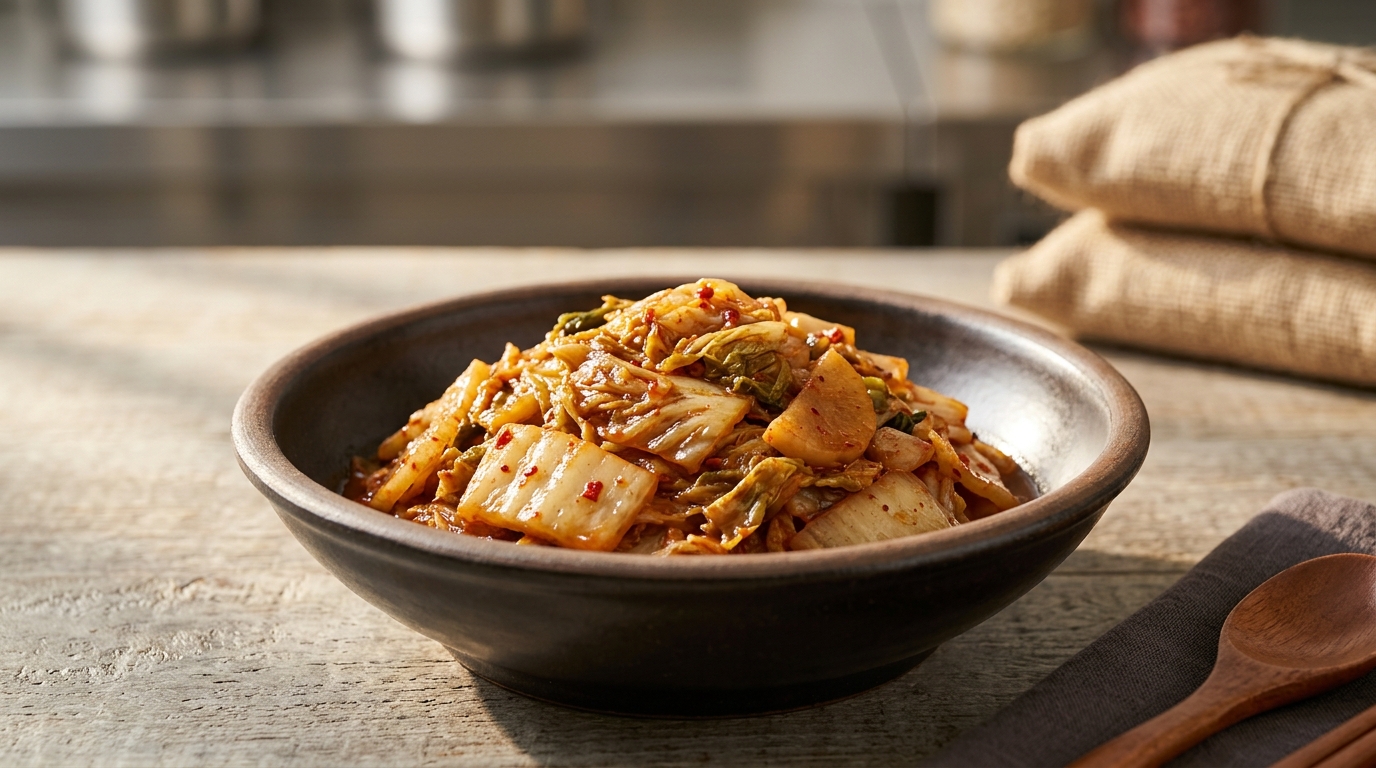
Stir-fried kimchi looks like a cabbage-driven category from the outside, but procurement outcomes are usually decided by lags (fermentation/WIP + inventory), and by the tightest operational constraint (capacity, packaging, or cold-chain). This guide gives customer-facing teams a practical way to talk about pricing mechanisms and continuity terms—without over-indexing on commodity headlines.
Raw material and finished-goods pricing for stir-fried kimchi routinely move at different speeds—and occasionally in opposite directions. The disconnect isn’t “supplier gamesmanship” by default; it’s usually inventory physics (fermentation + WIP), capacity allocation, packaging constraints, and retailer price cadence colliding. The advantage comes from spotting which constraint is setting the price floor this cycle, then negotiating to that constraint instead of arguing farmgate cabbage.


| What’s setting the price floor this cycle? | What you’ll observe | What you can offer (trade) | What you should ask for (get) |
|---|---|---|---|
| Capacity/allocation | Longer lead times, MOQ increases, “limited production slots” language | Smoother forecast, fixed weekly call-offs, off-peak production windows | Allocation protection + capped increases + service KPIs (OTIF/lead-time) |
| Packaging constraint | Forced substitutions, label delays, higher defect/leak claims | Pack-format flexibility (e.g., tub vs pouch), label pre-approvals, longer firm horizon | Packaging surcharge sunset clause + shared savings if packaging normalizes |
| Cold-chain/logistics | Higher accessorials, missed appointments, short-dates risk | Regional DC consolidation, appointment discipline, temp-monitoring alignment | Freight pass-through with auditability + penalty carve-outs for temp abuse |
Quick Win: In your next supplier review, ask one question: “What percentage of next month’s production is already covered by contracted cabbage + bulk WIP?” If they can’t answer, you’re negotiating blind.
Quick Win: Build a one-page “approved alternates” list (spice blend, seafood/vegan base, packaging format) with pre-cleared decision rights. It turns constraints into controlled flexibility.
Quick Win: Add one metric to your QBR: “% of volume priced with a defined lag/trigger mechanism.” Even moving 30–50% of volume off pure spot/annual fixed can reduce pricing disputes.
Quick Win: In disruption scenarios, ask for “slot confirmation” (production week + pack format + ship window) in writing. It turns vague risk into schedulable reality.
Quick Win: Reuse your kimchi contract language templates (lag/trigger, allocation protection, packaging surcharge sunset) in at least one other chilled/prepared category.
Quick Win: Align Finance and Ops on one sentence: “We’ll pay a small premium to avoid a large outage cost.” Then quantify outage cost once (even roughly) and use it as your negotiation boundary.
Use the current raw-to-finished disconnect to negotiate a 90-day fixed price with a step-down trigger rather than demanding an immediate decrease. The window exists because suppliers typically price off covered inventory + WIP, so today’s cabbage softness won’t show up until their next buying cycle—but you can pre-wire the pass-through now. What’s at stake is usually not a headline 15–20% move; it’s capturing a realistic 2–6% improvement versus waiting for the next renewal while also buying allocation protection when capacity tightens.
(Analyzed at: Sep, 2026)
If you’re renegotiating now, treat refrigerated freight as a first-order term, not a footnote: 2026 reefer conditions have been strong enough that landed-cost pressure can hold finished kimchi pricing up even when produce eases. [2] The most practical move is a 90-day price window with (1) a 30–60 day cabbage lookback step-down and (2) an auditable reefer pass-through cap tied to a defined index or lane-basket—so you’re not paying “mystery freight.” Done well, teams typically defend a few points of margin (often in the 2–6% range on the item) while also buying written slot/pack commitments that reduce the much larger cost of an allocation month.


