

Procurement teams new to organic ABC concentrate often assume farmgate moves will quickly show up in concentrate offers. In practice, concentrates behave like a processed, inventory-backed market: price transmission is delayed by stock carry, conversion capacity, and the “tightest-component-wins” effect in blends. This guide shows how to spot those lags, avoid common buying-motion mistakes, and negotiate contract structure (not just price) to protect cost and continuity.
Insight: In organic ABC (apple–beet–carrot) concentrate, upstream crop prices and downstream concentrate offers routinely move out of sync—creating short “alpha windows” where buyers can lock in better terms before suppliers re-price, or avoid getting trapped in a sticky price floor when raw material costs are falling.
Data (validated / corrected): The disconnect is structural, not random:

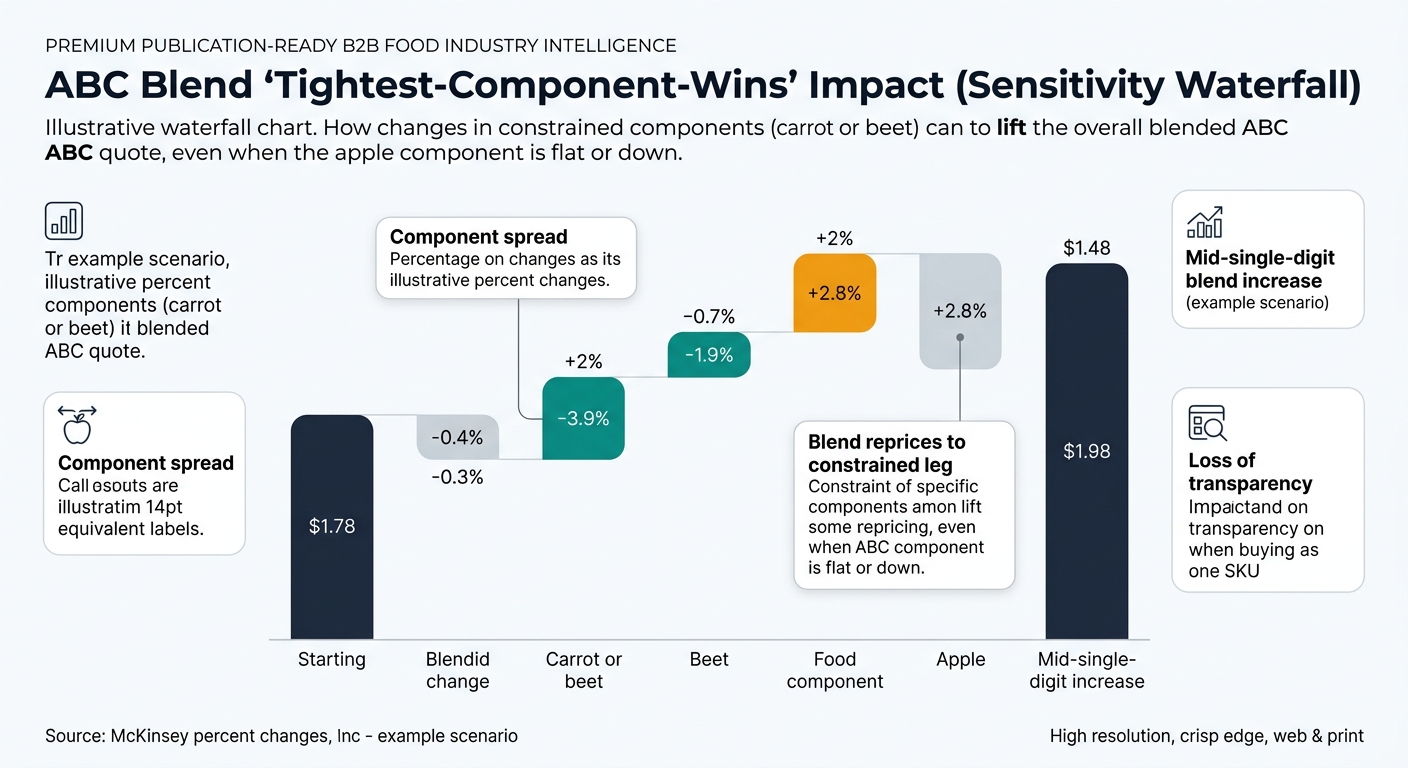
Procurement Impact: If you only watch “headline” fruit/veg pricing or only compare supplier quotes, you miss the timing edge. The practical play is to track (1) raw material direction, (2) processor capacity tightness, and (3) component spread (apple vs beet vs carrot) and then negotiate structure (indexing, reopeners, allocation language) during the 4–10 week window when suppliers’ offers haven’t fully caught up to the new reality.
Quick Win: Ask every supplier to state (in writing) whether the quote is based on old-inventory lots vs new production, and what month/quarter the underlying raw material was purchased or processed. This question is realistic in concentrate markets because inventory carry is common and materially affects offer behavior. (blog.tridge.com)
Insight: Most “bad outcomes” in organic ABC concentrate aren’t caused by choosing the wrong supplier—they’re caused by choosing the wrong buying motion (timing, spec rigidity, and component strategy) for a market that moves in lags.
Data: The most common mistakes are repeatable patterns.
Quick Win: Run a “spec elasticity” workshop once per year: identify which parameters are truly consumer-critical vs process-tunable. Relaxing one non-critical limit can expand the qualified supplier bench meaningfully—often more valuable than squeezing another 1–2% in price.
Insight: The measurable advantage comes from turning ABC buying into a continuous decision loop: monitor drivers, pre-qualify options, and negotiate contract structures that match the laggy price transmission.
Data (validated as directional, not universal): Typical before/after outcomes look like this:
Procurement Impact: The goal isn’t “always cheapest”—it’s fewer bad buys. Reducing just one emergency spot event can offset months of incremental negotiation gains.
Quick Win: Define a simple trigger rule: if carrot (or beet) market tightness signals rise while apple softens, shift negotiation from blended ABC to component-based pricing or insist on a reopener tied to the tight leg.
Insight: You don’t need perfect data to make better decisions—you need early warning, credible alternatives, and a negotiation plan that fits the specific scenario you’re in.
Data: These are the repeatable “moments that matter.”
Quick Win: For every disruption rumor, don’t ask “who can ship tomorrow?” first—ask “which already-qualified supplier can ship within our lead-time tolerance without waiving specs?” That’s the difference between resilience and panic buying.
Insight: The same lag-and-bottleneck logic shows up across food ingredients where conversion capacity and inventory cycles mute raw material moves.
Data: Comparable patterns procurement teams recognize:
Procurement Impact: If you build capability to read lags, capacity, and component spreads in ABC, you can reuse the same decision model across multiple spend categories.
Insight: ABC concentrate is a clean test of procurement maturity because it forces you to manage three commodities, one constrained conversion system, and strict governance—at the same time.
Data: The teams that outperform aren’t “better negotiators” in meetings; they’re better at:
Procurement Impact: This is what reduces decision-cycle time: fewer escalations, fewer emergency exceptions, and a clearer story for Finance/QA/Ops about why you chose a supplier/origin mix.
If suppliers are holding blended ABC pricing steady while at least one upstream component is visibly softening, don’t spend your leverage arguing for an immediate headline discount—use the disconnect to renegotiate structure. Push for a 60–90 day fixed-price bridge tied to documented crop timing (old vs new inventory), add a step-down or reopener linked to the component that’s easing, and tighten allocation language so you’re not paying a premium and still getting shorted. Teams that consistently exploit these lag windows typically capture mid-single-digit savings on contracted volume and avoid the larger hit of one panic-driven spot buy.
(Analyzed at: Oct, 2026)
In the current market, don’t assume a softer raw-material headline will automatically flow through to organic concentrate offers in the same month—USDA’s apple-processing reporting makes clear that concentrate pricing is tracked and traded as a distinct market, and suppliers commonly sell from inventory rather than “today’s fruit.” [2] Your highest-conviction move is to renew with a short bridge (60–90 days) plus a reopener tied to a mutually agreed driver (component tightness or an energy proxy), while tightening allocation and ship-window language. That structure is what prevents the expensive outcome in ABC: one avoidable spot buy or line disruption that can erase several points of annual savings in a single event.


