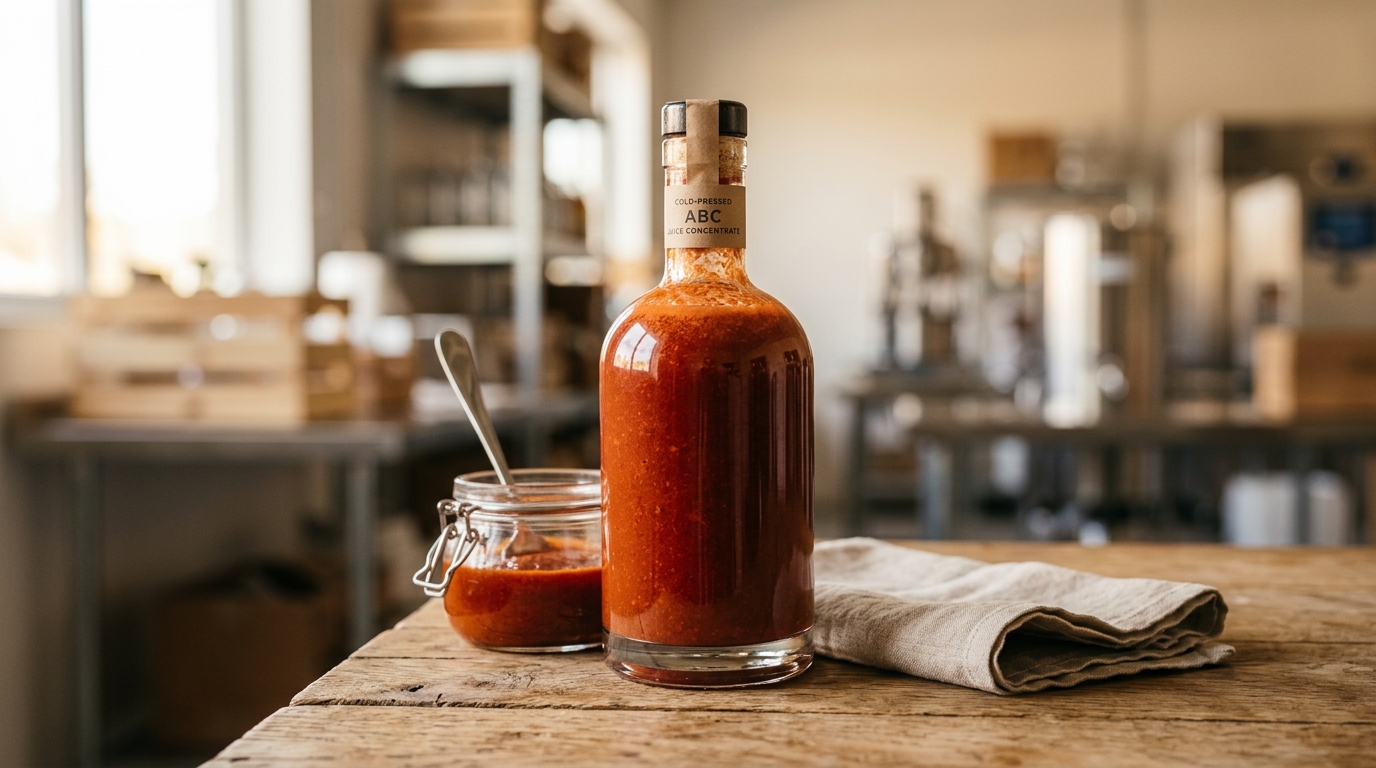
ABC (apple–beet–carrot) concentrate behaves less like a single commodity and more like three linked supply chains with different seasonality, spec risk, and logistics constraints. This guide shows procurement leaders how to read the right market signals, structure contracts for allocation certainty, and pre-qualify alternates—so you reduce stockout risk without quietly overpaying.
Insight: ABC concentrate pricing rarely follows a clean “crop down → concentrate down” line. The procurement edge comes from watching three spreads—(1) raw produce vs. concentrate, (2) single-concentrate vs. blended ABC, and (3) FOB vs. delivered—because each spread widens on a predictable calendar.
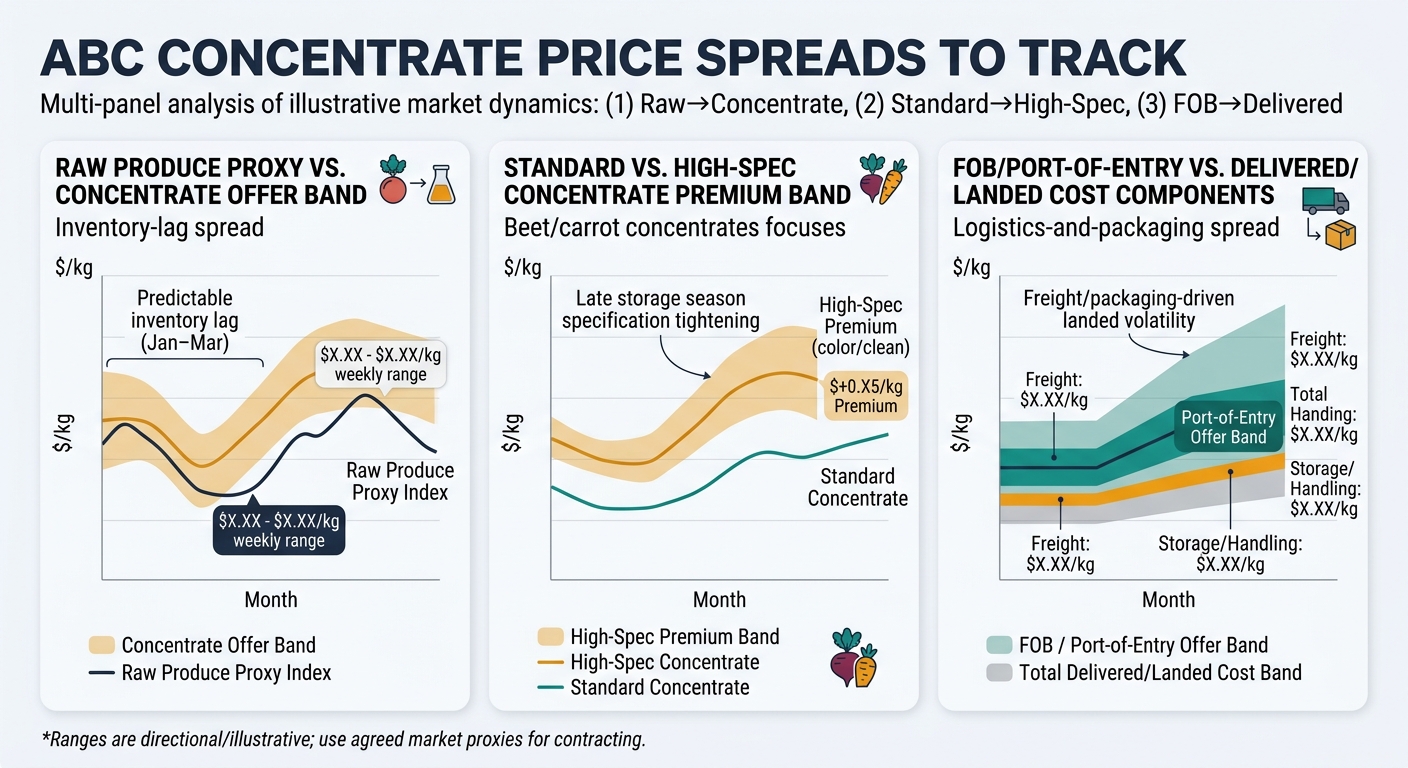
Data (validated/adjusted): Three recurring disconnect patterns create repeatable buying windows:
Procurement Impact: If you only benchmark “ABC concentrate $/kg,” you’ll miss when the market is offering cheap solids but expensive certainty. The exploitable window is when upstream indicators soften but (a) concentrate offers haven’t repriced yet and (b) processors start competing for forward allocation: you can trade commitment (volume timing + forecast clarity) for faster pass-through on declines, while ring-fencing spec compliance for beet color and carrot flavor.
Key Takeaways:
Insight: The performance gap isn’t supplier relationships—it’s decision cadence: teams that update benchmarks and risk signals monthly (not quarterly) buy closer to the market and suffer fewer allocation surprises.
Data (directionally credible, treat as typical ranges): A realistic before/after shift looks like this:
| Dimension | Before (traditional) | After (intelligence-driven) |
|---|---|---|
| Sourcing universe | 2–4 incumbent processors | 10–20 qualified-by-profile options split by apple/beet/carrot capability |
| Benchmarking cadence | Quarterly; tender-driven | Monthly; spread-driven (raw→concentrate, standard→high-spec, FOB→delivered) |
| Risk posture | Qualitative (“reliable supplier”) | Origin + processor + logistics watchlist with trigger thresholds |
| Commercial structure | One blended contract | Portfolio: base committed + flexible secondary + pre-agreed substitution rules |
| Typical outcome | Overpayment on portions of the year; allocation/firefighting events | Tighter budget variance; fewer unplanned expedites and reformulations |
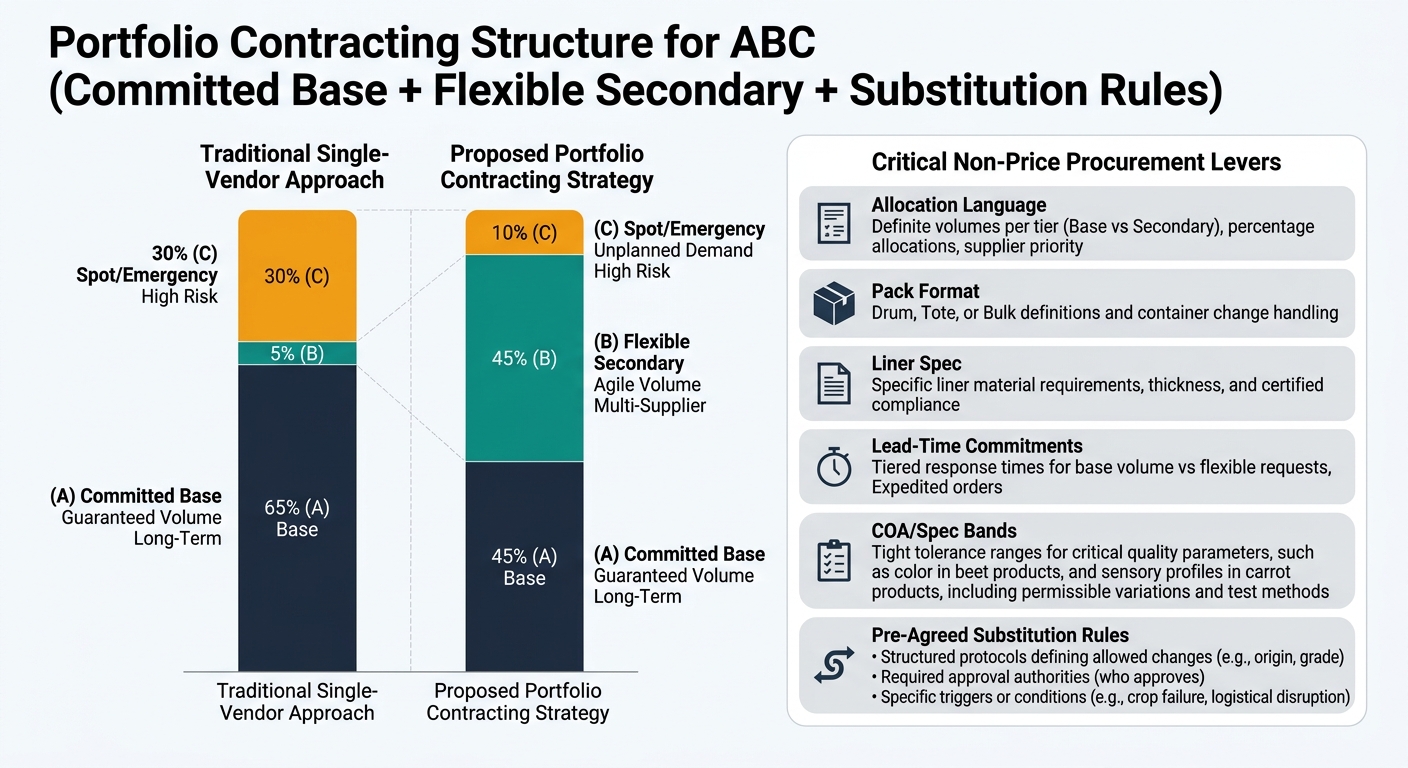
Procurement Impact: You stop paying “panic premiums.” More importantly, you convert supply continuity from a hope into a governed plan: which volumes are protected, at what spec, with what alternates, and what triggers a switch.
Insight: When raw indicators soften but concentrate offers haven’t moved, suppliers fear being caught with high-cost inventory.
Data: This is when you can credibly ask for a pass-through clause (e.g., step-down tied to agreed market proxies) instead of a one-time discount.
Procurement Impact: Lock allocation and service levels now, then participate in the down-move without re-tendering mid-quarter.
Insight: Beet concentrate variability often spikes at storage transitions; the market can tighten on high-color lots even if overall beet supply is fine.
Data: If multiple suppliers in the same origin show widening high-color premiums, it’s likely origin/seasonal—not just one supplier.
Procurement Impact: Switch from price-only negotiation to a spec-protection package: tighter COA bands, lot pre-approval, and a contingency split to a second processor with proven color stability.
Insight: Allocation shocks show up first as “small” signals—MOQ increases, longer confirmations, fewer shipment windows.
Data: A tell is when suppliers push from ~4–6 week lead times to ~8–10 weeks while holding price flat.
Procurement Impact: Don’t wait for the stockout. Pre-book secondary capacity for a defined volume band (even at a small premium) and use that credible alternative to renegotiate incumbent service commitments.
Insight: ABC behaves like a hybrid category: apple is commodity-like, beet/carrot are spec-constrained—this is the same pattern you see in other beverage ingredients.
Data: Comparable dynamics:
Procurement Impact: The transferable skill is managing spreads and triggers—separating “price risk” from “spec-and-allocation risk,” then contracting each explicitly.
Insight: ABC concentrate exposes weak governance faster than most categories because small spec drift becomes finished-product inconsistency, and small logistics delays become missed production windows.
Data: The category forces you to answer hard questions with evidence: which origins are truly substitutable, how quickly you can qualify alternates, and what your real landed-cost drivers are (not just FOB).
Procurement Impact: If you can run ABC with disciplined benchmarks, risk triggers, and a portfolio contract structure, you can replicate that operating model across your broader beverage ingredient spend—reducing firefighting while improving budget credibility.
(Analyzed at: Oct, 2026)
Use USDA’s apple juice concentrate spot reporting as your negotiation anchor for the apple portion of ABC, and separate that discussion from beet/carrot spec protection. USDA market news shows AJC spot pricing can vary widely by origin and week (e.g., domestic and import ranges reported in April 2026), which is exactly why a single blended ABC $/kg quote is easy to “win” and still lose on allocation or spec. [1]
For your next contract cycle, lock a committed base volume with explicit pack format and lead-time commitments, then put the balance on a short-lag pass-through tied to agreed proxies (and pre-agreed substitution rules if beet color tightens). Teams that do this typically avoid the “flat price, late ship” trap—and on a category where a few weeks of disruption can force premium freight and emergency buys, that governance can easily be the difference between a low-single-digit and mid-single-digit variance swing in the quarter.